| Title |
Warren S. Wimmer, American Fork, Utah: an interview by Winston Erickson, May 26, 2000: Saving the legacy tape no. 25, 26, and 27 |
| Alternative Title |
Warren Wimmer, Saving the legacy: an oral history of Utah's World War II veterans, ACCN 2070, American West Center, University of Utah |
| Creator |
Wimmer, Warren, 1920-2006 |
| Contributor |
Erickson, Winston P., 1943-; University of Utah. American West Center |
| Publisher |
Digitized by J. Willard Marriott Library, University of Utah |
| Date |
2000-05-26 |
| Date Digital |
2015-09-16 |
| Access Rights |
I acknowledge and agree that all information I obtain as a result of accessing any oral history provided by the University of Utah's Marriott Library shall be used only for historical or scholarly or academic research purposes, and not for commercial purposes. I understand that any other use of the materials is not authorized by the University of Utah and may exceed the scope of permission granted to the University of Utah by the interviewer or interviewee. I may request permission for other uses, in writing to Special Collections at the Marriott Library, which the University of Utah may choose grant, in its sole discretion. I agree to defend, indemnify and hold the University of Utah and its Marriott Library harmless for and against any actions or claims that relate to my improper use of materials provided by the University of Utah. |
| Spatial Coverage |
Pearl Harbor, Oahu, Hawaii, United States; Guadalcanal; Tulaghi Island (Solomon Islands); Saipan, Northern Mariana Islands; Savo Island; American Fork, Utah County, Utah, United States |
| Subject |
Wimmer, Warren, 1920-2006--Interviews; World War, 1939-1945--Personal narratives, American; Veterans--Utah--Biography; World War, 1939-1945--Naval operations, American; World War, 1939-1945--Campaigns--Pacific Area--Personal narratives, American; Pearl Harbor (Hawaii), Attack on, 1941 |
| Description |
Transcript (53 pages) of an interview by Winston P. Erickson with Warren S. Wimmer on May 26, 2000. This is from tape numbers 25, 26, and 27 in the "Saving the Legacy Oral History Project |
| Collection Number and Name |
Accn2070, Saving the Legacy oral history project, 2001-2010 |
| Abstract |
Wimmer (b. 1920) recalls his childhood in rural Utah and enlisting in the Navy in July 1941. After basic training he was assigned to the USS Rigal in Hawaii. Upon his arrival he learned that the Rigal had been towed to Hawaii to be converted into a destroyer tender and was in the process of being rebuilt. He gives a long and vivid account of the Japanese attack on Pearl Harbor and the aftermath. He served on work parties that recovered bodies before being admitted to the hospital for shrapnel wounds. On December 10 he was evacuated with other wounded from Pearl Harbor on a luxury liner with two coast guard cutters as escort. He was later assigned to the USS Shaw and saw combat at Guadalcanal, Tulagi, Saipan, and Savo Island. 53 pages. |
| Type |
Text |
| Genre |
oral histories (literary works) |
| Format |
application/pdf |
| Extent |
53 pages |
| Language |
eng |
| Rights |
 |
| Scanning Technician |
Mazi Rakhsha |
| Conversion Specifications |
Original scanned with Kirtas 2400 and saved as 400 ppi uncompressed TIFF. PDF generated by Adobe Acrobat Pro X for CONTENTdm display |
| ARK |
ark:/87278/s6jh5kdz |
| Topic |
Personal narratives--American; Veterans; World War (1939-1945); Military operations, Naval--American; Pearl Harbor, Attack on (Hawaii : 1941) |
| Setname |
uum_slohp |
| ID |
1026083 |
| Reference URL |
https://collections.lib.utah.edu/ark:/87278/s6jh5kdz |
| Title |
Page 4 |
| Format |
application/pdf |
| Setname |
uum_slohp |
| ID |
1026031 |
| OCR Text |
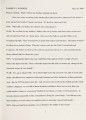
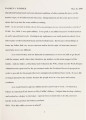
Show WARRE . WIMMER a ' 26, 2000 Murray melter. That' where my brother Leland wa born. After two year working at the melter there they moved to American Fork where I grew up and my brother Eugene was born. We lived in American Fork. WIN: What did your father do when he moved back here? WAR: He worked for my mother's father who was a farmer and fruit raiser on the ea t side of American Fork on a large farm. They were the Pulleys, and the Pulleys were recognized people. They were known as great fruit raisers and farmers. My father worked for them for a period of time. Then he went to work for the Utah Transit Railroad Company. My father worked on the railroad repairing, taking care, and maintaining the short railroad line for about ten years. WIN: So during the depression you would have been just in school a couple of years before the depression hit. Then, when the depression hit, did you notice any change in the economic status of your family? WAR: Yes, up to about 1928. I was about eight years old, and you were able to work and make a livelihood at a simple level through farming and other industries in this particular area. But in 1929 the depression hit. And, of course, the stock market failed and the whole country collapsed. As a result of those destitute conditions, there was no way that you could market whatever you raised; whether it was sheep, or cattle, or farm products. It became almost impossible to live, to maintain a living for your family. You did most any kind of labor, or work, that you could in order to maintain yourself and family. WIN: But you had farm produce, so you did have the ability to have food? 2 |
| Reference URL |
https://collections.lib.utah.edu/ark:/87278/s6jh5kdz/1026031 |