| Title |
Boyd Williams, Salt Lake City, Utah: an interview by Becky B. Lloyd, May 5, 2004: Saving the legacy tape no. 649 |
| Alternative Title |
Boyd T. Williams, Saving the legacy: an oral history of Utah's World War II veterans, ACCN 2070, American West Center, University of Utah |
| Creator |
Williams, Boyd T., 1926- |
| Contributor |
Lloyd, Becky B.; University of Utah. American West Center |
| Publisher |
Digitized by J. Willard Marriott Library, University of Utah |
| Date |
2004-05-05 |
| Date Digital |
2015-09-16 |
| Access Rights |
I acknowledge and agree that all information I obtain as a result of accessing any oral history provided by the University of Utah's Marriott Library shall be used only for historical or scholarly or academic research purposes, and not for commercial purposes. I understand that any other use of the materials is not authorized by the University of Utah and may exceed the scope of permission granted to the University of Utah by the interviewer or interviewee. I may request permission for other uses, in writing to Special Collections at the Marriott Library, which the University of Utah may choose grant, in its sole discretion. I agree to defend, indemnify and hold the University of Utah and its Marriott Library harmless for and against any actions or claims that relate to my improper use of materials provided by the University of Utah. |
| Spatial Coverage |
Okinawa; Saipan, Northern Mariana Islands; Guam; Formosa; Philippines; Ulithi, Caroline Islands, Borneo; Korea; China; Panama |
| Subject |
Williams, Boyd T., 1926- --Interviews; World War, 1939-1945--Personal narratives, American; Veterans--Utah--Biography; World War, 1939-1945--Campaigns--Pacific Area--Personal narratives, American; Radio operators--Biography; Radio, Military |
| Keywords |
Radio operator; Leyte; Manila |
| Description |
Transcript (44 pages) of an interview by Becky B. Lloyd with Boyd Williams on May 5, 2004. This is from tape number 649 in the "Saving the Legacy Oral History Project |
| Collection Number and Name |
Accn2070, Saving the Legacy oral history project, 2001-2010 |
| Abstract |
Williams (b. 1926) recalls his childhood in Rigby, Idaho, and describes enlisting in the Navy two days after graduating from high school in May 1944. He was a radio operator on the second Block Island (the first ship of that name had been sunk by a German submarine). He served in Pearl Harbor, Okinawa, Saipan, Guam, Formosa, Leyte, Manila, Ulithi, Borneo, Korea, China, and Panama. 44 pages. |
| Type |
Text |
| Genre |
oral histories (literary works) |
| Format |
application/pdf |
| Extent |
44 pages |
| Language |
eng |
| Rights |
 |
| Scanning Technician |
Mazi Rakhsha |
| Conversion Specifications |
Original scanned with Kirtas 2400 and saved as 400 ppi uncompressed TIFF. PDF generated by Adobe Acrobat Pro X for CONTENTdm display |
| ARK |
ark:/87278/s6p86b54 |
| Topic |
Personal narratives--American; Veterans; World War (1939-1945); Radio, Military; Radio operators |
| Setname |
uum_slohp |
| ID |
1026027 |
| Reference URL |
https://collections.lib.utah.edu/ark:/87278/s6p86b54 |
| Title |
Page 17 |
| Format |
application/pdf |
| Setname |
uum_slohp |
| ID |
1025998 |
| OCR Text |
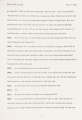
Show B YDWI '~ 4 Th am with nun1b r ; h y r all up nth t p r ~ f t p rit r k y . umb r ar five characters long· letters ar one, tw tine r four d t r da h long but numb r are all five digits. Like five is five dash in a row. Wh n another hip will be sending you a message, they ' ll ask you how fast you want to take the me sage and they 11 send it whatever my speed is, they ' 11 send it at that speed. If they have a long message and they request a first-class officer or petty officer radioman, they could sit down there and just rip off so fast. It was all a blur to me. I was just third-class; that's the lowest petty officer but I could take a lot of code but when it got fast, it was too fast for me. So that's why they had first, second and third class radimnan, then you went into chief petty officer. BEC: That was related to speed? How quickly you could take a message. BOY: Yeah, and the knowledge of the equipment. They had radio technicians besides radio operators to take care of the equipment if something went wrong. BEC: Separate people? BOY: Yeah, separate people all together. BEC: And you didn't ever send out messages, you personally. BOY: Yeah. BEC: You did incon1ing and outgoing. BOY: Yeah. BEC: And, again, it was probably gibberish you were sending out, coded. BOY: Yeah, usually coded. In one area, it was after the war, after the bomb had dropped, in Septe1nber or October of '45, we'd talk instead of Morse code. We'd talk plain verbal talk over the microphone and that way you could just talk in your normal voice and the guy on the other end would be typing out what you're saying. Of course, 16 |
| Reference URL |
https://collections.lib.utah.edu/ark:/87278/s6p86b54/1025998 |