| Title |
Boyd Williams, Salt Lake City, Utah: an interview by Becky B. Lloyd, May 5, 2004: Saving the legacy tape no. 649 |
| Alternative Title |
Boyd T. Williams, Saving the legacy: an oral history of Utah's World War II veterans, ACCN 2070, American West Center, University of Utah |
| Creator |
Williams, Boyd T., 1926- |
| Contributor |
Lloyd, Becky B.; University of Utah. American West Center |
| Publisher |
Digitized by J. Willard Marriott Library, University of Utah |
| Date |
2004-05-05 |
| Date Digital |
2015-09-16 |
| Access Rights |
I acknowledge and agree that all information I obtain as a result of accessing any oral history provided by the University of Utah's Marriott Library shall be used only for historical or scholarly or academic research purposes, and not for commercial purposes. I understand that any other use of the materials is not authorized by the University of Utah and may exceed the scope of permission granted to the University of Utah by the interviewer or interviewee. I may request permission for other uses, in writing to Special Collections at the Marriott Library, which the University of Utah may choose grant, in its sole discretion. I agree to defend, indemnify and hold the University of Utah and its Marriott Library harmless for and against any actions or claims that relate to my improper use of materials provided by the University of Utah. |
| Spatial Coverage |
Okinawa; Saipan, Northern Mariana Islands; Guam; Formosa; Philippines; Ulithi, Caroline Islands, Borneo; Korea; China; Panama |
| Subject |
Williams, Boyd T., 1926- --Interviews; World War, 1939-1945--Personal narratives, American; Veterans--Utah--Biography; World War, 1939-1945--Campaigns--Pacific Area--Personal narratives, American; Radio operators--Biography; Radio, Military |
| Keywords |
Radio operator; Leyte; Manila |
| Description |
Transcript (44 pages) of an interview by Becky B. Lloyd with Boyd Williams on May 5, 2004. This is from tape number 649 in the "Saving the Legacy Oral History Project |
| Collection Number and Name |
Accn2070, Saving the Legacy oral history project, 2001-2010 |
| Abstract |
Williams (b. 1926) recalls his childhood in Rigby, Idaho, and describes enlisting in the Navy two days after graduating from high school in May 1944. He was a radio operator on the second Block Island (the first ship of that name had been sunk by a German submarine). He served in Pearl Harbor, Okinawa, Saipan, Guam, Formosa, Leyte, Manila, Ulithi, Borneo, Korea, China, and Panama. 44 pages. |
| Type |
Text |
| Genre |
oral histories (literary works) |
| Format |
application/pdf |
| Extent |
44 pages |
| Language |
eng |
| Rights |
 |
| Scanning Technician |
Mazi Rakhsha |
| Conversion Specifications |
Original scanned with Kirtas 2400 and saved as 400 ppi uncompressed TIFF. PDF generated by Adobe Acrobat Pro X for CONTENTdm display |
| ARK |
ark:/87278/s6p86b54 |
| Topic |
Personal narratives--American; Veterans; World War (1939-1945); Radio, Military; Radio operators |
| Setname |
uum_slohp |
| ID |
1026027 |
| Reference URL |
https://collections.lib.utah.edu/ark:/87278/s6p86b54 |
| Title |
Page 5 |
| Format |
application/pdf |
| Setname |
uum_slohp |
| ID |
1025986 |
| OCR Text |
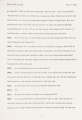
Show B YD WIL lAM y 5 20 hard tim s but w got through all right. In high sch ol w ort f kn w- I hadar al good friend well, three or four friends in the same grade in high school and we all kn w we would be going into the Navy together probably as soon as we could. I think it was April of '44 we enlisted in the Navy, about five of us together and we went to Boise one weekend and had our physicals. We were staying at the Idanha Hotel-it's quite a landmark there in Boise-and we had our physicals there on a weekend, I believe, so we could get back to school. But we were all accepted. So about two days after graduation in May in '44 we left for Farragut Training Station up in northern Idaho. It's up by Lake Coeur D'Alene and Lake Pend Oreille. BEC: So why did you all decide the Navy? BOY: Well, there'd been quite a few guardsmen, national guards, pulled out of Idaho. They had an engineering company in Rigby for a long time and they were called out in 1941, even before the war actually started. So we had a lot of buddies going into infantry with the guard. We sort of figured we'd go into the Navy. (We'd) rather be on a ship than in a foxhole (laughs). BEC: Some of those units were really decimated, weren't they? BOY: Oh, yeah. Some of those guard units were in New Guinea and some of the islands over there for four years. But we did decide on the Navy and about two days after we graduated from high school, we took a bus and left for Farragut, Idaho. We had about six weeks boot camp training there. While there, we took aptitude tests to see what we were best qualified to take, to be in the Navy there. I'd had radio school in high school for one year, so I knew the Morse code and basics of radio technology. After a few tests they said I'd be good as a radio operator. I said, "Okay, that's fine with me." So three of 4 |
| Reference URL |
https://collections.lib.utah.edu/ark:/87278/s6p86b54/1025986 |