| Title |
Preston Porath, Salt Lake City, Utah: an interview by Becky B. Lloyd, May 24, 2001: Saving the legacy tape no. 248 and 249 |
| Alternative Title |
Preston Porath, Saving the legacy: an oral history of Utah's World War II veterans, ACCN 2070, American West Center, University of Utah |
| Creator |
Porath, Preston, 1921- |
| Contributor |
Lloyd, Becky B.; University of Utah. American West Center |
| Publisher |
Digitized by J. Willard Marriott Library, University of Utah |
| Date |
2001-05-24 |
| Date Digital |
2015-09-16 |
| Access Rights |
I acknowledge and agree that all information I obtain as a result of accessing any oral history provided by the University of Utah's Marriott Library shall be used only for historical or scholarly or academic research purposes, and not for commercial purposes. I understand that any other use of the materials is not authorized by the University of Utah and may exceed the scope of permission granted to the University of Utah by the interviewer or interviewee. I may request permission for other uses, in writing to Special Collections at the Marriott Library, which the University of Utah may choose grant, in its sole discretion. I agree to defend, indemnify and hold the University of Utah and its Marriott Library harmless for and against any actions or claims that relate to my improper use of materials provided by the University of Utah. |
| Spatial Coverage |
Guadalcanal, Solomon Islands; New Guinea; Okinawa, Japan; New Caledonia; Salt Lake City, Salt Lake County, Utah, United States |
| Subject |
Porath, Preston, 1921- --Interviews; World War, 1939-1945--Personal narratives, American; Veterans--Utah--Biography; World War, 1939-1945--Naval operations, American; World War, 1939-1945--Campaigns--Pacific Area--Personal narratives, American |
| Keywords |
Hospital ships; Seabees |
| Description |
Transcript (80 pages) of an interview by Becky B. Lloyd with Preston Porath on May 24, 2001. This is from tape numbers 248 and 249 in the "Saving the Legacy Oral History Project |
| Collection Number and Name |
Accn2070, Saving the Legacy oral history project, 2001-2010 |
| Abstract |
Porath (b. 1921) recalls his childhood in Hyrum, Utah and describes joining the Seabees as a Third-Class Petty officer. He served on the USS Rixey in the Pacific, including Guadalcanal, New Guinea, Okinawa, and New Caledonia. He speaks at length about life aboard a ship. 80 pages. |
| Type |
Text |
| Genre |
oral histories (literary works) |
| Format |
application/pdf |
| Extent |
80 pages |
| Language |
eng |
| Rights |
 |
| Scanning Technician |
Mazi Rakhsha |
| Conversion Specifications |
Original scanned with Kirtas 2400 and saved as 400 ppi uncompressed TIFF. PDF generated by Adobe Acrobat Pro X for CONTENTdm display |
| ARK |
ark:/87278/s64f3pz6 |
| Topic |
Personal narratives--American; Veterans; World War (1939-1945); Military operations, Naval--American |
| Setname |
uum_slohp |
| ID |
1025981 |
| Reference URL |
https://collections.lib.utah.edu/ark:/87278/s64f3pz6 |
| Title |
Page 22 |
| Format |
application/pdf |
| Setname |
uum_slohp |
| ID |
1025921 |
| OCR Text |
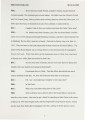
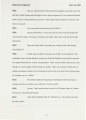
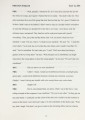
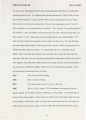
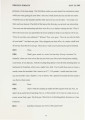
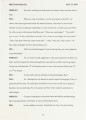
Show PRE TO PORATH 24,2 1 New Zealand where they had large hospitals where wed take the patients. Wed drop patients off in New Zealand and pick up replacements in New Zealand and New Caledonia, take them up to Guadalcanal. We operated that way for about a year till they started moving up into the islands. Fact is, when Guadalcanal was secure and Russels were secure, we took the first Navy nurses up to Guadalcanal and the Russels and Tulagi where they then had base hospitals. BEC: Must have been interesting cruise, was it? PRE: It was an interesting cruise: 130 Navy nurses and 500 Negroes. At that time there was a great distinction between the blacks and the whites. Our master at arms was a Southern boy and he saw that the colored boys were tucked into the hold where they were supposed to sleep. They were basically to be, well, I guess you'd call them stevedores, unloading the ships that pulled into Guadalcanal and the other islands. He treated them in the true Southern custom. He'd tuck them to bed each night, you know, then lock the hold. So they were locked in at nights, which was not very safe, but he wasn't too worried about it. The Navy nurses slept up in sickbay. We had quite a hospital. The Rtxey was an attack transport hospital, that is, we'd take troops into the invasions-had a complete medical staff, two operating rooms aboard ship. I guess now you'd call it a floating MASH unit. BEC: Oh, I see. PRE: So we had, I think, about a 200-bed hospital aboard ship. BEC: Oh, I see. Where did these black folks come from? Where did you pick them up? 21 |
| Reference URL |
https://collections.lib.utah.edu/ark:/87278/s64f3pz6/1025921 |