| Title |
Preston Porath, Salt Lake City, Utah: an interview by Becky B. Lloyd, May 24, 2001: Saving the legacy tape no. 248 and 249 |
| Alternative Title |
Preston Porath, Saving the legacy: an oral history of Utah's World War II veterans, ACCN 2070, American West Center, University of Utah |
| Creator |
Porath, Preston, 1921- |
| Contributor |
Lloyd, Becky B.; University of Utah. American West Center |
| Publisher |
Digitized by J. Willard Marriott Library, University of Utah |
| Date |
2001-05-24 |
| Date Digital |
2015-09-16 |
| Access Rights |
I acknowledge and agree that all information I obtain as a result of accessing any oral history provided by the University of Utah's Marriott Library shall be used only for historical or scholarly or academic research purposes, and not for commercial purposes. I understand that any other use of the materials is not authorized by the University of Utah and may exceed the scope of permission granted to the University of Utah by the interviewer or interviewee. I may request permission for other uses, in writing to Special Collections at the Marriott Library, which the University of Utah may choose grant, in its sole discretion. I agree to defend, indemnify and hold the University of Utah and its Marriott Library harmless for and against any actions or claims that relate to my improper use of materials provided by the University of Utah. |
| Spatial Coverage |
Guadalcanal, Solomon Islands; New Guinea; Okinawa, Japan; New Caledonia; Salt Lake City, Salt Lake County, Utah, United States |
| Subject |
Porath, Preston, 1921- --Interviews; World War, 1939-1945--Personal narratives, American; Veterans--Utah--Biography; World War, 1939-1945--Naval operations, American; World War, 1939-1945--Campaigns--Pacific Area--Personal narratives, American |
| Keywords |
Hospital ships; Seabees |
| Description |
Transcript (80 pages) of an interview by Becky B. Lloyd with Preston Porath on May 24, 2001. This is from tape numbers 248 and 249 in the "Saving the Legacy Oral History Project |
| Collection Number and Name |
Accn2070, Saving the Legacy oral history project, 2001-2010 |
| Abstract |
Porath (b. 1921) recalls his childhood in Hyrum, Utah and describes joining the Seabees as a Third-Class Petty officer. He served on the USS Rixey in the Pacific, including Guadalcanal, New Guinea, Okinawa, and New Caledonia. He speaks at length about life aboard a ship. 80 pages. |
| Type |
Text |
| Genre |
oral histories (literary works) |
| Format |
application/pdf |
| Extent |
80 pages |
| Language |
eng |
| Rights |
 |
| Scanning Technician |
Mazi Rakhsha |
| Conversion Specifications |
Original scanned with Kirtas 2400 and saved as 400 ppi uncompressed TIFF. PDF generated by Adobe Acrobat Pro X for CONTENTdm display |
| ARK |
ark:/87278/s64f3pz6 |
| Topic |
Personal narratives--American; Veterans; World War (1939-1945); Military operations, Naval--American |
| Setname |
uum_slohp |
| ID |
1025981 |
| Reference URL |
https://collections.lib.utah.edu/ark:/87278/s64f3pz6 |
| Title |
Page 18 |
| Format |
application/pdf |
| Setname |
uum_slohp |
| ID |
1025917 |
| OCR Text |
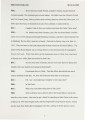
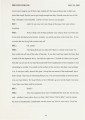
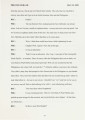
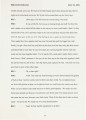
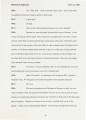
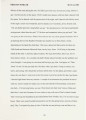
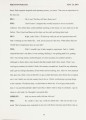
Show PRE TO PORAT PRE: BEC: No. That was his father's interpretation! (laughs) Oh, okay. So this is just folklore that's come down. 24, 20 1 PRE: He promoted it to four! No, I could only do one egg in each hand. I never saw a fellow do four eggs at one time and keep the shells out of the flour. BEC: Okay, all right. Well, we've settled that old rumor, then. PRE: Yeah. That's just a rumor. That's his dad's rumor (laughs). So we'd sit down and do two, three cases at a time, you know. But the duty there at the base, you were not assigned permanently there so you'd goof off as much as you could and sleep in as much as you could. But I'd go into San Francisco every night. I worked at the bake shop at a bakery there, Langendorf Bakery in San Francisco, some nights to earn a little extra money to spend downtown. BEC: And you were permitted to do that? PRE: Well, I don't know whether we were permitted or not, but we did. A lot of the guys went to work as longshoremen because the longshoremen were shorthanded because of the draft. The bake shops were short of hands each night. After you got through with work, they'd pay you, so you'd get money every night because the next night you may be out, you may be out to sea the next night. BEC: Right, yeah. That's interesting. PRE: So they'd pay you every night. Then I started dating a girl there in San Francisco, so I needed a little extra money. Actually it was a girl I met at the USO where they used to hold dances. I loved to dance and went there and danced. You couldn't take them home, but you could make dates with them for other nights when they weren't working. They weren't supposed to date right off the dance floor there. So she 17 |
| Reference URL |
https://collections.lib.utah.edu/ark:/87278/s64f3pz6/1025917 |