| Title |
Wataru Misaka, Bountiful, Utah: an interview by Winston Erickson: Saving the legacy tape no. 226 |
| Alternative Title |
Wataru Misaka, Saving the legacy: an oral history of Utah's World War II veterans, ACCN 2070, American West Center, University of Utah |
| Creator |
Misaka, Wataru, 1923- |
| Contributor |
Erickson, Winston P., 1943-; University of Utah. American West Center |
| Publisher |
Digitized by J. Willard Marriott Library, University of Utah |
| Date |
2001-05-17 |
| Date Digital |
2015-09-16 |
| Access Rights |
I acknowledge and agree that all information I obtain as a result of accessing any oral history provided by the University of Utah's Marriott Library shall be used only for historical or scholarly or academic research purposes, and not for commercial purposes. I understand that any other use of the materials is not authorized by the University of Utah and may exceed the scope of permission granted to the University of Utah by the interviewer or interviewee. I may request permission for other uses, in writing to Special Collections at the Marriott Library, which the University of Utah may choose grant, in its sole discretion. I agree to defend, indemnify and hold the University of Utah and its Marriott Library harmless for and against any actions or claims that relate to my improper use of materials provided by the University of Utah. |
| Spatial Coverage |
Japan; Ogden, Weber County, Utah, United States |
| Subject |
Misaka, Wataru, 1923- --Interviews; World War, 1939-1945--Personal narratives, American; Veterans--Utah--Biography; World War, 1939-1945--Personal narratives, Japanese American; World War, 1939-1945--Participation, Japanese American |
| Description |
Transcript (46 pages) of an interview by Winston P. Erickson with Wataru Misaka on May 17, 2001. This is from tape number 226 in the "Saving the Legacy Oral History Project |
| Collection Number and Name |
Accn2070, Saving the Legacy oral history project, 2001-2010 |
| Abstract |
Misaka (b. 1923) was born and raised in Ogden, Utah. He was a student at Weber College and the University of Utah before being drafted in June 1944. He was assigned to the language training school at Ft. Snelling where he was trained for the occupation forces. He served nine months in Japan, determining how the bombing affected civilian morale. He was discharged in 1946. 46 pages. |
| Type |
Text |
| Genre |
oral histories (literary works) |
| Format |
application/pdf |
| Extent |
46 pages |
| Language |
eng |
| Rights |
 |
| Scanning Technician |
Mazi Rakhsha |
| Conversion Specifications |
Original scanned with Kirtas 2400 and saved as 400 ppi uncompressed TIFF. PDF generated by Adobe Acrobat Pro X for CONTENTdm display |
| ARK |
ark:/87278/s62n71hg |
| Topic |
Personal narratives--American; Veterans; World War (1939-1945); Japanese Americans |
| Setname |
uum_slohp |
| ID |
1025843 |
| Reference URL |
https://collections.lib.utah.edu/ark:/87278/s62n71hg |
| Title |
Page 14 |
| Format |
application/pdf |
| Setname |
uum_slohp |
| ID |
1025808 |
| OCR Text |
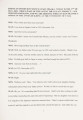
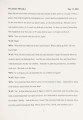
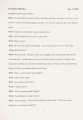
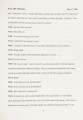
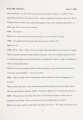
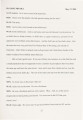
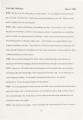
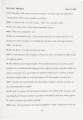
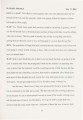
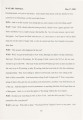
Show WATARUMI AKA day. One of the reasons was for having reading material for th cu tom r . WIN: Patrons? a 17 2 1 W AT: Patrons. And so I'd read those. I'd look at headlines mainly and then read the sports page. WIN: Of course. So the Japanese community really didn't discuss what was going on in Japan as far as you knew? WAT: No, not too much. They were trying to-since it was our parents homeland they were trying to help a little bit. I know that they had a program of trying to save the tinfoil, or whatever it was, on the cigarette packages. So I remember helping, you know, tearing open these cigarette packs and peeling off the tinfoil. And you'd have to go through a lot of those to get a big enough ball of foil that mattered any. WIN: That's right. W AT: And that was about the only participation that I know that we had, you know, in the war effort for Japan. WIN: So you were mostly interested in sports, and doing your own thing in school. You graduated from high school. Do you remember any favorite teachers, classmates, or anything that you liked to ... ? WAT: Yeah. Not so much teachers, but I went to school in the first grade and met three other boys there. And, of course, they were kind of in the neighborhood, so I knew a couple of them before. But they were the ones that gave me my nickname because they had trouble saying my full name, so I've been known as Wat ever since. And the four of 12 |
| Reference URL |
https://collections.lib.utah.edu/ark:/87278/s62n71hg/1025808 |