| Title |
Wataru Misaka, Bountiful, Utah: an interview by Winston Erickson: Saving the legacy tape no. 226 |
| Alternative Title |
Wataru Misaka, Saving the legacy: an oral history of Utah's World War II veterans, ACCN 2070, American West Center, University of Utah |
| Creator |
Misaka, Wataru, 1923- |
| Contributor |
Erickson, Winston P., 1943-; University of Utah. American West Center |
| Publisher |
Digitized by J. Willard Marriott Library, University of Utah |
| Date |
2001-05-17 |
| Date Digital |
2015-09-16 |
| Access Rights |
I acknowledge and agree that all information I obtain as a result of accessing any oral history provided by the University of Utah's Marriott Library shall be used only for historical or scholarly or academic research purposes, and not for commercial purposes. I understand that any other use of the materials is not authorized by the University of Utah and may exceed the scope of permission granted to the University of Utah by the interviewer or interviewee. I may request permission for other uses, in writing to Special Collections at the Marriott Library, which the University of Utah may choose grant, in its sole discretion. I agree to defend, indemnify and hold the University of Utah and its Marriott Library harmless for and against any actions or claims that relate to my improper use of materials provided by the University of Utah. |
| Spatial Coverage |
Japan; Ogden, Weber County, Utah, United States |
| Subject |
Misaka, Wataru, 1923- --Interviews; World War, 1939-1945--Personal narratives, American; Veterans--Utah--Biography; World War, 1939-1945--Personal narratives, Japanese American; World War, 1939-1945--Participation, Japanese American |
| Description |
Transcript (46 pages) of an interview by Winston P. Erickson with Wataru Misaka on May 17, 2001. This is from tape number 226 in the "Saving the Legacy Oral History Project |
| Collection Number and Name |
Accn2070, Saving the Legacy oral history project, 2001-2010 |
| Abstract |
Misaka (b. 1923) was born and raised in Ogden, Utah. He was a student at Weber College and the University of Utah before being drafted in June 1944. He was assigned to the language training school at Ft. Snelling where he was trained for the occupation forces. He served nine months in Japan, determining how the bombing affected civilian morale. He was discharged in 1946. 46 pages. |
| Type |
Text |
| Genre |
oral histories (literary works) |
| Format |
application/pdf |
| Extent |
46 pages |
| Language |
eng |
| Rights |
 |
| Scanning Technician |
Mazi Rakhsha |
| Conversion Specifications |
Original scanned with Kirtas 2400 and saved as 400 ppi uncompressed TIFF. PDF generated by Adobe Acrobat Pro X for CONTENTdm display |
| ARK |
ark:/87278/s62n71hg |
| Topic |
Personal narratives--American; Veterans; World War (1939-1945); Japanese Americans |
| Setname |
uum_slohp |
| ID |
1025843 |
| Reference URL |
https://collections.lib.utah.edu/ark:/87278/s62n71hg |
| Title |
Page 12 |
| Format |
application/pdf |
| Setname |
uum_slohp |
| ID |
1025806 |
| OCR Text |
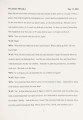
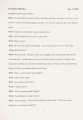
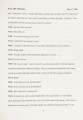
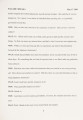
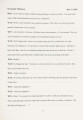
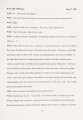
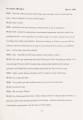
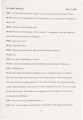
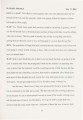
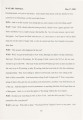
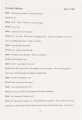
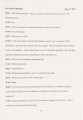
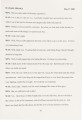
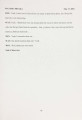
Show WATARU MI AKA a 17 20 1 W AT: No. That wasn't something I ... WIN: You never had time because you were involved every season in ports huh? WAT: Right. WIN: Until you broke your collarbone. Was that in junior high school? W AT: That was in junior high school, yeah. WIN: So then you went to basketball. In basketball in high school were you a standout? Did you ... ? WAT: Well, I like to think I was. You know, it's kind of hard to say. But I know that in those days the high school team for the school were the seniors. Of course, we had large graduating classes in those days. In fact, my graduating class was over six hundred. So the high school team was composed primarily of seniors, and then you had a junior varsity, or junior team. And then we had regular league games with juniors. And every once in awhile you get a junior that would play on the senior team. But not very often because-well, in high school they wanted to, of course, let as many people play as they could. And so the seniors played. But when I was a junior our high school won the state championship, and I was one of the two juniors that was on the senior team. But we had pretty good teams in those days. WIN: Did universities recruit players then as they do now? W AT: Not like they do now. And, in fact, I was never recruited. And playing for the Weber College-well, you know, you'd notice a notice on the bulletin board saying that the basketball tryouts would be in the gym Friday at four o'clock, or whatever, and bring 10 |
| Reference URL |
https://collections.lib.utah.edu/ark:/87278/s62n71hg/1025806 |