| Title |
Kenneth Nodzu, Salt Lake City, Utah: an interview by Luke Kelly, May 23, 2001: Saving the legacy tape no. 234 |
| Alternative Title |
Kenneth K. Nodzu, Saving the legacy: an oral history of Utah's World War II veterans, ACCN 2070, American West Center, University of Utah |
| Creator |
Nodzu, Kenneth K., 1927- |
| Contributor |
Kelly, Luke; University of Utah. American West Center |
| Publisher |
Digitized by J. Willard Marriott Library, University of Utah |
| Date |
2001-05-23 |
| Date Digital |
2015-09-16 |
| Access Rights |
I acknowledge and agree that all information I obtain as a result of accessing any oral history provided by the University of Utah's Marriott Library shall be used only for historical or scholarly or academic research purposes, and not for commercial purposes. I understand that any other use of the materials is not authorized by the University of Utah and may exceed the scope of permission granted to the University of Utah by the interviewer or interviewee. I may request permission for other uses, in writing to Special Collections at the Marriott Library, which the University of Utah may choose grant, in its sole discretion. I agree to defend, indemnify and hold the University of Utah and its Marriott Library harmless for and against any actions or claims that relate to my improper use of materials provided by the University of Utah. |
| Spatial Coverage |
Philippines; Orem, Utah County, Utah, United States |
| Subject |
Nodzu, Kenneth, 1927- --Interviews; World War, 1939-1945--Personal narratives, American; World War, 1939-1945--Personal narratives, Japanese American; Veterans--Utah--Biography |
| Keywords |
Post office; JACL |
| Description |
Transcript (25 pages) of an interview by Luke Kelly with Kenneth K. Nodzu on May 23, 2001. This is from tape number 234 in the "Saving the Legacy Oral History Project |
| Collection Number and Name |
Accn2070, Saving the Legacy oral history project, 2001-2010 |
| Abstract |
Kenneth Nodzu was born in Kenilworth, Utah, in 1927. He was drafted into the Army in 1945, and served in Minnesota, California, and the Philippines as a supply clerk. He also discusses his work with the Japanese American Citizen's League of Mt. Olympus. 25 pages. |
| Type |
Text |
| Genre |
oral histories (literary works) |
| Format |
application/pdf |
| Extent |
25 pages |
| Language |
eng |
| Rights |
 |
| Scanning Technician |
Mazi Rakhsha |
| Conversion Specifications |
Original scanned with Kirtas 2400 and saved as 400 ppi uncompressed TIFF. PDF generated by Adobe Acrobat Pro X for CONTENTdm display |
| ARK |
ark:/87278/s65t5jrq |
| Topic |
Personal narratives--American; Veterans; World War (1939-1945); Japanese Americans |
| Setname |
uum_slohp |
| ID |
1025254 |
| Reference URL |
https://collections.lib.utah.edu/ark:/87278/s65t5jrq |
| Title |
Page 17 |
| Format |
application/pdf |
| Setname |
uum_slohp |
| ID |
1025242 |
| OCR Text |
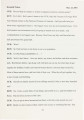
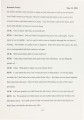
Show Kenneth Nodzu May 23,2001 mostly voted on issues brought up by the national organization. And that's about all f my involvement in the chapter. L UK: I was going to ask you if you got to travel after the war, and it sounds like you have had the opportunity? KEN: Yeah. LUK: So when you went to Chicago, Washington, and Sacramento did you get to go see the sights there such as the National Memorial? KEN: Yeah. Every convention-that was part of the agenda, that we would see the highlights of the city. And I particularly enjoyed Washington, D. C., because of all the historical monuments and buildings there that we visited. L UK: When you went to these national conventions, what were some of the challenges they were discussing? KEN: Way back in 1968 they were talking about the redress. Did you ever hear about the redress program for evacuees; people that had to move from the coast to the ... ? LUK: To the internment camps, or ... ? KEN: The internment camps. Way back in 1968, in Chicago, we discussed the redress. That was the first time that we ever expressed the interest in redress. And every two years, when we held our national convention, it was brought up. And, finally, let's see, I can't remember when they started. Congress okayed the redress program and they started paying off $20,000 for each family that were involved in the evacuation. And, then, we-the coal miners and the railroad workers were laid off right when the war started. 14 |
| Reference URL |
https://collections.lib.utah.edu/ark:/87278/s65t5jrq/1025242 |