| Title |
John Bleggi, Mapleton, Utah: an interview by Benjamin Bahlmann, 7 December 2000: Saving the legacy tape no. 379 and 380 |
| Alternative Title |
John Bleggi, Saving the legacy: an oral history of Utah's World War II veterans, ACCN 2070, American West Center, University of Utah |
| Creator |
Bleggi, John, 1921-2007 |
| Contributor |
Bahlmann, Benjamin; University of Utah. American West Center |
| Publisher |
Digitized by J. Willard Marriott Library, University of Utah |
| Date |
2000-12-07 |
| Date Digital |
2015-09-16 |
| Access Rights |
I acknowledge and agree that all information I obtain as a result of accessing any oral history provided by the University of Utah's Marriott Library shall be used only for historical or scholarly or academic research purposes, and not for commercial purposes. I understand that any other use of the materials is not authorized by the University of Utah and may exceed the scope of permission granted to the University of Utah by the interviewer or interviewee. I may request permission for other uses, in writing to Special Collections at the Marriott Library, which the University of Utah may choose grant, in its sole discretion. I agree to defend, indemnify and hold the University of Utah and its Marriott Library harmless for and against any actions or claims that relate to my improper use of materials provided by the University of Utah. |
| Spatial Coverage |
England; France; Germany; Mapleton, Utah County, Utah, United States |
| Subject |
Bleggi, John, 1921-2007--Interviews; World War, 1939-1945--Personal narratives, American; Veterans--Utah--Biography; World War, 1939-1945--Military operations, American; World War, 1939-1945--Campaigns--Europe, Northern--Personal narratives, American |
| Keywords |
Normandy; Patton |
| Description |
Transcript (92 pages) of an interview by Benjamin Bahlmann with John Bleggi on December 7, 2000. This is from tape numbers 379 and 380 in the "Saving the Legacy Oral History Project |
| Collection Number and Name |
Accn2070, Saving the Legacy oral history project, 2001-2010 |
| Abstract |
Bleggi (b. 1921) was the son of Italian immigrants. He recalls his childhood in Mapleton, Utah. He was drafted into the army in September 1942 and took basic training at Camp Kohler, California, before attending Signal Corps training at Camp McCain, Mississippi. He was assigned to the 33rd Construction Battalion and left New York on the H.M.S. Queen in February 1944. He spent five months in Wrexham, England, practicing for the invasion of France. He landed on Utah Beach on D-Day plus six. His unit supported A Corps and General Patton's Fourth Army through Europe, then trained in France to go to Japan. Bleggi was on a troop ship on its way to Japan when the war ended. He was discharged in December 1945 at Fort Douglas, Utah. 92 pages. |
| Type |
Text |
| Genre |
oral histories (literary works) |
| Format |
application/pdf |
| Extent |
92 pages |
| Language |
eng |
| Rights |
 |
| Scanning Technician |
Mazi Rakhsha |
| Conversion Specifications |
Original scanned with Kirtas 2400 and saved as 400 ppi uncompressed TIFF. PDF generated by Adobe Acrobat Pro X for CONTENTdm display |
| ARK |
ark:/87278/s6s201rm |
| Topic |
Personal narratives--American; Veterans; World War (1939-1945) |
| Setname |
uum_slohp |
| ID |
1024874 |
| Reference URL |
https://collections.lib.utah.edu/ark:/87278/s6s201rm |
| Title |
Page 35 |
| Format |
application/pdf |
| Setname |
uum_slohp |
| ID |
1024814 |
| OCR Text |
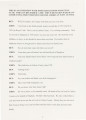
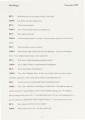
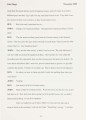
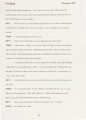
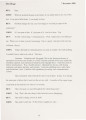
Show John Bleggi 7 December 2000 JOHN: Utah. BEN: You think D plust ix probably? I mean that s what it sounds lik . JOHN: That's what it sounds like. And see, the first under fire was on July 1 Olh and that's when we were in about twelve miles in a little town called LaMeauffe. BEN: What do you remember of Utah Beach? What memories do you have of that, besides the water. [laughing] JOHN: What I can remember is water and a cliff over there, and there were all kinds of these sharp objects sticking up out of the water, you know, to catch these landing crafts if they decided to stray, and I could see the pillboxes up on top of some of these cliffs, but there was no fire coming from them. We weren't afraid of that. And there were MPs along there, and we knew that if there were MPs it was partly safe. So we got in, and after we started into this little town a guard came running out and asked me what outfit, and I told him, because you have no markings on your jeeps or nothing. I told him and he said, "Over in that apple orchard. Find you some holes and dig in." So we went over there. BEN: Were there a lot of vehicles around? JOHN: Off in the distance there was. We could see A Corps headquarters was set up back in the woods, and we were in this apple orchard. The first thing I did was roll into a fox hole that was already dug, and come out of it in a hurry. There was a German soldier in there that had been killed several days before that, and the stench was so bad you couldn't stand it. So I went crawling over to another hole. Got into it. The next morning we woke up and there were dead Germans all around in this 33 |
| Reference URL |
https://collections.lib.utah.edu/ark:/87278/s6s201rm/1024814 |