| Title |
John Bleggi, Mapleton, Utah: an interview by Benjamin Bahlmann, 7 December 2000: Saving the legacy tape no. 379 and 380 |
| Alternative Title |
John Bleggi, Saving the legacy: an oral history of Utah's World War II veterans, ACCN 2070, American West Center, University of Utah |
| Creator |
Bleggi, John, 1921-2007 |
| Contributor |
Bahlmann, Benjamin; University of Utah. American West Center |
| Publisher |
Digitized by J. Willard Marriott Library, University of Utah |
| Date |
2000-12-07 |
| Date Digital |
2015-09-16 |
| Access Rights |
I acknowledge and agree that all information I obtain as a result of accessing any oral history provided by the University of Utah's Marriott Library shall be used only for historical or scholarly or academic research purposes, and not for commercial purposes. I understand that any other use of the materials is not authorized by the University of Utah and may exceed the scope of permission granted to the University of Utah by the interviewer or interviewee. I may request permission for other uses, in writing to Special Collections at the Marriott Library, which the University of Utah may choose grant, in its sole discretion. I agree to defend, indemnify and hold the University of Utah and its Marriott Library harmless for and against any actions or claims that relate to my improper use of materials provided by the University of Utah. |
| Spatial Coverage |
England; France; Germany; Mapleton, Utah County, Utah, United States |
| Subject |
Bleggi, John, 1921-2007--Interviews; World War, 1939-1945--Personal narratives, American; Veterans--Utah--Biography; World War, 1939-1945--Military operations, American; World War, 1939-1945--Campaigns--Europe, Northern--Personal narratives, American |
| Keywords |
Normandy; Patton |
| Description |
Transcript (92 pages) of an interview by Benjamin Bahlmann with John Bleggi on December 7, 2000. This is from tape numbers 379 and 380 in the "Saving the Legacy Oral History Project |
| Collection Number and Name |
Accn2070, Saving the Legacy oral history project, 2001-2010 |
| Abstract |
Bleggi (b. 1921) was the son of Italian immigrants. He recalls his childhood in Mapleton, Utah. He was drafted into the army in September 1942 and took basic training at Camp Kohler, California, before attending Signal Corps training at Camp McCain, Mississippi. He was assigned to the 33rd Construction Battalion and left New York on the H.M.S. Queen in February 1944. He spent five months in Wrexham, England, practicing for the invasion of France. He landed on Utah Beach on D-Day plus six. His unit supported A Corps and General Patton's Fourth Army through Europe, then trained in France to go to Japan. Bleggi was on a troop ship on its way to Japan when the war ended. He was discharged in December 1945 at Fort Douglas, Utah. 92 pages. |
| Type |
Text |
| Genre |
oral histories (literary works) |
| Format |
application/pdf |
| Extent |
92 pages |
| Language |
eng |
| Rights |
 |
| Scanning Technician |
Mazi Rakhsha |
| Conversion Specifications |
Original scanned with Kirtas 2400 and saved as 400 ppi uncompressed TIFF. PDF generated by Adobe Acrobat Pro X for CONTENTdm display |
| ARK |
ark:/87278/s6s201rm |
| Topic |
Personal narratives--American; Veterans; World War (1939-1945) |
| Setname |
uum_slohp |
| ID |
1024874 |
| Reference URL |
https://collections.lib.utah.edu/ark:/87278/s6s201rm |
| Title |
Page 32 |
| Format |
application/pdf |
| Setname |
uum_slohp |
| ID |
1024811 |
| OCR Text |
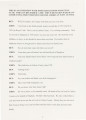
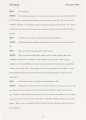
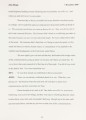
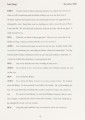
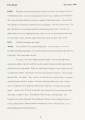
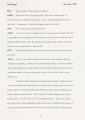
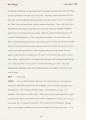
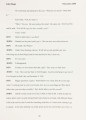
Show John Bleggi 7 D cemb r 2 0 invasion is going to start and we're moving you south. Wh n y u g aero w can't tell you, but we are moving south." Two days later we moved down to uthampt n. That was the primary port for holding, the staging area. We all went to church. I was Catholic at the time. I went to church and somebody said, 'You better go into confession." And I said, "I can't." I said, "I'll be on my knees the rest of the war." [laughing] When that Father got through with me, boy, I'll tell you he give me a blessing all right. You were worried. You told the truth. You didn't know whether you were coming back or not, and they told you that fifty percent weren't coming back, if they went in on the original invasion, and I can believe it. Because, when we went in, like I say, that day is still-oh, he keeps telling me that it's D-Day plus Six and I thought it was sixteen. I read these books and they say, of course, I was on detach service and this probably is telling me what our outfit did. BEN: If you saw bodies actually, that would be more congruent with probably the D-Day plus Six, don't you think? JOHN: Oh, bodies were still all over. This jeep driver was coming and he says, "What's that?" He says, "A duffel bag." And it was a man on his stomach floating, and he pushed him out of the way. You were told once you went in you didn't look back. You didn't. You took care of yourself first. BEN: So when you went were there a lot of boats still going out there with you? JOHN: Oh, there were boats everywhere. There were ships around there. We got in their with our liberty ship to where they anchored about ten o'clock at night. Bed 30 |
| Reference URL |
https://collections.lib.utah.edu/ark:/87278/s6s201rm/1024811 |