| Title |
Elman Ellsworth, Salt Lake City, Utah: an interview by Winston P. Erickson, May 30, 2000: Saving the legacy tape no. 28 |
| Alternative Title |
Elman Ellsworth, Saving the legacy: an oral history of Utah's World War II veterans, ACCN 2070, American West Center, University of Utah |
| Creator |
Ellsworth, Elman K., 1918-2009 |
| Contributor |
Erickson, Winston P., 1943-; University of Utah. American West Center |
| Publisher |
Digitized by J. Willard Marriott Library, University of Utah |
| Date |
2000-05-30 |
| Date Digital |
2015-09-16 |
| Access Rights |
I acknowledge and agree that all information I obtain as a result of accessing any oral history provided by the University of Utah's Marriott Library shall be used only for historical or scholarly or academic research purposes, and not for commercial purposes. I understand that any other use of the materials is not authorized by the University of Utah and may exceed the scope of permission granted to the University of Utah by the interviewer or interviewee. I may request permission for other uses, in writing to Special Collections at the Marriott Library, which the University of Utah may choose grant, in its sole discretion. I agree to defend, indemnify and hold the University of Utah and its Marriott Library harmless for and against any actions or claims that relate to my improper use of materials provided by the University of Utah. |
| Spatial Coverage |
France; Germany; Japan; Korea; Vietnam |
| Subject |
Ellsworth, Elman K., 1918-2009--Interviews; World War, 1939-1945--Personal narratives, American; Veterans--Utah--Biography; World War, 1939-1945--Artillery operations, American; World War, 1939-1945--Campaigns--Europe, Northern--Personal narratives, American; World War, 1939-1945--Campaigns--France--Normandy--Personal narratives, American |
| Keywords |
Utah National Guard; Utah Beach; Dachau; Occupied Germany; Occupied Japan |
| Description |
Transcript (37 pages) of an interview by Winston P. Erickson with Elman Ellsworth on May 30, 2000. This is from tape number 28 in the "Saving the Legacy Oral History Project |
| Collection Number and Name |
Accn2070, Saving the Legacy oral history project, 2001-2010 |
| Abstract |
Ellsworth (b. 1918) entered the National Guard and was commissioned as a second lieutenant in 1940. He trained as an artillery officer and became a communications officer in an artillery battalion. Initially scheduled to go to the Philippines following Pearl Harbor, his unit ended up in England, landing on Utah Beach in July of 1944. Ellsworth recalls the move through France and Germany, entering Dachau, serving in the occupation forces in Europe, and being discharged in 1945. Less than a year later he rejoined the army and was sent to Japan, where he remained for four years. He also served in Germany, Korea, and Vietnam, before returning to Utah and Fort Douglas. He retired in 1964 and was recruited by a reserve unit, serving in various places, including Israel. He retired from the reserve in 1983.37 pages. |
| Type |
Text |
| Genre |
oral histories (literary works) |
| Format |
application/pdf |
| Extent |
;37 pages |
| Language |
eng |
| Rights |
 |
| Scanning Technician |
Mazi Rakhsha |
| Conversion Specifications |
Original scanned with Kirtas 2400 and saved as 400 ppi uncompressed TIFF. PDF generated by Adobe Acrobat Pro X for CONTENTdm display |
| ARK |
ark:/87278/s60021cm |
| Topic |
Personal narratives--American; Veterans; World War (1939-1945); Military operations, Artillery--American |
| Setname |
uum_slohp |
| ID |
1023187 |
| Reference URL |
https://collections.lib.utah.edu/ark:/87278/s60021cm |
| Title |
Page 38 |
| Format |
application/pdf |
| Setname |
uum_slohp |
| ID |
1023185 |
| OCR Text |
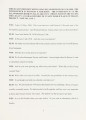
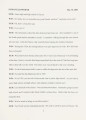
Show LM LL W T Wh n w wer in Alt for a whil th y nt in num r r u int th buildings that we were u ing were hit. ur tir tr d r In t n ur vehicles. Some of our guns were destroyed-not destroy d but dam g d- and h d t repaired. Of course, you never knew about small arms fire. WIN: What about aircraft? Did the Germans have enough air force left when you w r v r there to cause any concern? ELM: Well in Normandy, the German fighters came over. When we were in Verdun th German fighters came over and bombed us. Eventually the U.S. Army Air Force controlled the skies. We saw what happens when the air force-that the Falaise Gap thing-we went through there after. And miles and miles of German force destruction was evident. Vehicles, horses, equipment. So we were believers in the air force. WIN: Yeah, it turned the tide of a lot of battles, didn't it? ELM: We did see MIG fighters, or jet fighters, later on in the war, but at a distance. You heard them when you looked over here. But finally, you learned to look over here. WIN: Oh, you mean the Messerschmitt 262. Messerschmitt ELM: Well, whichever one it was. WIN: Yeah, it was the Messerschmitt 262, I think, that was the only jet that was flying. ELM: Hitler put those in place instead of the V-Is and V-2s. It might have been a longer war. WIN: yeah, there were a lot of those mistakes made. Well, I appreciate you talking to us for this program. Anything else you want to say? 36 |
| Reference URL |
https://collections.lib.utah.edu/ark:/87278/s60021cm/1023185 |