| Title |
Olive O'Mara, West Valley City, Utah: an interview by Becky B. Lloyd, June 22, 2002: Saving the legacy tape no. 569 and 570 |
| Alternative Title |
Olive O'Mara, Saving the legacy: an oral history of Utah's World War II veterans, ACCN 2070, American West Center, University of Utah |
| Creator |
O'Mara, Olive, 1920- |
| Contributor |
Lloyd, Becky B.; University of Utah. American West Center |
| Publisher |
Digitized by J. Willard Marriott Library, University of Utah |
| Date |
2002-06-22 |
| Date Digital |
2015-09-16 |
| Access Rights |
I acknowledge and agree that all information I obtain as a result of accessing any oral history provided by the University of Utah's Marriott Library shall be used only for historical or scholarly or academic research purposes, and not for commercial purposes. I understand that any other use of the materials is not authorized by the University of Utah and may exceed the scope of permission granted to the University of Utah by the interviewer or interviewee. I may request permission for other uses, in writing to Special Collections at the Marriott Library, which the University of Utah may choose grant, in its sole discretion. I agree to defend, indemnify and hold the University of Utah and its Marriott Library harmless for and against any actions or claims that relate to my improper use of materials provided by the University of Utah. |
| Spatial Coverage |
New York City, New York, United States |
| Subject |
O'Mara, Olive, 1920- --Interviews; World War, 1939-1945--Personal narratives, American; Veterans--Utah--Biography; World War, 1939-1945--Women--United States--Biography; United States--Naval Reserve--Women's Reserve |
| Keywords |
WAVEs |
| Description |
Transcript (47 pages) of an interview by Becky B. Lloyd with Olive O'Mara on June 22, 2002. This is from tape numbers 569 and 570 in the "Saving the Legacy Oral History Project |
| Collection Number and Name |
Accn2070, Saving the Legacy oral history project, 2001-2010 |
| Abstract |
O'Mara (b. 1920) recalls growing up in a small mining town in Pennsylvania during the Depression. She enlisted in the WAVES, was trained as an electrician's mate, and served in New York. 47 pages. |
| Type |
Text |
| Genre |
oral histories (literary works) |
| Format |
application/pdf |
| Extent |
31 pages |
| Language |
eng |
| Rights |
 |
| Scanning Technician |
Mazi Rakhsha |
| Conversion Specifications |
Original scanned with Kirtas 2400 and saved as 400 ppi uncompressed TIFF. PDF generated by Adobe Acrobat Pro X for CONTENTdm display |
| ARK |
ark:/87278/s6ww9gxv |
| Topic |
Personal narratives--American; Veterans; World War (1939-1945); Women in war; United States. Naval Reserve. Women's Reserve |
| Setname |
uum_slohp |
| ID |
1022905 |
| Reference URL |
https://collections.lib.utah.edu/ark:/87278/s6ww9gxv |
| Title |
Page 12 |
| Format |
application/pdf |
| Setname |
uum_slohp |
| ID |
1022868 |
| OCR Text |
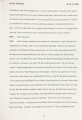
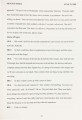
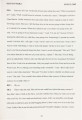
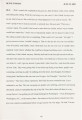
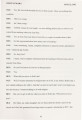
Show OLIVE O'MARA 22 2 2 Buick and all that sort of thing. Yet the Depression hit him terribl . Y u ur y u ant t hear all this? BEC: Yes. OLI: I told you I have a memory (laughs). BEC: That's great. It's wonderful. OLI: He lost, you know, all this money, because he gave credit to people. He had this little store at the bottom-not a little store; it was a big one. A&P they called it, on this side and another rental store down at the bottom, then these apartments at the top. And he had the store on the left, but he gave credit to people right and left. I mean, what are you going to do, if people are your own neighbors. You don't let them go hungry. Nobody tried to cheat him. They just didn't have it. And so he lost his money and I remember seeing him sit an awful lot quietly, right across the street. Granddad developed a cancer of the lymph nodes; they call it Hodgkin's Disease. The only member of his entire family who ever got it. I think it was depression; it was a loss of everything. Grandmother, on the other hand, in order to keep the building and to keep us all financially with our heads above water, used the basement of the building-and it was a big basement-to sell second-hand furniture. She bought cheaply, second-hand furniture and sold it. Well, that caused Granddad and his sons to just wring their hands. They were humiliated beyond belief that Grandma would do this. But Grandma was very practical and said, "There's no need for blacksmiths anymore. What do you know how to do? The store is gone. This is what I can do." But I remember and I'm so ashamed of-I love my father-but I'm ashamed that he was so resentful that his mother was running a second-hand store. Well, that she was working at all. But that's how the Depression affected us in one small way. 11 |
| Reference URL |
https://collections.lib.utah.edu/ark:/87278/s6ww9gxv/1022868 |