| Title |
Olive O'Mara, West Valley City, Utah: an interview by Becky B. Lloyd, June 22, 2002: Saving the legacy tape no. 569 and 570 |
| Alternative Title |
Olive O'Mara, Saving the legacy: an oral history of Utah's World War II veterans, ACCN 2070, American West Center, University of Utah |
| Creator |
O'Mara, Olive, 1920- |
| Contributor |
Lloyd, Becky B.; University of Utah. American West Center |
| Publisher |
Digitized by J. Willard Marriott Library, University of Utah |
| Date |
2002-06-22 |
| Date Digital |
2015-09-16 |
| Access Rights |
I acknowledge and agree that all information I obtain as a result of accessing any oral history provided by the University of Utah's Marriott Library shall be used only for historical or scholarly or academic research purposes, and not for commercial purposes. I understand that any other use of the materials is not authorized by the University of Utah and may exceed the scope of permission granted to the University of Utah by the interviewer or interviewee. I may request permission for other uses, in writing to Special Collections at the Marriott Library, which the University of Utah may choose grant, in its sole discretion. I agree to defend, indemnify and hold the University of Utah and its Marriott Library harmless for and against any actions or claims that relate to my improper use of materials provided by the University of Utah. |
| Spatial Coverage |
New York City, New York, United States |
| Subject |
O'Mara, Olive, 1920- --Interviews; World War, 1939-1945--Personal narratives, American; Veterans--Utah--Biography; World War, 1939-1945--Women--United States--Biography; United States--Naval Reserve--Women's Reserve |
| Keywords |
WAVEs |
| Description |
Transcript (47 pages) of an interview by Becky B. Lloyd with Olive O'Mara on June 22, 2002. This is from tape numbers 569 and 570 in the "Saving the Legacy Oral History Project |
| Collection Number and Name |
Accn2070, Saving the Legacy oral history project, 2001-2010 |
| Abstract |
O'Mara (b. 1920) recalls growing up in a small mining town in Pennsylvania during the Depression. She enlisted in the WAVES, was trained as an electrician's mate, and served in New York. 47 pages. |
| Type |
Text |
| Genre |
oral histories (literary works) |
| Format |
application/pdf |
| Extent |
31 pages |
| Language |
eng |
| Rights |
 |
| Scanning Technician |
Mazi Rakhsha |
| Conversion Specifications |
Original scanned with Kirtas 2400 and saved as 400 ppi uncompressed TIFF. PDF generated by Adobe Acrobat Pro X for CONTENTdm display |
| ARK |
ark:/87278/s6ww9gxv |
| Topic |
Personal narratives--American; Veterans; World War (1939-1945); Women in war; United States. Naval Reserve. Women's Reserve |
| Setname |
uum_slohp |
| ID |
1022905 |
| Reference URL |
https://collections.lib.utah.edu/ark:/87278/s6ww9gxv |
| Title |
Page 11 |
| Format |
application/pdf |
| Setname |
uum_slohp |
| ID |
1022867 |
| OCR Text |
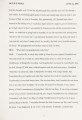
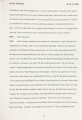
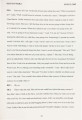
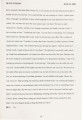
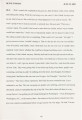
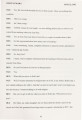
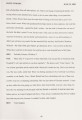
Show OLIVE O'MARA J 22 2 2 OLI: Yeah (laughs). It was an experience that doesn t happ n no . I think that, I wanted to become a doctor, although there were other thing I had a b nd toward . I remember I was excited about growing things in the yard watch them grow. And I u d to take- it makes me sick now- but I used to take the hens eggs and put them under the hen and every day break one to see how it developed. And I remember cutting up a snake to see what it was made of. I had this bend to be a doctor and to this day, I think the human body is one of the most intriguing things on earth. I respect it so much, it's hard to express. When you think of all the complications in one human body. To this day, I am thrilled with medicine. But the interaction of the hormones and the cells of the body, the body is, to me, the most intriguing thing I could ever conceive of. But I used to then want to know what's inside. BEC: How did it work? And what did it look like? OLI: Yes. And, of course, in those days, don't forget, if you wanted chicken for Sunday, you killed your chicken. Now Dad couldn't kill a chicken; Dad couldn't kill a flea (laughs). But Mother did. She didn't worry about that. During the Depression, we would go on Sundays to the various houses of Mother's four sisters. One Sunday they would have a meal and we would all eat there and then the other Sundays we would go to their houses and eat there. It seemed to work. During the main part of the Depression, a lot of people in Uniontown and all over the country killed themselves. They couldn't deal with this. They had had money, or thought they did. I remember the Playfords father in Uniontown killed his whole family and himself and his wife. A lot of people jumped out of windows and killed themselves in those days because of financial loss. Now, Granddad Osterwise was living high on the hog. He had this apartment building and a big 10 |
| Reference URL |
https://collections.lib.utah.edu/ark:/87278/s6ww9gxv/1022867 |