| Title |
Leslie Eric Teasdale, Sandy, Utah: an interview by Winston Erickson, August 16, 2001: Saving the legacy tape no. 285 and 286 |
| Alternative Title |
Leslie Teasdale, Saving the legacy: an oral history of Utah's World War II veterans, ACCN 2070, American West Center, University of Utah |
| Creator |
Teasdale, Les (Leslie Eric), 1920-2006 |
| Contributor |
Erickson, Winston P., 1943-; University of Utah. American West Center |
| Publisher |
Digitized by J. Willard Marriott Library, University of Utah |
| Date |
2001-08-16 |
| Date Digital |
2015-09-16 |
| Access Rights |
I acknowledge and agree that all information I obtain as a result of accessing any oral history provided by the University of Utah's Marriott Library shall be used only for historical or scholarly or academic research purposes, and not for commercial purposes. I understand that any other use of the materials is not authorized by the University of Utah and may exceed the scope of permission granted to the University of Utah by the interviewer or interviewee. I may request permission for other uses, in writing to Special Collections at the Marriott Library, which the University of Utah may choose grant, in its sole discretion. I agree to defend, indemnify and hold the University of Utah and its Marriott Library harmless for and against any actions or claims that relate to my improper use of materials provided by the University of Utah. |
| Spatial Coverage |
England, United Kingdom; Egypt; Italy; Germany |
| Subject |
Teasdale, Les (Leslie Eric), 1920-2006--Interviews; World War, 1939-1945--Personal narratives, British; Veterans--Utah--Biography; Prisoners of war--Great Britain; Prisoners of war--Italy; Prisoners of war--Germany |
| Keywords |
POWs |
| Description |
Transcript (55 pages) of an interview by Winston P. Erickson with Leslie Eric Teasdale on August 16, 2001. This is from tape numbers 285 and 286 in the "Saving the Legacy Oral History Project |
| Collection Number and Name |
Accn2070, Saving the Legacy oral history project, 2001-2010 |
| Abstract |
Leslie Teasdale (b. 1920) was born in a suburb of London. He recalls his boyhood and education prior to getting a job with a passenger liner. He was conscripted into the Royal Artillery Coastal Defense Regiment and later served in Egypt, where he was taken prisoner in June 1942. He was subsequently transferred to prisoner of war camps in Italy and Germany. His camp was liberated by the Americans in January of 1945. 55 pages. |
| Type |
Text |
| Genre |
oral histories (literary works) |
| Format |
application/pdf |
| Extent |
55 pages |
| Language |
eng |
| Rights |
 |
| Scanning Technician |
Mazi Rakhsha |
| Conversion Specifications |
Original scanned with Kirtas 2400 and saved as 400 ppi uncompressed TIFF. PDF generated by Adobe Acrobat Pro X for CONTENTdm display |
| ARK |
ark:/87278/s6q54nvb |
| Topic |
Personal narratives--British; Veterans; World War (1939-1945); Prisoners of war |
| Setname |
uum_slohp |
| ID |
1022828 |
| Reference URL |
https://collections.lib.utah.edu/ark:/87278/s6q54nvb |
| Title |
Page 29 |
| Format |
application/pdf |
| Setname |
uum_slohp |
| ID |
1022799 |
| OCR Text |
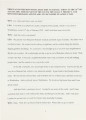
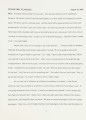
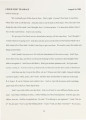
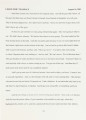
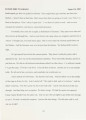
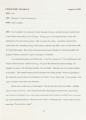
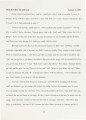
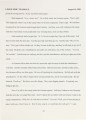
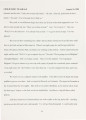
Show L LIE ERIC TEA DALE ugu t16,2001 gi v n the wrong answer. o he was back inside again. That happened. Now where am I? I m in Italy under the German regime. That s right. This happened when I was in the camp when we'd been recaptured. That's right. We had been recaptured by the Germans and brought into Latarina. And they were still working in the camp. And they were Italian work people that were working there; all in civilian clothes. And somebody had a bright idea. At 5 o'clock at night they'd go out of the camp. And they'd come back the next day. And this guy had seen them go out. And he said, "Oh, it's too easy." He's got civilian clothes on. So they'd come in this day, and they're all ready to go out of the camp. He picks out a wheelbarrow and walks out with them, one of the workers. "I'm out. I'm outside." And he kept on walking, and he's got this wheelbarrow, and he got right out of the camp. A German officer had seen him this particular night because he had this wheelbarrow with him. And the German officer had noticed him. Half an hour later, and three miles away, this German officer saw him again. He was still pushing the wheelbarrow. He felt safe with the wheelbarrow. So the officer stopped him and questioned him, and he was back inside. We all cheered, "Good try." But those were the things. They were digging tunnels. Everybody was trying to get out. Now, I'm still in the camp under the German regime. And they'd taken us into Germany. And the next day we caught this train. And I'd taken this accordion with me because I said to the camp commandant, "What do I do with this accordion?" He said, "Well, you've been playing it, take it with you. Don't leave it. They'll only scrap it, or somebody else will get it." I said, 27 |
| Reference URL |
https://collections.lib.utah.edu/ark:/87278/s6q54nvb/1022799 |