| Title |
Zenaida Laroco Silvey, Salt Lake City, Utah: an interview by Becky B. Lloyd, December 11, 2004: Saving the legacy tape no. 718 |
| Alternative Title |
Zenaida Laroco Silvey, Saving the legacy: an oral history of Utah's World War II veterans, ACCN 2070, American West Center, University of Utah |
| Creator |
Silvey, Zenaida Laroco, 1921- |
| Contributor |
Lloyd, Becky B.; University of Utah. American West Center |
| Publisher |
Digitized by J. Willard Marriott Library, University of Utah |
| Date |
2004-12-11 |
| Date Digital |
2015-09-16 |
| Access Rights |
I acknowledge and agree that all information I obtain as a result of accessing any oral history provided by the University of Utah's Marriott Library shall be used only for historical or scholarly or academic research purposes, and not for commercial purposes. I understand that any other use of the materials is not authorized by the University of Utah and may exceed the scope of permission granted to the University of Utah by the interviewer or interviewee. I may request permission for other uses, in writing to Special Collections at the Marriott Library, which the University of Utah may choose grant, in its sole discretion. I agree to defend, indemnify and hold the University of Utah and its Marriott Library harmless for and against any actions or claims that relate to my improper use of materials provided by the University of Utah. |
| Spatial Coverage |
Philippines |
| Subject |
Silvey, Zenaida Laroco, 1921- --Interviews; World War, 1939-1945--Personal narratives, Filipino; World War, 1939-1945--Philippines; World War, 1939-1945--Women--Philippines--Biography |
| Description |
Transcript (26 pages) of an interview by Becky B. Lloyd with Zenaida Laroco Silvey, on December 11, 2004. This is from tape number 718 in the "Saving the Legacy Oral History Project |
| Collection Number and Name |
Accn2070, Saving the Legacy oral history project, 2001-2010 |
| Abstract |
Silvey (b. 1921) was born in Natividad, Pangasinan Province, Philippines. She was in high school when the Japanese invaded the Philippines. She recalls her next door neighbor, a barrio lieutenant, being tortured for information. She joined the Luzon Guerilla Armed Forces and served for about five years. After the war she came to the United States and attended the University of Utah. 26 pages. |
| Type |
Text |
| Genre |
oral histories (literary works) |
| Format |
application/pdf |
| Extent |
26 pages |
| Language |
eng |
| Rights |
 |
| Scanning Technician |
Mazi Rakhsha |
| Conversion Specifications |
Original scanned with Kirtas 2400 and saved as 400 ppi uncompressed TIFF. PDF generated by Adobe Acrobat Pro X for CONTENTdm display |
| ARK |
ark:/87278/s6st9p2h |
| Topic |
Personal narratives--Filipino; World War (1939-1945) |
| Setname |
uum_slohp |
| ID |
1022038 |
| Reference URL |
https://collections.lib.utah.edu/ark:/87278/s6st9p2h |
| Title |
Page 15 |
| Format |
application/pdf |
| Setname |
uum_slohp |
| ID |
1022025 |
| OCR Text |
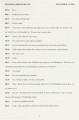
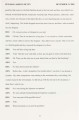
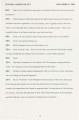
Show Z NAIDA LAROCO IL VEY D MB R 11 2004 ZEN: Yeah. They came and would even give us some food and donati n and thing like that. As I was saying when they saw me I was dressed in old woman attir b cau if you dressed yourself different from that they might rape you or harm you or something. BEC: Oh, I see. ZEN: But, he said, "You look like my sister!" BEC: Is that right? ZEN: That's what one of the Japanese told me, I mean pointed at me. He was laughing. And then they became really different and they gave us food. BEC: Well, that was nice. That worked out nicely for you. ZEN: Yeah, they'd come up not too far from us in open fields and during lunch time and they shared the food. BEC: Wow. Oh, that is something-really interesting. ZEN: Yeah, it is. BEC: So did your father, did he practice law during the war? What did he do? ZEN: No. Before that. BEC: Before that. So during the war he was just working to survive? Just growing food and ... there wasn't a lot to do work-wise. But your family survived well enough? ZEN: My family survived well because, I think, everybody shared whatever they had, we shared each other's things, like how they do this ... we raised chickens. We raised pigs. We raised goats a lot and we would barter. We'd share with our neighbors, maybe a kilo of this, a pound of this, and something. And we didn't go to the town to the marketplace, because we didn't know what might happen. We were scared. It could be peaceful, but it could be that something would happen. That fear was there. 14 |
| Reference URL |
https://collections.lib.utah.edu/ark:/87278/s6st9p2h/1022025 |