| Title |
Ethel Nielson, Manti, Utah: an interview by Becky B. Lloyd, August 16, 2004: Saving the legacy tape no. 699 |
| Alternative Title |
Ethel Nielson, Saving the legacy: an oral history of Utah's World War II veterans, ACCN 2070, American West Center, University of Utah |
| Creator |
Nielson, Ethel, 1921-2015 |
| Contributor |
Lloyd, Becky B.; University of Utah. American West Center |
| Publisher |
Digitized by J. Willard Marriott Library, University of Utah |
| Date |
2004-08-16 |
| Date Digital |
2015-09-16 |
| Access Rights |
I acknowledge and agree that all information I obtain as a result of accessing any oral history provided by the University of Utah's Marriott Library shall be used only for historical or scholarly or academic research purposes, and not for commercial purposes. I understand that any other use of the materials is not authorized by the University of Utah and may exceed the scope of permission granted to the University of Utah by the interviewer or interviewee. I may request permission for other uses, in writing to Special Collections at the Marriott Library, which the University of Utah may choose grant, in its sole discretion. I agree to defend, indemnify and hold the University of Utah and its Marriott Library harmless for and against any actions or claims that relate to my improper use of materials provided by the University of Utah. |
| Spatial Coverage |
Ephraim, Sanpete County, Utah, United States; Manti, Sanpete County, Utah, United States |
| Subject |
Nielson, Ethel, 1921-2015--Interviews; World War, 1939-1945--Personal narratives, American; World War, 1939-1945--War work--United States; World War, 1939-1945--Women--United States--Biography |
| Keywords |
Parachute factory |
| Description |
Transcript (34 pages) of an interview by Becky B. Lloyd with Ethel Nielson on August 16, 2004. This is from tape number 699 in the "Saving the Legacy Oral History Project |
| Collection Number and Name |
Accn2070, Saving the Legacy oral history project, 2001-2010 |
| Abstract |
Ethel Nielseon (b. 1921) describes her childhood in Ephraim, Utah, and working at a parachute factory in Manti, Utah. 34 pages. |
| Type |
Text |
| Genre |
oral histories (literary works) |
| Format |
application/pdf |
| Extent |
34 pages |
| Language |
eng |
| Rights |
 |
| Scanning Technician |
Mazi Rakhsha |
| Conversion Specifications |
Original scanned with Kirtas 2400 and saved as 400 ppi uncompressed TIFF. PDF generated by Adobe Acrobat Pro X for CONTENTdm display |
| ARK |
ark:/87278/s6961gt9 |
| Topic |
Personal narratives--American; Veterans; World War (1939-1945); Women in war; War work |
| Setname |
uum_slohp |
| ID |
1021977 |
| Reference URL |
https://collections.lib.utah.edu/ark:/87278/s6961gt9 |
| Title |
Page 12 |
| Format |
application/pdf |
| Setname |
uum_slohp |
| ID |
1021953 |
| OCR Text |
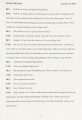
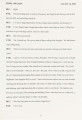
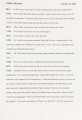
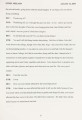
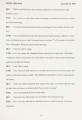
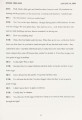
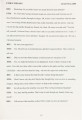
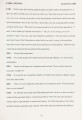
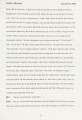
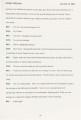
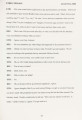
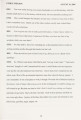
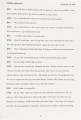
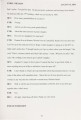
Show ETHEL NIEL ON 1 2 04 ETH: Well I had a little girl and I had her when I went to w rk. My hu band wa fanning and he got polio, so that wasn't fun. I worked at the hatchery. I candl d gg . BEC: Oh, the hatchery. And you candled eggs? ETH: Yes. Yes, at the Apex Hatchery. Morgan Dyreng had 10,000 chickens. o there was lots of eggs. We were pretty busy. They had four rows-well, before that they only had two little buildings out here, then he extended it to the big one. BEC: How was candling done? ETH: Okay, they had lights under the trays. When they go by you-at the new factory there was four lines. So you had to watch and grab off any that had small cracks-they called those chex-and then with blood spots, I'd take those off. And if they was really funny shaped, they went off because they couldn't be double A. If you buy an egg, your best grade of eggs is medium. BEC: Is that right? Why is that? ETH: Because they're younger chickens and their shells are harder and they're just better eggs. BEC: Gee, I always buy the jumbo. I've got the old hens, then. ETH: It's old hens that do that. You have bigger whites but they're not as good a grade of egg. BEC: I didn't know that. I'm glad you told me. ETH: Usually they're cheaper. BEC: Yes, they are. So the eggs would move along on a conveyor belt, and just come through the light? 11 |
| Reference URL |
https://collections.lib.utah.edu/ark:/87278/s6961gt9/1021953 |