| Title |
Harold D. Collipriest: an interview by Winston P. Erickson, June 10, 2000: Saving the legacy tape no. 61 |
| Alternative Title |
Harold D. Collipriest, Saving the legacy: an oral history of Utah's World War II veterans, ACCN 2070, American West Center, University of Utah |
| Creator |
Collipriest, Harold D., 1926-2010 |
| Contributor |
Erickson, Winston P., 1943-; University of Utah. American West Center |
| Publisher |
Digitized by J. Willard Marriott Library, University of Utah |
| Date |
2000-06-10 |
| Date Digital |
2015-09-16 |
| Access Rights |
I acknowledge and agree that all information I obtain as a result of accessing any oral history provided by the University of Utah's Marriott Library shall be used only for historical or scholarly or academic research purposes, and not for commercial purposes. I understand that any other use of the materials is not authorized by the University of Utah and may exceed the scope of permission granted to the University of Utah by the interviewer or interviewee. I may request permission for other uses, in writing to Special Collections at the Marriott Library, which the University of Utah may choose grant, in its sole discretion. I agree to defend, indemnify and hold the University of Utah and its Marriott Library harmless for and against any actions or claims that relate to my improper use of materials provided by the University of Utah. |
| Spatial Coverage |
Manila, Philippines; Salt Lake City, Salt Lake County, Utah, United States |
| Subject |
Collipriest, Harold D., 1926-2010--Interviews; World War, 1939-1945--Personal narratives, American; Veterans--Utah--Biography; World War, 1939-1945--Campaigns--Pacific Area--Personal narratives, American; World War, 1939-1945--Philippines; MacArthur, Douglas, 1880-1964 |
| Keywords |
Air Force Reserve; General Frayne Baker |
| Description |
Transcript (39 pages) of an interview by Winston P. Erickson with Harold D. Collipriest on June 10, 2000. This is from tape number 61 in the "Saving the Legacy Oral History Project |
| Collection Number and Name |
Accn2070, Saving the Legacy oral history project, 2001-2010 |
| Abstract |
Collipriest (b. 1926) was raised in Salt Lake City by his widowed mother. He had an older brother who was a pilot in the Navy. Collipriest was drafted in 1944 and sent to Manila. Shortly after he arrived there, his brother was killed in action. As the last surviving son of a family, he was no longer eligible for combat duty and so remained in Manila as a member of General Baker's staff. Collipriest's godfather was an aide to General MacArthur, and he relates some personal anecdotes about the General. After the war, Collipriest stayed in the Air Force Reserve and retired as a Colonel 39 pages. |
| Type |
Text |
| Genre |
oral histories (literary works) |
| Format |
application/pdf |
| Extent |
39 pages |
| Language |
eng |
| Rights |
 |
| Scanning Technician |
Mazi Rakhsha |
| Conversion Specifications |
Original scanned with Kirtas 2400 and saved as 400 ppi uncompressed TIFF. PDF generated by Adobe Acrobat Pro X for CONTENTdm display |
| ARK |
ark:/87278/s64q9t61 |
| Topic |
Personal narratives--American; Veterans; World War (1939-1945); MacArthur, Douglas, 1880-1964 |
| Setname |
uum_slohp |
| ID |
1021806 |
| Reference URL |
https://collections.lib.utah.edu/ark:/87278/s64q9t61 |
| Title |
Page 20 |
| Format |
application/pdf |
| Setname |
uum_slohp |
| ID |
1021782 |
| OCR Text |
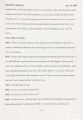
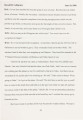
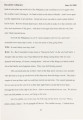
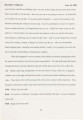
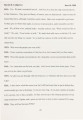
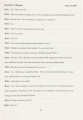
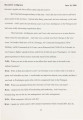
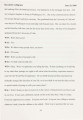
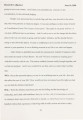
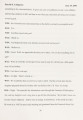
Show Harold D. Colliprie t Jun 10 2 0 fireworks and so forth and that was such a spectacular event that 3 v ry n w and celebrating into the night. So then they started making the arrangements for the surrender to be signed on the battleship Missouri, but my uncle became very ill and they couldn't treat him medically in the Pacific. So they flew him back to the United States for medical purposes and he never returned to the Pacific. He had been through nearly the whole war and missed the surrender. So that was very hard on him, but the reasons were obvious. Manila had become a huge staging area for the invasion of Japan. Every nook and cranny of Manila, and the surrounding area, was filled with equipment. To this day I am stunned by what they had. You could literally drive for miles and miles on a road, and three, four, five, sometimes six deep on either side of the road would be various types of equipment, either tanks, or radar units, or weapons carriers and so forth- just an unlimited amount of equipment ready for the jump off. This was really a staging area for the invasion. And then the A-bomb was dropped on Hiroshima. WIN: Did you have any notice, or rumor, or anything preceding the dropping of the A-bomb, or was that just something out of the blue? HAL: No. Later, of course, rumors were rampant of what this weapon was. I don't believe we even called it an A-bomb at the time. It was just this-I remember the comment being made that, "There is a new weapon that is so powerful." And then it was described as a tiny little piece you could place in an ashtray that would blow up a building or something- trying to give some kind of credence to what this huge secret weapon was. 18 |
| Reference URL |
https://collections.lib.utah.edu/ark:/87278/s64q9t61/1021782 |