| Title |
Robert Cope, Salt Lake City, Utah: an interview by Joel Calderon, [July 31, 2001]: Saving the legacy tape no. 278 |
| Alternative Title |
Robert L. Cope, Saving the legacy: an oral history of Utah's World War II veterans, ACCN 2070, American West Center, University of Utah |
| Creator |
Cope, Robert L., 1918-2002 |
| Contributor |
Calderon, Joel C.; University of Utah. American West Center |
| Publisher |
Digitized by J. Willard Marriott Library, University of Utah |
| Date |
2001-07-31 |
| Date Digital |
2015-09-16 |
| Access Rights |
I acknowledge and agree that all information I obtain as a result of accessing any oral history provided by the University of Utah's Marriott Library shall be used only for historical or scholarly or academic research purposes, and not for commercial purposes. I understand that any other use of the materials is not authorized by the University of Utah and may exceed the scope of permission granted to the University of Utah by the interviewer or interviewee. I may request permission for other uses, in writing to Special Collections at the Marriott Library, which the University of Utah may choose grant, in its sole discretion. I agree to defend, indemnify and hold the University of Utah and its Marriott Library harmless for and against any actions or claims that relate to my improper use of materials provided by the University of Utah. |
| Spatial Coverage |
Florida; Montana |
| Subject |
Cope, Robert L., 1918-2002--Interviews; World War, 1939-1945--Personal narratives, American; Veterans--Utah--Biography; World War, 1939-1945--Aerial operations, American; Flight training |
| Keywords |
Army Flight Service; Flight trainers |
| Description |
Transcript (81 pages) of an interview by Joel C. Calderon with Robert L. Cope on July 31, 2001. This is from tape number 278 in the "Saving the Legacy Oral History Project |
| Collection Number and Name |
Accn2070, Saving the Legacy oral history project, 2001-2010 |
| Abstract |
Cope (b. 1918) joined the Army Air Corps shortly after Pearl Harbor. Although he had a pilot's license, he was not trained as a military pilot because he couldn't pass the pressure chamber test. He spent the war training pilots and in the Army Flight Service, giving weather briefings and managing field traffic. 21 pages. |
| Type |
Text |
| Genre |
oral histories (literary works) |
| Format |
application/pdf |
| Extent |
81 pages |
| Language |
eng |
| Rights |
 |
| Scanning Technician |
Mazi Rakhsha |
| Conversion Specifications |
Original scanned with Kirtas 2400 and saved as 400 ppi uncompressed TIFF. PDF generated by Adobe Acrobat Pro X for CONTENTdm display |
| ARK |
ark:/87278/s6w68k15 |
| Topic |
Personal narratives--American; Veterans; World War (1939-1945); Military operations, Aerial--American; Flight training |
| Setname |
uum_slohp |
| ID |
1021320 |
| Reference URL |
https://collections.lib.utah.edu/ark:/87278/s6w68k15 |
| Title |
Page 18 |
| Format |
application/pdf |
| Setname |
uum_slohp |
| ID |
1021314 |
| OCR Text |
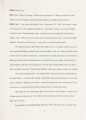
Show ROBERT L. COPE JUL 31 2001 Another interesting thing that happened at that time: gasoline was rationed. Wh n we were in New York, we bought us a car- after I got out of OCS I could take my wifi with me. I couldn't at OCS, we couldn't have anybody stay with us or anything. But when I got to New York, we bought us a car. And then, when I was transferred to Montana, then the problem came of- how are you going to get gas, because you had to have ration stamps to get gas. WIFE: They could get him to Montana, but ... ROB: We had orders to go someplace supposing- from New York to Montana- then they would issue you what they called "gas ration stamps," and then you could buy gas to make the trip. So we got enough gas ration stamps to buy the gas to make the trip. And of course we'd have to pay for the gas, but the problem was the gas ration stamps. And when we bought the car, the front headlights were all blacked out, except for one tiny strip in the middle that let the light through. Everything was blacked out in New York. And the streets ofNew York was free of cars. You'd drive up and down the streets, and maybe you'd be the only car on the street. And that was kind of unusual for a place like New York. But that's what happened during the war. And when we got to Montana, we stayed there until Christmas time, and we decided that I'd like to go home for Christmas. So we came down to Utah. My wife was also from Utah- her folks were living in Smithfield, Utah, at the time. So we took the trip and went to Smithfield, and then down to Richfield, but we had to save up our ration stamps for gas. 16 |
| Reference URL |
https://collections.lib.utah.edu/ark:/87278/s6w68k15/1021314 |