| Title |
Robert Cope, Salt Lake City, Utah: an interview by Joel Calderon, [July 31, 2001]: Saving the legacy tape no. 278 |
| Alternative Title |
Robert L. Cope, Saving the legacy: an oral history of Utah's World War II veterans, ACCN 2070, American West Center, University of Utah |
| Creator |
Cope, Robert L., 1918-2002 |
| Contributor |
Calderon, Joel C.; University of Utah. American West Center |
| Publisher |
Digitized by J. Willard Marriott Library, University of Utah |
| Date |
2001-07-31 |
| Date Digital |
2015-09-16 |
| Access Rights |
I acknowledge and agree that all information I obtain as a result of accessing any oral history provided by the University of Utah's Marriott Library shall be used only for historical or scholarly or academic research purposes, and not for commercial purposes. I understand that any other use of the materials is not authorized by the University of Utah and may exceed the scope of permission granted to the University of Utah by the interviewer or interviewee. I may request permission for other uses, in writing to Special Collections at the Marriott Library, which the University of Utah may choose grant, in its sole discretion. I agree to defend, indemnify and hold the University of Utah and its Marriott Library harmless for and against any actions or claims that relate to my improper use of materials provided by the University of Utah. |
| Spatial Coverage |
Florida; Montana |
| Subject |
Cope, Robert L., 1918-2002--Interviews; World War, 1939-1945--Personal narratives, American; Veterans--Utah--Biography; World War, 1939-1945--Aerial operations, American; Flight training |
| Keywords |
Army Flight Service; Flight trainers |
| Description |
Transcript (81 pages) of an interview by Joel C. Calderon with Robert L. Cope on July 31, 2001. This is from tape number 278 in the "Saving the Legacy Oral History Project |
| Collection Number and Name |
Accn2070, Saving the Legacy oral history project, 2001-2010 |
| Abstract |
Cope (b. 1918) joined the Army Air Corps shortly after Pearl Harbor. Although he had a pilot's license, he was not trained as a military pilot because he couldn't pass the pressure chamber test. He spent the war training pilots and in the Army Flight Service, giving weather briefings and managing field traffic. 21 pages. |
| Type |
Text |
| Genre |
oral histories (literary works) |
| Format |
application/pdf |
| Extent |
81 pages |
| Language |
eng |
| Rights |
 |
| Scanning Technician |
Mazi Rakhsha |
| Conversion Specifications |
Original scanned with Kirtas 2400 and saved as 400 ppi uncompressed TIFF. PDF generated by Adobe Acrobat Pro X for CONTENTdm display |
| ARK |
ark:/87278/s6w68k15 |
| Topic |
Personal narratives--American; Veterans; World War (1939-1945); Military operations, Aerial--American; Flight training |
| Setname |
uum_slohp |
| ID |
1021320 |
| Reference URL |
https://collections.lib.utah.edu/ark:/87278/s6w68k15 |
| Title |
Page 7 |
| Format |
application/pdf |
| Setname |
uum_slohp |
| ID |
1021303 |
| OCR Text |
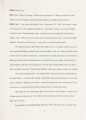
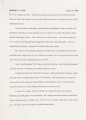
Show ROBERT L. COPE L 1 20 1 what they called "Gore Field. They had "Gore Field and th n they had th Air Base." And one of our jobs was - one of the jobs of Gore Field wa to s nd airplan over to Russia - over to Alaska and then across the Bering Sea and then over to Russia. The ones they sent is what they called "P-39," and then later they called them the P-63 which was a different version of what was approximately the same airplane. Well anyway, I stayed there until the war was almost over and just before the war ended they transferred me to Salt Lake City, and it was in Salt Lake City that I was discharged, after about four years in the service. I was in what the called the "Flight Service," the "Army Flight Service" all the time. And we would advise the pilots at weather conditions, and we would clear the pilots off from fields that didn't have any clearing authority. That's the way I spent most of my time. I might say that shortly after I left Florida, and OCS, I was sent to Winston-Salem North Carolina for training and also other work that we had to do there. And then, after that, it was to Flushing, New York. And after Flushing, New York, then it was to Great Falls, Montana. And Great Falls, Montana, is where I spent most of the time. I guess most of the interesting situations in the service in our family was experienced by my brothers -I'll have to look to see which ones went where. My oldest brother, George Denzel Cope, he got to be a dentist and he was in the Medical Corps. And he went over to - in the Pacific - and was in Japan for a considerable part of the time practicing dentistry. 5 |
| Reference URL |
https://collections.lib.utah.edu/ark:/87278/s6w68k15/1021303 |