| Title |
Nathan J. Fullmer, Salt Lake City, Utah: an interview by Luke Kelly, August 11, 2001: Saving the legacy tape no. 282 |
| Alternative Title |
Nathan J. Fullmer, Saving the legacy: an oral history of Utah's World War II veterans, ACCN 2070, American West Center, University of Utah |
| Creator |
Fullmer, Nathan J., 1925- |
| Contributor |
Kelly, Luke; University of Utah. American West Center |
| Publisher |
Digitized by J. Willard Marriott Library, University of Utah |
| Date |
2001-08-01 |
| Date Digital |
2015-09-16 |
| Access Rights |
I acknowledge and agree that all information I obtain as a result of accessing any oral history provided by the University of Utah's Marriott Library shall be used only for historical or scholarly or academic research purposes, and not for commercial purposes. I understand that any other use of the materials is not authorized by the University of Utah and may exceed the scope of permission granted to the University of Utah by the interviewer or interviewee. I may request permission for other uses, in writing to Special Collections at the Marriott Library, which the University of Utah may choose grant, in its sole discretion. I agree to defend, indemnify and hold the University of Utah and its Marriott Library harmless for and against any actions or claims that relate to my improper use of materials provided by the University of Utah. |
| Spatial Coverage |
Germany |
| Subject |
Fullmer, Nathan J., 1925- --Interviews; World War, 1939-1945--Personal narratives, American; Veterans--Utah--Biography; World War, 1939-1945--Military operations, American; World War, 1939-1945--Campaigns--Europe, Northern--Personal narratives, American |
| Keywords |
69th Infantry Division; Company C, 272nd Infantry Regiment; Battle Axe Regiment; Sharpshooters |
| Description |
Transcript (34 pages) of an interview by Luke Kelly with Nathan J. Fullmer on August 2, 2001. This is from tape number 282 in the "Saving the Legacy Oral History Project |
| Collection Number and Name |
Accn2070, Saving the Legacy oral history project, 2001-2010 |
| Abstract |
Fullmer (b. 1925) discusses serving with the 69th Infantry Division, in Company C of the 272nd Infantry Regiment (the so-called "Battle Axe" Regiment.") He was assigned to a 12-man rifle squad and classified as a sharpshooter. By the time he boarded a troop ship headed for England he was a PFC. He describes moving through Germany with his regiment, being on patrol, and meeting up with the Russian army at the Elbe River. After V-E day he was transferred into Ordnance, where he was responsible for captured enemy material. Fullmer returned home on the Santa Maria, and was discharged as a Staff Sergeant. 34 pages. |
| Type |
Text |
| Genre |
oral histories (literary works) |
| Format |
application/pdf |
| Extent |
34 pages |
| Language |
eng |
| Rights |
 |
| Scanning Technician |
Mazi Rakhsha |
| Conversion Specifications |
Original scanned with Kirtas 2400 and saved as 400 ppi uncompressed TIFF. PDF generated by Adobe Acrobat Pro X for CONTENTdm display |
| ARK |
ark:/87278/s66h6gn4 |
| Topic |
Personal narratives--American; Veterans; World War (1939-1945) |
| Setname |
uum_slohp |
| ID |
1021171 |
| Reference URL |
https://collections.lib.utah.edu/ark:/87278/s66h6gn4 |
| Title |
Page 21 |
| Format |
application/pdf |
| Setname |
uum_slohp |
| ID |
1021156 |
| OCR Text |
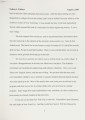
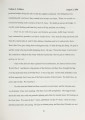
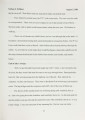
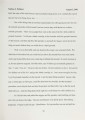
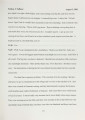
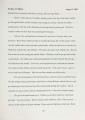
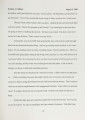
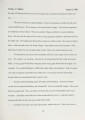
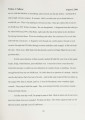
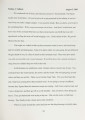
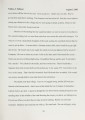
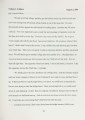
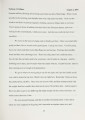
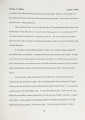
Show athan J. Fullmer t that had been covered up with dirt as storag lik our ug r b t . The M-1 rifles and our 30 caliber machine gun on th top o n t get through that dirt, and the Germans were taking cover there. But th 50 alib r machine gun on the top of the Sherman got through that dirt pretty good. We had a couple of tanks out there that were scattering the Germans. Anyway the counterattack was beaten off, and a lot of German dead· some prisoners. But in that combat-go back to our the rifle squad, the 12-man squad. There was the squad leader, and an assistant squad leader, which was then me, two scouts, two BAR men, and the rest were riflemen. Of course, the scouts were riflemen, too. But our first scout was a nice young guy named Adam J. Walensky. And he got gut shot in that counterattack. The medics got to him and hauled him off, but he did die the next day. We didn't know the details. You know, your imagination goes wild that the Germans were using wooden bullets, and that tore him up inside. Well, dead is dead. I guess it doesn't make any difference. That was our first casualty out of the twelve. We were then going to move into the houses, and you've got to search the house. We had village training clear back a year before in Camp Roberts, and the theory is you go running up to the house and you throw the grenade through the window. After it explodes you run in and you shoot anything that moves. Okay, that's simple enough. The good old squad leader says, "Fullmer, go up there and throw some hand grenades." I go up to house. There's screens on the windows, Luke. There were no screens on the windows in basic training. There were just big holes in the wall. Well, 20 |
| Reference URL |
https://collections.lib.utah.edu/ark:/87278/s66h6gn4/1021156 |