| Title |
Van C. Sorensen, Mapleton, Utah: an interview by Winston Erickson and Benjamin Bahlmann, August 17th, 2001: Saving the legacy tape no. 288 and 289 |
| Alternative Title |
Van C. Sorensen, Saving the legacy: an oral history of Utah's World War II veterans, ACCN 2070, American West Center, University of Utah |
| Creator |
Sorensen, Van C., 1922-2007 |
| Contributor |
Erickson, Winston P., 1943-; University of Utah. American West Center |
| Publisher |
Digitized by J. Willard Marriott Library, University of Utah |
| Date |
2001-08-17 |
| Date Digital |
2015-09-16 |
| Access Rights |
I acknowledge and agree that all information I obtain as a result of accessing any oral history provided by the University of Utah's Marriott Library shall be used only for historical or scholarly or academic research purposes, and not for commercial purposes. I understand that any other use of the materials is not authorized by the University of Utah and may exceed the scope of permission granted to the University of Utah by the interviewer or interviewee. I may request permission for other uses, in writing to Special Collections at the Marriott Library, which the University of Utah may choose grant, in its sole discretion. I agree to defend, indemnify and hold the University of Utah and its Marriott Library harmless for and against any actions or claims that relate to my improper use of materials provided by the University of Utah. |
| Spatial Coverage |
Marshall Islands; New Guinea; Philippines; China; Aurora, Sevier County, Utah, United States |
| Subject |
Sorensen, Van C., 1922-2007--Interviews; World War, 1939-1945--Personal narratives, American; Veterans--Utah--Biography; World War, 1939-1945--Aerial operations, American; World War, 1939-1945--Campaigns--Pacific Area--Personal narratives, American |
| Keywords |
Topaz; Internment camps; PTSD |
| Description |
Transcript (95 pages) of an interview by Winston P. Erickson with Van C. Sorensen on August 17, 2001. This is from tape numbers 288 and 289 in the "Saving the Legacy Oral History Project |
| Collection Number and Name |
Accn2070, Saving the Legacy oral history project, 2001-2010 |
| Abstract |
Van Sorensen (b. 1922) recalls his childhood on a cattle ranch in Utah, working on the construction of the Topaz Japanese Relocation camp, and joining the U.S. Marines in December 1943. After training as a gunner and being assigned to a flight crew, Sorensen was assigned to the Pacific Theater of Operations. He talks at length about his combat experiences. He also talks about returning to civilian life and suffering from what would come to be known as Post Traumatic Stress Syndrome. 95 pages. |
| Type |
Text |
| Genre |
oral histories (literary works) |
| Format |
application/pdf |
| Extent |
95 pages |
| Language |
eng |
| Rights |
 |
| Scanning Technician |
Mazi Rakhsha |
| Conversion Specifications |
Original scanned with Kirtas 2400 and saved as 400 ppi uncompressed TIFF. PDF generated by Adobe Acrobat Pro X for CONTENTdm display |
| ARK |
ark:/87278/s6767djj |
| Topic |
Personal narratives--American; Veterans; World War (1939-1945); Military operations, Aerial--American |
| Setname |
uum_slohp |
| ID |
1021118 |
| Reference URL |
https://collections.lib.utah.edu/ark:/87278/s6767djj |
| Title |
Page 84 |
| Format |
application/pdf |
| Setname |
uum_slohp |
| ID |
1021104 |
| OCR Text |
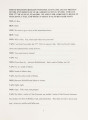
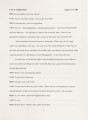
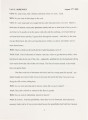
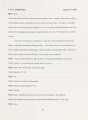
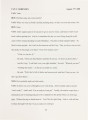
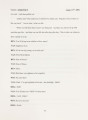
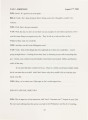
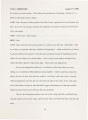
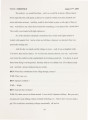
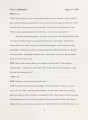
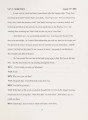
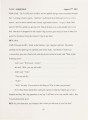
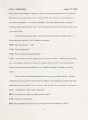
Show VAN C. ORENSEN WIN: That's a long - well, that's not too bad. VAN: Not too bad. WIN: Some people are thirty days. VAN: Yeah, yeah. WIN: On those old LST' s. Augu t 17th, 2001 BEN: That was only the second time you'd been on a ship, is that correct? VAN: Uh huh. The first time was on the LST' s, the landing ships. BEN: Is that when you hit the typhoon? VAN: Uh huh, yeah. BEN: You said they wanted you to abandon ship. What, did they rescind the order? VAN: Well, what had happened: The steering mechanism had broken. And the chip was in trouble, bad trouble. As I understood the mechanics of it, the rudder was held by a huge arm out here that had huge cables that came out here and made their way to the mechanism that run them, so they could steer. One of those broke. And of course it left the ship adrift, and we were in trouble. And they said, "Well, if it goes down, we'll all go with it." And they thought, maybe if some of us might survive- but I can't see how possibly you could have survived in that. It was so noisy, the wind was so loud, we had to stand mouth to ear to hear each other, you know. BEN: Did you get sea sick out on the ocean, or were you accustomed by then from being in the air? VAN: I guess I was used to it because I never did. Never did. 82 |
| Reference URL |
https://collections.lib.utah.edu/ark:/87278/s6767djj/1021104 |