| Title |
Van C. Sorensen, Mapleton, Utah: an interview by Winston Erickson and Benjamin Bahlmann, August 17th, 2001: Saving the legacy tape no. 288 and 289 |
| Alternative Title |
Van C. Sorensen, Saving the legacy: an oral history of Utah's World War II veterans, ACCN 2070, American West Center, University of Utah |
| Creator |
Sorensen, Van C., 1922-2007 |
| Contributor |
Erickson, Winston P., 1943-; University of Utah. American West Center |
| Publisher |
Digitized by J. Willard Marriott Library, University of Utah |
| Date |
2001-08-17 |
| Date Digital |
2015-09-16 |
| Access Rights |
I acknowledge and agree that all information I obtain as a result of accessing any oral history provided by the University of Utah's Marriott Library shall be used only for historical or scholarly or academic research purposes, and not for commercial purposes. I understand that any other use of the materials is not authorized by the University of Utah and may exceed the scope of permission granted to the University of Utah by the interviewer or interviewee. I may request permission for other uses, in writing to Special Collections at the Marriott Library, which the University of Utah may choose grant, in its sole discretion. I agree to defend, indemnify and hold the University of Utah and its Marriott Library harmless for and against any actions or claims that relate to my improper use of materials provided by the University of Utah. |
| Spatial Coverage |
Marshall Islands; New Guinea; Philippines; China; Aurora, Sevier County, Utah, United States |
| Subject |
Sorensen, Van C., 1922-2007--Interviews; World War, 1939-1945--Personal narratives, American; Veterans--Utah--Biography; World War, 1939-1945--Aerial operations, American; World War, 1939-1945--Campaigns--Pacific Area--Personal narratives, American |
| Keywords |
Topaz; Internment camps; PTSD |
| Description |
Transcript (95 pages) of an interview by Winston P. Erickson with Van C. Sorensen on August 17, 2001. This is from tape numbers 288 and 289 in the "Saving the Legacy Oral History Project |
| Collection Number and Name |
Accn2070, Saving the Legacy oral history project, 2001-2010 |
| Abstract |
Van Sorensen (b. 1922) recalls his childhood on a cattle ranch in Utah, working on the construction of the Topaz Japanese Relocation camp, and joining the U.S. Marines in December 1943. After training as a gunner and being assigned to a flight crew, Sorensen was assigned to the Pacific Theater of Operations. He talks at length about his combat experiences. He also talks about returning to civilian life and suffering from what would come to be known as Post Traumatic Stress Syndrome. 95 pages. |
| Type |
Text |
| Genre |
oral histories (literary works) |
| Format |
application/pdf |
| Extent |
95 pages |
| Language |
eng |
| Rights |
 |
| Scanning Technician |
Mazi Rakhsha |
| Conversion Specifications |
Original scanned with Kirtas 2400 and saved as 400 ppi uncompressed TIFF. PDF generated by Adobe Acrobat Pro X for CONTENTdm display |
| ARK |
ark:/87278/s6767djj |
| Topic |
Personal narratives--American; Veterans; World War (1939-1945); Military operations, Aerial--American |
| Setname |
uum_slohp |
| ID |
1021118 |
| Reference URL |
https://collections.lib.utah.edu/ark:/87278/s6767djj |
| Title |
Page 18 |
| Format |
application/pdf |
| Setname |
uum_slohp |
| ID |
1021038 |
| OCR Text |
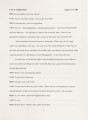
Show VAN C. OREN EN one of the big names. u u t 17th 2001 But also Mussolini was the Prime Minister of Italy then. And they were expanding. It's seldom mentioned anymore, but they tried at one time to take over Ethiopia. And we studied about that. The Japanese, even early on (back in the late '30's), they'd already invaded China and was trying to set up an empire over there. WIN: Taken over Manchuria there of course. VAN: Right. And a lot eastern China was under their rule, well, not direct control. But on the other hand, yes, because they were pretty aggressive about it. And we studied all this. One time they said Hitler was going to give one of his famous speeches. And they said, "We're going to take the class and go somewhere where there's a radio." And by the way, radios were not very numerous at the time. We didn't get a radio until I was probably twelve, fourteen years old. But we went and one of the furniture stores furnished a radio so that we could hear. We didn't understand one word of German. But on the other hand, you could hear the anger and the hatred in his voice. You know, you could tell that this guy was going to cause trouble. And of course, having graduated in 1941, it was that fall the war started. WIN: Okay, you had a radio. Was that your prime source of current events, or did you have newspapers and other sources? VAN: We had newspapers. WIN: Did your family take the newspaper, or did you just have that at school? 16 |
| Reference URL |
https://collections.lib.utah.edu/ark:/87278/s6767djj/1021038 |