| Title |
Vico E. Henriques, an interview by Daniel McCool, November 9, 2004: Saving the legacy tape no. 729 |
| Alternative Title |
Vico Henriques, Saving the legacy: an oral history of Utah's World War II veterans, ACCN 2070, American West Center, University of Utah |
| Creator |
Henriques, Vico E., 1930- |
| Contributor |
McCool, Daniel, 1950- ; University of Utah. American West Center |
| Publisher |
Digitized by J. Willard Marriott Library, University of Utah |
| Date |
2004-09-09 |
| Date Digital |
2015-09-16 |
| Access Rights |
I acknowledge and agree that all information I obtain as a result of accessing any oral history provided by the University of Utah's Marriott Library shall be used only for historical or scholarly or academic research purposes, and not for commercial purposes. I understand that any other use of the materials is not authorized by the University of Utah and may exceed the scope of permission granted to the University of Utah by the interviewer or interviewee. I may request permission for other uses, in writing to Special Collections at the Marriott Library, which the University of Utah may choose grant, in its sole discretion. I agree to defend, indemnify and hold the University of Utah and its Marriott Library harmless for and against any actions or claims that relate to my improper use of materials provided by the University of Utah. |
| Spatial Coverage |
Korea |
| Subject |
Henriques, Vico E., 1930- --Interviews; Korean War, 1950-1953--Personal narratives, American; Veterans--Utah--Biography |
| Keywords |
Utah National Guard |
| Description |
Transcript (86 pages) of an interview by Daniel McCool with Vico Henriques in Arlington, Virginia, on November 9, 2004. This is from tape number 729 in the "Saving the Legacy Oral History Project |
| Collection Number and Name |
Accn2070, Saving the Legacy oral history project, 2001-2010 |
| Abstract |
Henriques (b. 1930) joined the National Guard in 1947. He had been in the State Guard during World War II. In 1950 he was on a survey crew working for the Bureau of Land Management at thd Dugway Proving Grounds when a man came out and told him that he had been ordered to active duty because war had broken out in Korea. According to Henriques, 80% of the Utah Guard was called up on the first day of the Korean War. He recalls being processed and sent to Japan, then Korea. He was immediately transferred to the 1343rd Engineer Combat Battalion (Alabama National Guard)and put into an intelligence and reconnaissance platoon. He talks about being a Sergeant Major and what that means in the military, being promoted to 2nd lieutenant, and about army life in combat. Other topics covered include leadership in combat, the CIA, being a primate caretaker for the National Zoo, political advice from J.D. Williams, hunting game in Korea, adjusting to civilian life after the military, leading the "enemy" unit in field maneuvers, and receiving the Bronze Star. 86 pages. |
| Type |
Text |
| Genre |
oral histories (literary works) |
| Format |
application/pdf |
| Extent |
86 pages |
| Language |
eng |
| Rights |
 |
| Scanning Technician |
Mazi Rakhsha |
| Conversion Specifications |
Original scanned with Kirtas 2400 and saved as 400 ppi uncompressed TIFF. PDF generated by Adobe Acrobat Pro X for CONTENTdm display |
| ARK |
ark:/87278/s61r8ps1 |
| Topic |
Personal narratives--American; Veterans; Korean War (1950-1953) |
| Setname |
uum_slohp |
| ID |
1020499 |
| Reference URL |
https://collections.lib.utah.edu/ark:/87278/s61r8ps1 |
| Title |
Page 18 |
| Format |
application/pdf |
| Setname |
uum_slohp |
| ID |
1020427 |
| OCR Text |
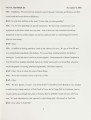
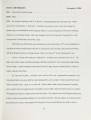
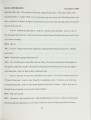
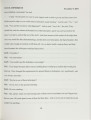
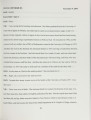
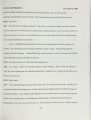
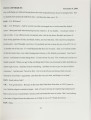
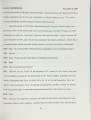
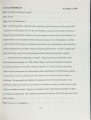
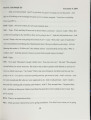
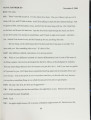
Show I 0 . Q E VIC: I was still an enlisted man. D N: Okay. VIC: So, instead of going to OCS, or ROTC or something like that th y ju t aid you are now a lieutenant. Good luck." And the observations were- ! went from being th smartest guy in the battalion as the Sergeant Major to a second lieutenant who knows nothing which is a very strange change. But I got assigned a lot of the brand new lieutenants to work with because I'd been there for about a year. But I had to go before this pre-commission review board back at 8th Army Headquarters. And that involved a truck back to the rail at Air Head Ch'unch'on that I had mentioned before, and then flying from there to Taegu, Korea which was where gth Army Headquarters was. And, so, I went down and got on the plane. And there were only about four of us. The plane was mainly cargo, and the passengers that they could fit in. So it was pretty empty going back to Japan. And it normally made stops in Seoul, Taegu, Pusan, and then back to Ashiya in Japan, a big air force base. So, I got on the plane. And there was a colonel, who was a regimental commander, who was going back to do some stuff at corps headquarters, and a couple of other people that I don't really remember well. And, so, we took off. And we didn't land at Seoul because of weather, and we didn't land at Taegu because of weather, and we didn't land at Pusan because of weather. We hightailed it back to Japan, and we ran out of gas. The captain, who was flying the plane, put it down with the smoothest landing I've ever made in my life. But the engines were dead, and he put it down on-it was a four-engine C-54-he put it down so smoothly on the strip we didn't 16 |
| Reference URL |
https://collections.lib.utah.edu/ark:/87278/s61r8ps1/1020427 |