| Title |
Vico E. Henriques, an interview by Daniel McCool, November 9, 2004: Saving the legacy tape no. 729 |
| Alternative Title |
Vico Henriques, Saving the legacy: an oral history of Utah's World War II veterans, ACCN 2070, American West Center, University of Utah |
| Creator |
Henriques, Vico E., 1930- |
| Contributor |
McCool, Daniel, 1950- ; University of Utah. American West Center |
| Publisher |
Digitized by J. Willard Marriott Library, University of Utah |
| Date |
2004-09-09 |
| Date Digital |
2015-09-16 |
| Access Rights |
I acknowledge and agree that all information I obtain as a result of accessing any oral history provided by the University of Utah's Marriott Library shall be used only for historical or scholarly or academic research purposes, and not for commercial purposes. I understand that any other use of the materials is not authorized by the University of Utah and may exceed the scope of permission granted to the University of Utah by the interviewer or interviewee. I may request permission for other uses, in writing to Special Collections at the Marriott Library, which the University of Utah may choose grant, in its sole discretion. I agree to defend, indemnify and hold the University of Utah and its Marriott Library harmless for and against any actions or claims that relate to my improper use of materials provided by the University of Utah. |
| Spatial Coverage |
Korea |
| Subject |
Henriques, Vico E., 1930- --Interviews; Korean War, 1950-1953--Personal narratives, American; Veterans--Utah--Biography |
| Keywords |
Utah National Guard |
| Description |
Transcript (86 pages) of an interview by Daniel McCool with Vico Henriques in Arlington, Virginia, on November 9, 2004. This is from tape number 729 in the "Saving the Legacy Oral History Project |
| Collection Number and Name |
Accn2070, Saving the Legacy oral history project, 2001-2010 |
| Abstract |
Henriques (b. 1930) joined the National Guard in 1947. He had been in the State Guard during World War II. In 1950 he was on a survey crew working for the Bureau of Land Management at thd Dugway Proving Grounds when a man came out and told him that he had been ordered to active duty because war had broken out in Korea. According to Henriques, 80% of the Utah Guard was called up on the first day of the Korean War. He recalls being processed and sent to Japan, then Korea. He was immediately transferred to the 1343rd Engineer Combat Battalion (Alabama National Guard)and put into an intelligence and reconnaissance platoon. He talks about being a Sergeant Major and what that means in the military, being promoted to 2nd lieutenant, and about army life in combat. Other topics covered include leadership in combat, the CIA, being a primate caretaker for the National Zoo, political advice from J.D. Williams, hunting game in Korea, adjusting to civilian life after the military, leading the "enemy" unit in field maneuvers, and receiving the Bronze Star. 86 pages. |
| Type |
Text |
| Genre |
oral histories (literary works) |
| Format |
application/pdf |
| Extent |
86 pages |
| Language |
eng |
| Rights |
 |
| Scanning Technician |
Mazi Rakhsha |
| Conversion Specifications |
Original scanned with Kirtas 2400 and saved as 400 ppi uncompressed TIFF. PDF generated by Adobe Acrobat Pro X for CONTENTdm display |
| ARK |
ark:/87278/s61r8ps1 |
| Topic |
Personal narratives--American; Veterans; Korean War (1950-1953) |
| Setname |
uum_slohp |
| ID |
1020499 |
| Reference URL |
https://collections.lib.utah.edu/ark:/87278/s61r8ps1 |
| Title |
Page 15 |
| Format |
application/pdf |
| Setname |
uum_slohp |
| ID |
1020424 |
| OCR Text |
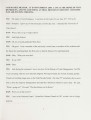
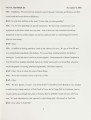
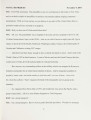
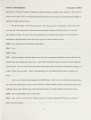
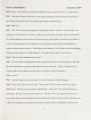
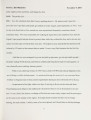
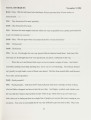
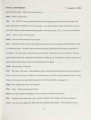
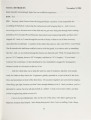
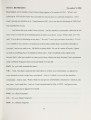
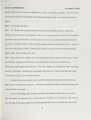
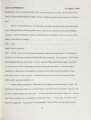
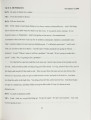
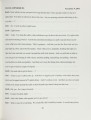
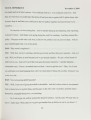
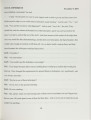
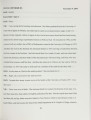
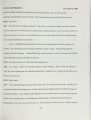
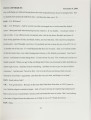
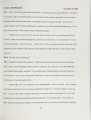
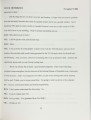
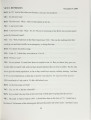
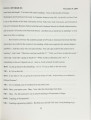
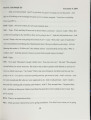
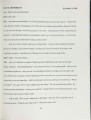
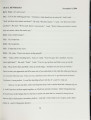
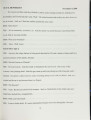
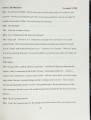
Show VICO . RIQUE amaz d by the sight. They were just awed by it. DAN: Almost Napoleonic. VIC: Yes. Well, it was very much like the stuff that happened in the r volution-ranks and ranks and ranks of soldiers at very close range. So I, and a number of the other NCO s sp nt a great deal of time going around kicking peoples' butts and saying, Fire. You have ammunition shoot." And we were overrun twice. DAN: Tell me what it means to be overrun. VIC: That means that you lose all contact with any of your own troops, and the Chinese sweep over the top of you. And then the ones that are coming up behind are looking for prisoners, or wounded, or to shoot you, or bayonet you, or whatever. But your unit is not cohesive. It's just individuals at this point; separated individuals, sweating it out. Sometimes you play possum, you know, and let them walk on by you and think that you're dead. DAN: Did you have to do that? VIC: Oh, yeah. Oh, yeah. And sometimes they would come up and prod you with a bayonet to make sure you were dead. And then our reinforcements would be coming and the Chinese would retreat. And you go out and collect, and see who's left, and what was going on. DAN: How many times were you overrun? VIC: Twice. That was in the early days. DAN: I presume when that happens your unit takes tremendous casualties? VIC: Actually not because they were-mostly what they were trying to do was to get us to retreat. And if you're spread out fairly thin you can hide pretty easily. The casualties were, I 13 |
| Reference URL |
https://collections.lib.utah.edu/ark:/87278/s61r8ps1/1020424 |