| Title |
Stanley G. Smith, Salt Lake City, Utah: an interview by Winston Erickson, January 18, 2002: Saving the legacy tape no. 310-311 |
| Alternative Title |
Stanley G. Smith, Saving the legacy: an oral history of Utah's World War II veterans, ACCN 2070, American West Center, University of Utah |
| Creator |
Smith, Stanley G., 1923-2013 |
| Contributor |
Erickson, Winston P., 1943-; University of Utah. American West Center |
| Publisher |
Digitized by J. Willard Marriott Library, University of Utah |
| Date |
2002-01-18 |
| Date Digital |
2015-09-16 |
| Access Rights |
I acknowledge and agree that all information I obtain as a result of accessing any oral history provided by the University of Utah's Marriott Library shall be used only for historical or scholarly or academic research purposes, and not for commercial purposes. I understand that any other use of the materials is not authorized by the University of Utah and may exceed the scope of permission granted to the University of Utah by the interviewer or interviewee. I may request permission for other uses, in writing to Special Collections at the Marriott Library, which the University of Utah may choose grant, in its sole discretion. I agree to defend, indemnify and hold the University of Utah and its Marriott Library harmless for and against any actions or claims that relate to my improper use of materials provided by the University of Utah. |
| Spatial Coverage |
England; Germany; Salt Lake City, Salt Lake County, Utah, United States |
| Subject |
Smith, Stanley G., 1923-2013--Interviews; World War, 1939-1945--Personal narratives, American; Veterans--Utah--Biography; World War, 1939-1945--Aerial operations, American; World War, 1939-1945--Campaigns--Europe, Northern--Personal narratives, American; Prisoners of war--United States; Prisoners of war--Germany |
| Keywords |
B-17 bomber; POWs |
| Description |
Transcript (57 pages) of an interview by Winston P. Erickson with Stanley G. Smith on January 18, 2002. This is from tape numbers 310 and 311 in the "Saving the Legacy Oral History Project |
| Collection Number and Name |
Accn2070, Saving the Legacy oral history project, 2001-2010 |
| Abstract |
Stanley G. Smith (b. 1923 in Seattle) grew up in Salt Lake and joined the Air Force in December 1942. He trained in Santa Ana, Visalia, Merced, and Stockton, California. He was sent to Ardmore, Oklahoma, where he trained in a B-17. He recalls his experiences while stationed in Lavenham, England; discusses missions, strategies, fellow crew members, being shot down over Cologne, and his internment in Stalag Luft Three. 57 pages. |
| Type |
Text |
| Genre |
oral histories (literary works) |
| Format |
application/pdf |
| Extent |
57 pages |
| Language |
eng |
| Rights |
 |
| Scanning Technician |
Mazi Rakhsha |
| Conversion Specifications |
Original scanned with Kirtas 2400 and saved as 400 ppi uncompressed TIFF. PDF generated by Adobe Acrobat Pro X for CONTENTdm display |
| ARK |
ark:/87278/s6bz858z |
| Topic |
Personal narratives--American; Veterans; World War (1939-1945); Military operations, Aerial--American; Prisoners of war |
| Setname |
uum_slohp |
| ID |
1019704 |
| Reference URL |
https://collections.lib.utah.edu/ark:/87278/s6bz858z |
| Title |
Page 47 |
| Format |
application/pdf |
| Setname |
uum_slohp |
| ID |
1019691 |
| OCR Text |
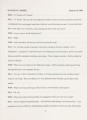
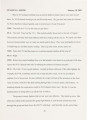
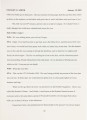
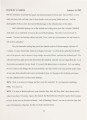
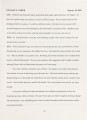
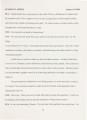
Show T ANLEY G. MITH January 18, 2002 march that I think an enlisted man had made. But, at any rate, we moved down to that other camp and they carried that radio in the backpack. And we learned about Hitler's effort, when we moved past Berchtesgaden, to move us in there as hostages. We had a Brigadier with us who told the German guard, captain of the guard, who said, "If you do this it will be the last thing you ever do." But the book I mentioned about this escape factory mentioned the existence of that radio, and the disclosure of the hostage suggestion. And apparently Eva Braun herself was the one that convinced Hitler that that was a bad move, so it just went by the board. We had a reprint of the newspaper announcement that that was going to be the approach to Hitler's escape. WIN: Having the radio, and listening to the BBC, must have been somewhat comforting to understand the progress of the allies into Germany. It must have given you some kind of hope that you'd be out soon. ST A: Right. We had a big wall map; and again, we had to be careful not to indicate locations that hadn't been disclosed by the Germans, but it was a thing of cheerfulness to recognize that they were making progress, particularly when we were in Munich. Of course, the Third Army was making great strides down in the south, and it wasn't too long-we got down there about March, and in April the handwriting was on the wall, and on the 1Oth of May it finally folded up. As that time approached we could hear artillery fire, and it wasn't long before we saw tanks moving over the hillsides toward the camp. One thing that the Germans did was to try to disperse the people in the death camps and the concentration camps. And they moved about 500 of those people into our camp at Munich. 45 |
| Reference URL |
https://collections.lib.utah.edu/ark:/87278/s6bz858z/1019691 |