| Title |
Norley Hall, Springville, Utah: an interview by Benjamin Bahlmann, December 6, 2001: Saving the legacy oral history project |
| Alternative Title |
Norley Hall, Saving the legacy: an oral history of Utah's World War II veterans, ACCN 2070, American West Center, University of Utah |
| Creator |
Hall, Norley, 1925- |
| Contributor |
Bahlmann, Benjamin; University of Utah. American West Center |
| Publisher |
Digitized by J. Willard Marriott Library, University of Utah |
| Date |
2011-12-06 |
| Date Digital |
2015-09-16 |
| Access Rights |
I acknowledge and agree that all information I obtain as a result of accessing any oral history provided by the University of Utah's Marriott Library shall be used only for historical or scholarly or academic research purposes, and not for commercial purposes. I understand that any other use of the materials is not authorized by the University of Utah and may exceed the scope of permission granted to the University of Utah by the interviewer or interviewee. I may request permission for other uses, in writing to Special Collections at the Marriott Library, which the University of Utah may choose grant, in its sole discretion. I agree to defend, indemnify and hold the University of Utah and its Marriott Library harmless for and against any actions or claims that relate to my improper use of materials provided by the University of Utah. |
| Spatial Coverage |
Utah County, Utah, United States; Catalina Island, Los Angeles County, California, United States; Aleutian Islands, Alaska, United States; New Guinea; Japan |
| Subject |
Hall, Norley, 1925- --Interviews; World War, 1939-1945--Personal narratives, American; Veterans--Utah--Biography; World War, 1939-1945--Naval operations, American; World War, 1939-1945--Campaigns--Pacific Area--Personal narratives, American; Merchant marine--United States--Biography |
| Keywords |
Merchant Marines |
| Description |
Transcript (86 pages) of an interview by Benjamin Bahlmann with Norley Hall on December 6, 2001. This is part of the "Saving the Legacy Oral History Project |
| Collection Number and Name |
Accn2070, Saving the Legacy oral history project, 2001-2010 |
| Abstract |
Norley Hall (b. 1925) recalls his childhood in rural Utah and listening to the news about Pearl Harbor when he was in his first year of high school. He enlisted in the Merchant Marines because they had the shortest training period and he wanted to get into the war quickly. He received engine room training in California and ended up on a ship transporting troops from Seattle to the Aleutian Islands. He later went from San Francisco to New Guinea on a liberty ship. He spent the remainder of the war in the Pacific. 86 pages. |
| Type |
Text |
| Genre |
oral histories (literary works) |
| Format |
application/pdf |
| Language |
eng |
| Rights |
 |
| Scanning Technician |
Mazi Rakhsha |
| Conversion Specifications |
Original scanned with Kirtas 2400 and saved as 400 ppi uncompressed TIFF. PDF generated by Adobe Acrobat Pro X for CONTENTdm display |
| ARK |
ark:/87278/s6jt1pnx |
| Topic |
Personal narratives--American; Veterans; World War (1939-1945); Military operations, Naval--American |
| Setname |
uum_slohp |
| ID |
1019422 |
| Reference URL |
https://collections.lib.utah.edu/ark:/87278/s6jt1pnx |
| Title |
Page 40 |
| Format |
application/pdf |
| Setname |
uum_slohp |
| ID |
1019373 |
| OCR Text |
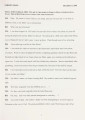
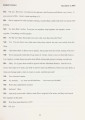
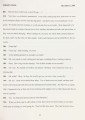
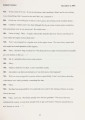
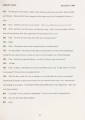
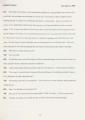
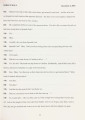
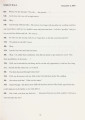
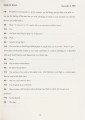
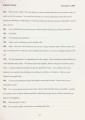
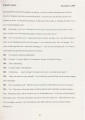
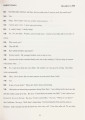
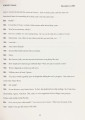
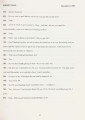
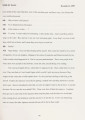
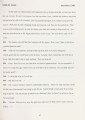
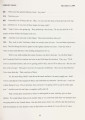
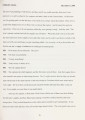
Show 0 LL BB: om tim ? kay. How many tim s did you com back t th tat or did one ... ? NH: We didn't. 1 nth t tim BB: So once you-that first trip when you went over there you pretty much worked within th Pacific? NH: The only break we got was when our ship required some work done on the engines. They sent us to Australia, to Sidney, and put us in dry dock for a couple of weeks. BB: Okay. And during that time you had liberty then to do whatever? NH: Oh, yeah, very much so. Then we brought a large contingency of Australian troops when we came back. BB: Uh huh. What were your initial thoughts, or experiences, in the Pacific? What did you think coming from an arid environment? NH: Well ... BB: Definitely coming from Nevada and Utah. NH: Of course, everything was entirely different. It was jungles, very hot, steamy. You could literally feel the humidity when you were going into the island probably a half a day out. Before you could ever see them you could feel the humidity. Strangely enough, there's not much humidity on the open ocean, but the islands, with their vegetation, there's a tremendous amount. BB: Interesting. So you could kind of tell you were coming to them before? NH: You could literally feel them before you saw them. We had one interesting experience. On my particular shift the oiler was a huge Cuban. He'd been raised on a coconut plantation in Cuba. And the very first island that we went to, and went ashore on, there were a lot of coconut 38 |
| Reference URL |
https://collections.lib.utah.edu/ark:/87278/s6jt1pnx/1019373 |