| OCR Text |
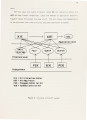
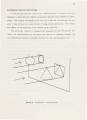
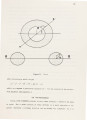
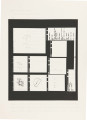
Show 23 therefore no need ex1sts for commun1cat1on between processes So 1t 1s suitable for multiprocesser architecture mach1nes. Also for h1s reas on some ray-tracing-oriented hardware has been proposed . Therefore 1t may cause problems to try to use coherency for ray trac1ng . Figure 7 shows the typtcal features of ray tracmg. 4.2 Set Operations and Ray Tracing In this section . it is shown how to realize ray tracmg for compostte objects based on the common funcuon idea mentioned in Chapter 3. 4.2.1 Implementation of S~.Qperations There are two ways to realize set operations. The first method is the evaluated method. which means that the result of the set operations on two objects is calculated and stored as a new object. In this case no care is needed in rendenng smce the set operation has been previously evaluated at the database level. For the evaluated method, it 1s necessary to have a homogeneous data structure. Usually this method 1s used for 8-reps, because set operations are closed in 8-rep. (That means that the result of a set operation on two 8-rep objects is also a 8-rep object.) Much research has been done on set operations of polyhedra. [1 , 20, 21] etc. and recently set operations on 8-spline-bounded objects has been reported [32]. The second method (the unevaluated method) of realizing set operations is to evaluate set operations at the application stages, in this case, in rendering . When the set operators combine different types of objects as in KIT, it is impossible to evaluate at the database level. Ross [27] first implemented set operations for ray tracing usmg a one-dimensional classification of intersection points. Also an unevaluated method using a scanline algorithm has been reported [2]. |