| Title |
Melvin S. Larsen, Salt Lake City, Utah: an interview by Becky B. Lloyd, May 7, 2005: Saving the legacy tape no. 724 |
| Alternative Title |
Melvin S. Larsen, Saving the legacy: an oral history of Utah's World War II veterans, ACCN 2070, American West Center, University of Utah |
| Creator |
Larsen, Melvin S., 1922-2013 |
| Contributor |
Lloyd, Becky B.; University of Utah. American West Center |
| Publisher |
Digitized by J. Willard Marriott Library, University of Utah |
| Date |
2005-05-07 |
| Date Digital |
2015-09-16 |
| Access Rights |
I acknowledge and agree that all information I obtain as a result of accessing any oral history provided by the University of Utah's Marriott Library shall be used only for historical or scholarly or academic research purposes, and not for commercial purposes. I understand that any other use of the materials is not authorized by the University of Utah and may exceed the scope of permission granted to the University of Utah by the interviewer or interviewee. I may request permission for other uses, in writing to Special Collections at the Marriott Library, which the University of Utah may choose grant, in its sole discretion. I agree to defend, indemnify and hold the University of Utah and its Marriott Library harmless for and against any actions or claims that relate to my improper use of materials provided by the University of Utah. |
| Spatial Coverage |
Denmark; Belgium; France; Germany; Czechoslovakia; Salt Lake City, Salt Lake County, Utah, United States |
| Subject |
Larsen, Melvin S., 1922-2013--Interviews; World War, 1939-1945--Personal narratives, American; Veterans--Utah--Biography; World War, 1939-1945--Military operations, American; World War, 1939-1945--Campaigns--Europe, Northern--Personal narratives, American; World War, 1939-1945--Campaigns--France--Normandy--Personal narratives, American |
| Keywords |
ROTC; D-Day |
| Description |
Transcript (29 pages) of an interview by Becky B. Lloyd with Melvin S. Larsen on May 7, 2005. This is from tape number 724 in the "Saving the Legacy Oral History Project |
| Collection Number and Name |
Accn2070, Saving the Legacy oral history project, 2001-2010 |
| Abstract |
Melvin S. Larsen (b. 1922) details his genealogy and family history. His father served as a Mission President in Denmark for the LDS Church and Larsen received his primary education in Danish schools. He attended West High in Salt Lake City and was in ROTC before being drafted into the army. He was assigned to the 87th Infantry Division and was part of the D-Day invasion. He fought in Belgium, France, Germany, and Czechoslovakia. He received five Purple Hearts and returned to the United States in 1945. 29 pages. |
| Type |
Text |
| Genre |
oral histories (literary works) |
| Format |
application/pdf |
| Extent |
29 pages |
| Language |
eng |
| Rights |
 |
| Scanning Technician |
Mazi Rakhsha |
| Conversion Specifications |
Original scanned with Kirtas 2400 and saved as 400 ppi uncompressed TIFF. PDF generated by Adobe Acrobat Pro X for CONTENTdm display |
| ARK |
ark:/87278/s63797x8 |
| Topic |
Personal narratives--American; Veterans; World War (1939-1945) |
| Setname |
uum_slohp |
| ID |
1018438 |
| Reference URL |
https://collections.lib.utah.edu/ark:/87278/s63797x8 |
| Title |
Page 13 |
| Format |
application/pdf |
| Setname |
uum_slohp |
| ID |
1018420 |
| OCR Text |
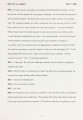
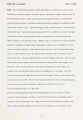
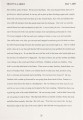
Show MELVIN . LAR EN M Y 7, 2005 about once every two or three days. When you got to a stop where you couldn t go anymore, they'd come up with a meal. They'd come up in a jeep and you unload it and feed the guys at night. You don't want to do it in the daytime because they'd come over with aircraft and knock them out. You'd eat at night and dig a foxhole and sleep. A foxhole is shoulder wide about two and a half feet wide, six foot deep with a seat over here and a seat over here that you could sit down on. The only heat you had was one candle. We'd light the candle and set it in the foxhole between us to warm our feet on. It was six feet high, if you could dig it six feet high. It was the middle of the winter when we got over to the Belgium Bulge. We had a hard time digging in the ground. The ground was frozen. Well, that was a lifesaver for us because as the tanks approached and rode over the top of us, if the ground wasn't frozen solid, it would cave in on top of us and we'd be buried. But it was frozen so the tank would go over the top of us. Some days you'd go a hundred yards, some days, you'd go a mile. It depends on how much resistance you had. If you ran into artillery, you'd stop and dig a foxhole. That's the only way you could survive the artillery. Then we'd meet resistance of Germans all the way along to the right and left and front. You'd just move as you could. Keep moving. Headquarters of course, was behind us a mile or two or five and we had our artillery behind us. They would fire up artillery to knock out resistance. They gave me a radio and told me, "You're in contact with the firing range of the artillery. Whenever you need artillery, when you can't move and are pinned down and so forth, you talk on this radio and tell them what you want and where." I don't know how to fire artillery. I don't know how. All I could say was, "Give me a smoke shell, one shell, five hundred yards straight ahead." Then, I'd say, move it to the right a hundred yards or move it to left a 12 |
| Reference URL |
https://collections.lib.utah.edu/ark:/87278/s63797x8/1018420 |