| Title |
Joseph M. Hebert, Salt Lake City., Utah: an interview by Winston P. Erickson, April 4, 5, 11, and 18, 2000: Saving the legacy tape no. 9, 10, 11, and 12 |
| Alternative Title |
Joseph M. Hebert, Saving the legacy: an oral history of Utah's World War II veterans, ACCN 2070, American West Center, University of Utah |
| Creator |
Hebert, Joseph M., 1924- |
| Contributor |
Erickson, Winston P., 1943-; University of Utah. American West Center |
| Publisher |
Digitized by J. Willard Marriott Library, University of Utah |
| Date |
2000-04-04; 2000-04-05; 2000-04-11; 2000-04-18 |
| Date Digital |
2015-09-16 |
| Access Rights |
I acknowledge and agree that all information I obtain as a result of accessing any oral history provided by the University of Utah's Marriott Library shall be used only for historical or scholarly or academic research purposes, and not for commercial purposes. I understand that any other use of the materials is not authorized by the University of Utah and may exceed the scope of permission granted to the University of Utah by the interviewer or interviewee. I may request permission for other uses, in writing to Special Collections at the Marriott Library, which the University of Utah may choose grant, in its sole discretion. I agree to defend, indemnify and hold the University of Utah and its Marriott Library harmless for and against any actions or claims that relate to my improper use of materials provided by the University of Utah. |
| Spatial Coverage |
Italy |
| Subject |
Hebert, Joseph M., 1924- --Interviews; World War, 1939-1945--Personal narratives, American; Veterans--Utah--Biography; World War, 1939-1945--Aerial operations, American; World War, 1939-1945--Campaigns--Europe, Southern--Personal narratives, American |
| Keywords |
Army Air Corps; B-24 bomber; Aerial gunner; Tuskegee Airmen; Colin Powell |
| Description |
Transcript (79 pages) of an interview by Winston P. Erickson with Joseph M. Hebert on April 4, 5, 11, and 18, 2000. This is from tape numbers 9, 10, 11, and 12 in the "Saving the Legacy Oral History Project |
| Collection Number and Name |
Accn2070, Saving the Legacy oral history project, 2001-2010 |
| Abstract |
Hebert (b. 1924) was raised in Washington and Indiana. He was inducted into the Army Air Corps in February 1943 on "limited service." After basic training in Florida he was assigned to the 484th Bomb Group, where he met the rest of his crew--the pilot, copilot, navigator, and bombardier. Hebert was the aerial gunner, completing the crew of this B24 Liberator. He describes his training and overseas flight experiences including flying with the Tuskegee airmen. Other topics covered include his relationship with Colin Powell, flying out of Toretta Base in Italy, aircraft types and battle strategies, flak, bombing Ploesti, Major General Bill Keese, jet airplanes, and his postwar life. 79 pages. |
| Type |
Text |
| Genre |
oral histories (literary works) |
| Format |
application/pdf |
| Extent |
79 pages |
| Language |
eng |
| Rights |
 |
| Scanning Technician |
Mazi Rakhsha |
| Conversion Specifications |
Original scanned with Kirtas 2400 and saved as 400 ppi uncompressed TIFF. PDF generated by Adobe Acrobat Pro X for CONTENTdm display |
| ARK |
ark:/87278/s6gj1h6n |
| Topic |
Personal narratives--American; Veterans; World War (1939-1945); Military operations, Aerial--American |
| Setname |
uum_slohp |
| ID |
1018293 |
| Reference URL |
https://collections.lib.utah.edu/ark:/87278/s6gj1h6n |
| Title |
Page 18 |
| Format |
application/pdf |
| Setname |
uum_slohp |
| ID |
1018226 |
| OCR Text |
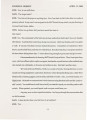
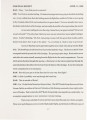
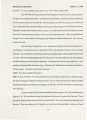
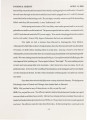
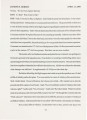
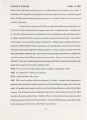
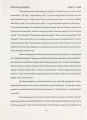
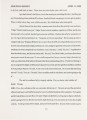
Show JOSEPH H. HEBERT APRIL 11,2000 he did, but it was a real struggle to make myself do it. My brain was telling my hand to do it, but my hand wasn't getting the message. At about twenty thousand feet the other fellow passed out He slapped an oxygen mask on him, and he immediately recovered. I was still conscious. He "increased" altitude to twentythree thousand feet, and I knew what he wanted me to do, but just couldn't do it. And I passed out. DAN: Was he in this chamber with you? JOE: Oh, yes. He was right there with us. He put the oxygen mask on me, and I revived immediately. Now we are all on oxygen and we kept going to forty-five thousand feet, staying there for about a half-hour. As we went up, once in a while in one of the guys, the pain would get so severe they would let him go out. He failed the test and would no longer be qualified to go to gunnery school. So everyone resisted until the pain got so severe that they just couldn't stand it. I think the test was about three hours in total length. After I passed I was shipped to the Wendover gunnery school. DAN: Did this test take place in Salt Lake? JOE: Yes, at the old Salt Lake Air Base. Now, you've been probably, and you are well aware of the field that is to the south ofi -80. The gunnery school was on the north side of the highway. Not too far north of the highway are rocky hills. When we got off the train we were loaded on a GI truck and taken to the gunnery school. It was about three miles on a dirt road. Up on the side of the hill, in whitewashed rocks, was a rather stark message. I still remember it. It said "Kill, or be killed." It kind of put things in perspective. WIN: Can we stop right now and tum the tape? (End side A) WIN: We were just talking about you arriving in Wendover. JOE: Yes. The gunnery school was in a box canyon in these rocky hills. The canyon was maybe 13 |
| Reference URL |
https://collections.lib.utah.edu/ark:/87278/s6gj1h6n/1018226 |