| OCR Text |
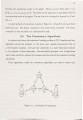
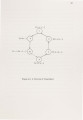
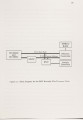
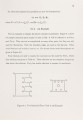
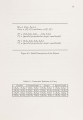
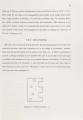
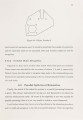
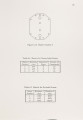
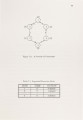
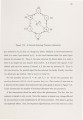
Show 32 hence the time taken in this case is 0 ( na / k). Too= 0(1); IP = T1/Too = O(na); Pmax = na. 4.3 Lower Bound for Parallel Arc Consistency In this section a lower bound for parallel arc consistency is derived. It is assumed that the number of processors available is polynomial in terms of the number of units, labels, and the arcs of the constraint graph. It has been shown that CLP can be solved in constant time if exponential number of processors were available; so there would not be much use for doing arc consistency. Theorem 4.1 : Any parallel algorithm for enforcing arc consistency in the worst case must have 0 (na) sequential steps, where n is number of nodes, and a is the number of labels per node. Proof: Consider a network of n nodes connected to form a cycle as shown in Figure 4.3. Let the label set of node i be the set of numbers defined as: { x I x = jn+i, 1 :5 j :5 a}. The relation used here is the greater-than relation such that values at node i + 1 (mod n) should be greater than values at node i, 1 :5 i :::; n. It is assumed that the network is node consistent before any algorithm is applied. (Dechter and Pearl[11] use a cyclic graph to prove the lower bound for sequential arc consistency. However, the label sets of the nodes are different and the constraint used is also different.) In general the arcs of the graph may represent different types of constraints. So it may not be possible to use any special technique to enforce global arc consistency. The only way to achieve global arc consistency is to enforce consistency along each arc. If unlimited processors were available consistency could be enforced along all the arcs concurrently. In this problem instance, during the first time step only the |