|
|
Creator | Title | Description | Subject | Date |
| 1 |
 |
Wittwer, Carl T. | Influence of PCR reagents on DNA polymerase extension rates measured on real-time PCR instruments | BACKGROUND: Radioactive DNA polymerase activity methods are cumbersome and do not provide initial extension rates. A simple extension rate assay would enable study of basic assumptions about PCR and define the limits of rapid PCR. METHODS: A continuous assay that monitors DNA polymerase extension us... | | 2014-01-01 |
| 2 |
 |
Dwight, Zachary Lawrence | uAnalyze: web-based high-resolution DNA melting analysis with comparison to thermodynamic predictions | Abstract-uAnalyzeSM is a web-based tool for analyzing high-resolution melting data of PCR products. PCR product sequence is input by the user and recursive nearest neighbor thermodynamic calculations used to predict a melting curve similar to uMELT (http://www.dna.utah.edu/umelt/umelt.html). Unproce... | | 2012-01-01 |
| 3 |
 |
Dwight, Zachary Lawrence | Heterozygote PCR product melting curve prediction | Melting curve prediction of PCR products is limited to perfectly complementary strands. Multiple domains are calculated by recursive nearest-neighbor thermodynamics. However, the melting curve of an amplicon containing a heterozygous single nucleotide variant (SNV) after PCR is the composite of four... | | 2014-01-01 |
| 4 |
 |
Planelles, Vicente | Kinase control of latent HIV-1 infection: PIM-1 kinase as a major contributor to HIV-1 reactivation | Despite the clinical relevance of latent HIV-1 infection as a block to HIV-1 eradication, the molecular biology of HIV-1 latency remains incompletely understood. We recently demonstrated the presence of a gatekeeper kinase function that controls latent HIV-1 infection. Using kinase array analysis w... | | 2014-01-01 |
| 5 |
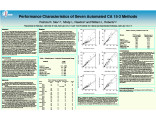 |
Slev, Patricia R.; Rawlins, Mindy, L.; Roberts, William L. | Performance characteristics of seven automated CA 15-3 methods | Poster describing studies to evaluate seven automated methods for the following parameters: limit of detection, linearity, imprecision, reference intervals and method comparison with the ADVIA Centaur as the comparison method to detect CA 15-3. | CA 15-3 Method | 2005-07-13 |
| 6 |
 |
Smith, A. Gordon; Singleton, J. Robinson | Lifestyle intervention for pre-diabetic neuropathy. | OBJECTIVE: The purpose of this study was to evaluate intraepidermal nerve fiber density (IENFD) as a sensitive measure of neuropathy change in patients with neuropathy associated with impaired glucose tolerance (IGT) receiving lifestyle intervention based on that used in the Diabetes Prevention Prog... | Older people; Biopsy; Blood Pressure; Body Mass Index; Cholesterol; Diabetic Diet | 2006-06-29 |
| 7 |
 |
Digre, Kathleen B.; Blumenthal, Deborah T.; Cessna, Melissa H.; Gopez, Evelyn V.; Shen, Yue | Carcinomatous meningitis as the presenting manifestation of gallbladder carcinoma: case report and review of the literature | The primary tumors that typically cause carcinomatous meningitis include lung cancer, breast cancer, leukemia, lymphoma and melanoma. A variety of neurological signs and symptoms can be seen depending on the extent and location of the meningeal metastasis. Once the diagnosis of carcinomatous meningi... | Carcinomatous Meningitis; Gallbladder Carcinoma; Leptomeningeal Metastasis; Meningeal Carcinomatosis; Cranial Neuropathy | 2004-10 |
| 8 |
 |
Margraf, Rebecca L.; Mao, Rong; Highsmith, W. Edward; Holtegaard, Leonard; Wittwer, Carl T. | Masking selected sequence variation by incorporating mismatches into melting analysis probes | Hybridization probe melting analysis can be complicated by the presence of sequence variations (benign polymorphisms or other mutations) near the targeted mutation. We investigated the use of 'masking' probes to differentiate alleles with similar probe melting temperatures. Selected sequence variati... | probe hybridization; high-resolution melting analysis; masking; RET | 2005-06-28 |
| 9 |
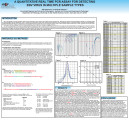 |
Stevenson, Jeffery B.; Hillyard, David R. | Quantitative real time PCR assay for detecting EBV virus in multiple sample types. | We are developing a real time quantitative PCR assay to detect EBV in serum, plasma, whole blood, tissue and spinal fluid. Real time PCR, with its intrinsic quantitative capacity, is an excellent method for measuring EBV viral load. Epstein Barr virus is a member of the Herpesvirus family, with a tr... | Eclipse Probes; EBV Primer | 2005-08-11 |
| 10 |
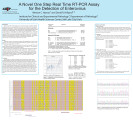 |
Hymas, Weston C.; Hillyard, David R. | Novel one step real time RT-PCR assay for the detection of Enterovirus, A | This poster describes the development of a novel real time assay that utilizes primers and an Eclipse probe in an overlapping format upstream of the Rotbart amplicon. | RT-PCR Assay | 2005-11-08 |
| 11 |
 |
Jaskowski, Troy D. | Screening for antinuclear antibodies by enzyme immunoassay | Indirect fluorescent antibody (IFA) is the most widely used method in clinical laboratories to screen for autoantibodies against a wide variety of nuclear antigens. Recently, a number of antinuclear antibody (ANA) enzyme immunoassay (EIA) screens have become commercially available and claim to be an... | Antinuclear antibodies; Enzyme immunoassay | 1996 |
| 12 |
 |
Hansen, Mark S.; Coffin, Cheryl M.; Capecchi, Mario R. | Pax3:Fkhr interferes with embryonic Pax3 and Pax7 function: implications for alveolar rhabdomyosarcoma cell of origin. | To investigate the role of the translocation-associated gene Pax3:Fkhr in alveolar rhabdomyosarcomas, we generated a Cre-mediated conditional knock-in of Pax3:Fkhr into the mouse Pax3 locus. Exploring embryonic tumor cell origins, we replaced a Pax3 allele with Pax3:Fkhr throughout its expression do... | Neuroprogenitor; Embryogenesis | 2004-11-01 |
| 13 |
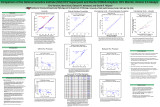 |
Konnick, Eric Q.; Erali, Maria; Ashwood, Edward R.; Hillyard, David R. | Comparison of the National Genetics Institute (NGI) HCV Superquant and Roche COBAS Amplicor HCV Monitor, Version 2.0 Assays | Chronic Hepatitis C infection is currently recognized as an important health care problem. It is estimated that nearly 4 million Americans are infected, 15 to 20 percent of whom will eventually develop Cirrhosis. Current treatments for Hepatitis C virus (HCV) are limited to alfa-interferon alone or ... | Cirrhosis; Patients | 2000-04-22 |
| 14 |
 |
Owen, William E.; Roberts, William L. | Comparable effects of DIGIBIND and DigiFab in thirteen digoxin immunoassays | Digoxin is widely prescribed for the treatment of cardiac conditions (1). Because of its narrow therapeutic range, digoxin-related toxicity resulting from acute or chronic overdose is common. Metabolites of digoxin as well as related compounds, including digitoxin, tanshinones, bufandienolide, a... | DIGIBIND; DigiFab; Digoxin immunoassays; Digoxin toxicity | 2002 |
| 15 |
 |
Cloud, Joann L.; Dunn, Jim; Hoggan, Karen; Wilson, Deborah; Iwen, Peter; Lasala, Paul; Hall, Geri; Woods, Gail L. | Sequence-based identification of gram negative nonfermenters using commercial 16S rDNA databases | This poster presents a study assessing the validity of the databases from two commercial systems were compared for the identification of NF. Background: Identification of gram negative nonfermenters (NF) from cultured human specimens is often difficult using traditional phenotypic methods. Partial 1... | MicroSeq500; Virodec | 2005-08-29 |
| 16 |
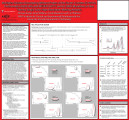 |
Seipp, Michael; Williams, Jamie; Meadows, Cindy; Wittwer, Carl T. | Multiplex solution genotyping without probes of the factor V Leiden (G1691A), Prothrombin (G20210A), and MTHFR (C677T and A1298C) mutations in one tube by single color high-resolution melting analysis | This poster describes a study which concludes that genotyping by amplicon melting is a rapid, closed-tube method for genotyping without probes that can be multiplexed. The method was successfully applied to the four most common clotting factor mutations in a single tube. The simplicity of the method... | Genotyping; Amplicon Melting | 2005-06 |
| 17 |
 |
Owen, William E.; Roberts, William L. | Performance characteristics of four immunonephelometric assays for the quantitative determination of IgA and IgM in cerebrospinal fluid | Measurement of IgA and IgM in cerebrospinal fluid (CSF) can be useful in the diagnosis of multiple sclerosis and other central nervous system disorders. The Dade Behring (Deerfield, IL) N Latex IgA and N Latex IgM tests on the BN II System and Beckman Coulter (Brea, CA) low-concentration IgA an... | IgA; IgM; Immunonephelometric assays; Imprecision; Method comparison; Reference interval | 2003 |
| 18 |
 |
Jaskowski, Troy D. | Determination of cytokine responses using a multiplexed fluorescent microsphere immunoassay | We used a multiplexed fluorescent microsphere immunoassay to develop a sandwich capture assay to assess simultaneously the production of thymus helper (TH) 1- and TH2-type cytokines in tissue culture supernatant obtained from stimulated peripheral blood mononuclear cells. The assay then was use... | Multiplexed fluorescent microsphere immunoassay | 2002 |
| 19 |
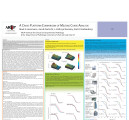 |
Herrmann, Mark G.; Durtschi, Jacob; Bromley, L. Kathryn; Voelkerding, Karl V. | Cross platform comparison of melting curve analysis | Melting analysis of PCR product was first performed on the LightCycler 10 years ago. Now, melting analysis is a standard function on all real-time PCR instruments. Recent advances in DNA melting analysis, including high resolution melting and specialized dyes, have increased the capabilities of melt... | PCR; SNP; SYBR Green I; LC Green Plus; high-resolution melting; mutation scanning; amplicon genotyping | 2005-11-04 |
| 20 |
 |
Owen, William E.; Roberts, William L. | Comparison of five automated serum and whole blood folate assays | Serum and whole blood folate measurements are used to establish folate deficiency. Most methods used in clinical laboratories are automated, nonisotopic methods that use folate-binding protein. Linearity, imprecision, and method comparison studies, including serum and whole blood hemolysates, wer... | Folate assays; Serum folate; Whole blood folate; Automated assays | 2003 |
| 21 |
 |
Hymas, Weston C. | Ultrasonic enhancement of antibiotic action on several species of bacteria | The effect of the antibiotics gentamicin, streptomycin, kanamycin, tetracycline, and ampicillin on planktonic cultures of Enterobacter aerogenes, Serratia marcescens, Salmonella derby, Streptococcus mitis, and Staphylococcus epidermidis with and without an application of 70 kHz ultrasound was studi... | Enterobacter aerogenes; Serratia marcescens; Salmonella derby; Streptococcus mitis; Staphylococcus epidermidis; Planktonic cultures; Gentamicin; Streptomycin; Kanamycin; Tetracycline; Ampicillin; Ultrasonic enhancement; Bioacoustic effect | 1998 |
| 22 |
 |
Erickson, J. Alan; Ashwood, Edward R. | Evaluation of an enzyme-linked binding protein assay for hyaluronic acid and concentrations in hepatitis C infected patients | Serological hyaluronic acid (HA) has been proposed as a noninvasive alternative to liver biopsy for assessing the extent of liver fibrosis. Liver biopsy correctly identifies hepatic disease in about 65 to 75% of cases, being strongly dependent on the length of the biopsy obtained. Furthermore, hepat... | Hyaluronic Acid Concentration; Corgenix HA assay | 2005-07-21 |
| 23 |
 |
Erickson, J. Alan; Aldeen, William E.; Ashwood, Edward R. | Evaluation of a fecal pancreatic elastase-1 enzyme-linked immunosorbent assay: assessment versus an established assay and implication in classifying pancreatic function | Disagreement continues regarding the two commercially available fecal pancreatic elastase-1 (PE-1) ELISAs and their respective capabilities to assess pancreatic function. Our objectives were to validate the newer PE-1 ELISA and evaluate the test against the previously established assay, to investiga... | PE-1; pancreatic elastase-1; FDA; AMR; analytical measurement range; BioServ Diagnostics PE-1ELISA; ScheBo Biotech PE-1ELISA | 2005-09-25 |
| 24 |
 |
Erickson, J. Alan; Smith, Jeffrey, J.; Bornhorst, Joshua A.; Ashwood, Edward R. | Humananti-mouse antibody protected ELISA for the quantification of squamous cell carcinoma antigen | Squamous cell carcinoma antigen (SCC) was first isolated from squamous cell carcinoma tissue of the uterine cervix and initially reported as TA-4. The antigen has been characterized as a glycoprotein with a molecular weight between 45,000 and 55,000 daltons. Studies suggest that SCC may function as ... | SCC; Squamous Cell Carcinoma Antigen; BSA; PBS; Phosphate Buffered Saline; HAMA; Human Anti-mouse Antibodies; IIR; ImmunoglobulinInhibiting Reagent | 2005-12-09 |
| 25 |
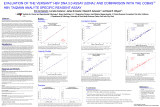 |
Konnick, Eric Q.; Ashwood, Edward R.; Hillyard, David R.; Comanor, Lorraine; Di Canzio, James | Evaluation of the Versant ? HBV DNA 3.0 Assay (bDNA)+ and comparison with the Cobastm HBV Taqman Analyte Specific Reagent Assay. | To evaluate the performance characteristics of the Versant ? HBV DNA 3.0 assay (bDNA)+ (Versant, Bayer Healthcare LLC, Tarrytown, NY). 2.) To compare the Versant assay to the COBAS HBV TaqMan Analyte Specific Reagent assay (TaqMan) (Roche Molecular Systems, Pleasanton, CA) using random and defined p... | International Standard; HBV DNA Tests | 2005-05-07 |