| Title |
Esther Kline, Interviews with Jews in Utah, Accn 998 |
| Alternative Title |
Accn 998, Interviews with Jews in Utah, Esther Kline |
| Description |
Transcript (69 pages) of interviews by Lorraine Ferra with Esther Kline for the Interviews with Jews in Utah Oral History Project. |
| Creator |
Kline, Esther, 1906- |
| Contributor |
Ferra, Lorraine; Oral History Institute |
| Publisher |
Digitized by J. Willard Marriott Library, University of Utah |
| Date |
1982; 1983; 1984; 1985; 1986; 1987; 1988 |
| Date Digital |
2015-07-06 |
| Access Rights |
I acknowledge and agree that all information I obtain as a result of accessing any oral history provided by the University of Utah's Marriott Library shall be used only for historical or scholarly or academic research purposes, and not for commercial purposes. I understand that any other use of the materials is not authorized by the University of Utah and may exceed the scope of permission granted to the University of Utah by the interviewer or interviewee. I may request permission for other uses, in writing to Special Collections at the Marriott Library, which the University of Utah may choose grant, in its sole discretion. I agree to defend, indemnify and hold the University of Utah and its Marriott Library harmless for and against any actions or claims that relate to my improper use of materials provided by the University of Utah. |
| Spatial Coverage |
Salt Lake City, Salt Lake County, Utah, United States, http://sws.geonames.org/5780993 |
| Subject |
Jews, American--Utah--Interviews; Kline, Esther, 1906- --Interviews; Peddling; Jews--Social life and customs; Bamberger Railroad Company; Kosher food |
| Abstract |
Lorraine Ferra conducted two interviews with Esther Kline (b. 1906), who talks about growing up in Salt Lake city, including her memories of Pioneer Day, local businesses, Kaplan (the local kosher butcher), the Bamberger Railroad, and her father's work as a junk peddler. She also talks about some of the early distinctions between the congregations B'nai Israel, Monefiore, and Shaary Tzedick. The transcript for this interview may not be complete. 69 pages. |
| Type |
Text |
| Genre |
oral histories (literary works) |
| Format |
application/pdf |
| Extent |
69 pages |
| Language |
eng |
| Rights |
 |
| Is Part of |
Interviews with Jews in Utah collection, 1982-1988, http://archiveswest.orbiscascade.org/ark:/80444/xv70657/; Aileen H. Clyde 20th Century Women's Legacy Archive |
| Scanning Technician |
Niko Amaya; Halima Noor |
| Conversion Specifications |
Original scanned with Kirtas 2400 and saved as 400 ppi uncompressed TIFF. PDF generated by Adobe Acrobat Pro X for CONTENTdm display |
| ARK |
ark:/87278/s6tx5954 |
| Topic |
Jews, American; Jews--Social life and customs; Peddling; Bamberger Railroad Company; Kosher food |
| Setname |
uum_iju |
| ID |
903795 |
| Reference URL |
https://collections.lib.utah.edu/ark:/87278/s6tx5954 |
| Title |
Page 29 |
| Format |
application/pdf |
| Setname |
uum_iju |
| ID |
903753 |
| OCR Text |
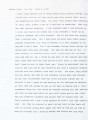
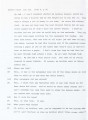
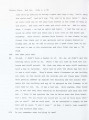
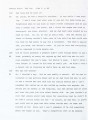
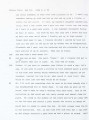
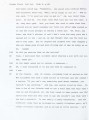
Show Esther Klein 1st Int. Side 2, p 28 school age then so I wouldn't see them come in so they'd be coming in probably during the day and we used to have another vacant lot near where we lived at that time. The big circus was where this great big vacant was over there where on about 9th South and between West Temple and 1st West. Somewhere in there and this great big lot. And we'd watch them put up the tents at that time. But then the medicine shows where they'd come in the little wagons, smaller wagons, they'd never hit town at the same time as I recall. And they would be, oh, on the other side of where we lived at that time. There used to be another vacant lot about a block away and, of course, everybody would be standing up trying to see what was going on on the tail end of that wagon. LOR Did you go after school to see the show? EK Well, they generally had the shows towards evening so we'd go as a family. They'd have this patent medicine and like Lydia Pinkham and other stuff. LOR What is that? EK I guess, Lydia Pinkahm used to be a patent medicine they used to say in later years a baby in every bottle. (laugh) LOR Oh, I see. EK And, but a lot of people believed in that medication, you know, be· cause there weren't too many doctors out West at that time. But they had lots of pharmacies around with the pharmacists and, gee, a lot of times, they acted like doctors. They really helped peopD out a great deal. LOR Did your parents buy the medicine from these places? EK I don't know whether they bought from the medicine shows or not. But I know they used to patronize the pharmacies. Because they |
| Reference URL |
https://collections.lib.utah.edu/ark:/87278/s6tx5954/903753 |