| Title |
Interviews with Japanese in Utah: Ronald K. Wakabayashi |
| Alternative Title |
Ronald K. Wakabayashi: interview on March 11, 1984 |
| Creator |
Wakabayashi, Ronald K, 1944- |
| Contributor |
Kelen, Leslie G., 1949- |
| Publisher |
Digitized by J. Willard Marriott Library, University of Utah |
| Date |
1984-03-11 |
| Date Digital |
2014-05-07 |
| Access Rights |
I acknowledge and agree that all information I obtain as a result of accessing any oral history provided by the University of Utah's Marriott Library shall be used only for historical or scholarly or academic research purposes, and not for commercial purposes. I understand that any other use of the materials is not authorized by the University of Utah and may exceed the scope of permission granted to the University of Utah by the interviewer or interviewee. I may request permission for other uses, in writing to Special Collections at the Marriott Library, which the University of Utah may choose grant, in its sole discretion. I agree to defend, indemnify and hold the University of Utah and its Marriott Library harmless for and against any actions or claims that relate to my improper use of materials provided by the University of Utah. |
| Spatial Coverage |
East Los Angeles, Los Angeles County, California, United States, http://sws.geonames.org/5344994/ |
| Subject |
Wakabayashi, Ronald K, 1944- --Interviews; Japanese Americans--Utah--Interviews; Japanese Americans--Forced removal and internment, 1942-1945 |
| Description |
Transcript (typescript, 54 pages) of an interview with Ronald K. Wakabayashi, a Japanese-American living in Utah in 1984. Mr. Wakabayashi (b. 1944) talks about his childhood in East Los Angeles, racism, and the differences among first, second, and third generation Japanese Americans. He recalls his experience with organizing outings for a population of California Isseis, single men who had never married and would never return to Japan. Of particular interest is his description of working with Japanese people who testified about their relocation camp experiences |
| Type |
Text |
| Genre |
oral histories (literary works) |
| Format |
application/pdf |
| Language |
eng |
| Rights |
 |
| Relation |
http://archiveswest.orbiscascade.org/ark:/80444/xv45901 |
| Scanning Technician |
Matt Wilkinson |
| Conversion Specifications |
Original scanned with Kirtas 2400 and saved as 400 ppi uncompressed TIFF. PDF generated by Adobe Acrobat Pro 9 for CONTENTdm display |
| ARK |
ark:/87278/s6g46746 |
| Topic |
Japanese Americans; Evacuation and relocation of Japanese Americans (United States : 1942-1945) |
| Relation is Part of |
Mitsugi M. Kasai Memorial Japanese American Archive |
| Setname |
uum_ijau |
| ID |
899599 |
| Reference URL |
https://collections.lib.utah.edu/ark:/87278/s6g46746 |
| Title |
Page 6 |
| Format |
application/pdf |
| Setname |
uum_ijau |
| ID |
899549 |
| OCR Text |
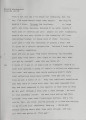
Show Ronald Wakabayashi 3-11-84 s1:5 you don't know what to do with. L Tell me about that. What did you get? RW Well, I didn't - the experiences that you're usually, you know, because of wanting to - we used to do the shopping, buying rice and staples, Japanese stables. You go down with your family once a month and it's akind of spiritual cultural center if nothing else. And. As you walk down the street with your parents, one of the things you'll encounter is you'll run into people that your parents know . And your parents will introduce you. And the introduction invariably is tied back to a reference that's camp related. This is Mr. So-and-So. He was in the same camp as us. And he lived on such and such a block, which meant nothing to me. L You thought, yesterday when you were saying that it was like a RW Yes, what else do you think ca-- L Yeah. RW See, I was familiar with it at that point by most of the you know churches had some sort of summer camp. So I thought it was one of those kind of camps. You know, kids, one year we went to a one year camp during the summer. I thought it was something like that they had a common exper.ience. And they all talked about. But the camps all had Indian names as far as I --you know, Topaz, which I thought was an Indian name then. Manzana which is-- L What does Tepa~ mean? |
| Reference URL |
https://collections.lib.utah.edu/ark:/87278/s6g46746/899549 |