| Title |
Interviews with Japanese in Utah: Edward I. Hashimoto |
| Alternative Title |
Edward I. Hashimoto: interview on April 25, 1984; May 2, 1984; and May 11, 1984 |
| Creator |
Hashimoto, Edward I., 1911-1987 |
| Contributor |
Kelen, Leslie G., 1949- |
| Publisher |
Digitized by J. Willard Marriott Library, University of Utah |
| Date |
1984-04-25; 1984-05-02; 1984-05-11 |
| Date Digital |
2014-05-07 |
| Access Rights |
I acknowledge and agree that all information I obtain as a result of accessing any oral history provided by the University of Utah's Marriott Library shall be used only for historical or scholarly or academic research purposes, and not for commercial purposes. I understand that any other use of the materials is not authorized by the University of Utah and may exceed the scope of permission granted to the University of Utah by the interviewer or interviewee. I may request permission for other uses, in writing to Special Collections at the Marriott Library, which the University of Utah may choose grant, in its sole discretion. I agree to defend, indemnify and hold the University of Utah and its Marriott Library harmless for and against any actions or claims that relate to my improper use of materials provided by the University of Utah. |
| Spatial Coverage |
Salt Lake City, Salt Lake County, Utah, United States, http://sws.geonames.org/5780993/ |
| Subject |
Hashimoto, Edward I., 1911-1995--Interviews; Japanese Americans--Utah--Interviews; Japanese Americans--Utah--Cultural assimilation; Japanese American physicians--Utah--Interviews; Railroads--Employees--Utah |
| Description |
Transcript (typescript, 89 pages) of three interviews with Edward I. Hashimoto, a Japanese-American living in Utah in 1984. Mr. Hashimoto (b. 1911) tells about his genealogy and the life of his parents and other family members in Japan. He details his father's immigrant experiences including working for the railroad, surviving an ambush by cowboys, and arranging immigration of Japanese laborers for mining and farming companies. He reminisces about his own childhood in Salt Lake City's "Japan Town," discusses prostitution and syphllis, discrimination, getting his medical degree from Harvard, and practicing in Salt Lake City. Other topics covered include Japanese folk medicine, civilian life in World War II, and teaching anatomy at the University of Utah |
| Type |
Text |
| Genre |
oral histories (literary works) |
| Format |
application/pdf |
| Language |
eng |
| Rights |
 |
| Relation |
http://archiveswest.orbiscascade.org/ark:/80444/xv45901 |
| Scanning Technician |
Matt Wilkinson |
| Conversion Specifications |
Original scanned with Kirtas 2400 and saved as 400 ppi uncompressed TIFF. PDF generated by Adobe Acrobat Pro 9 for CONTENTdm display |
| ARK |
ark:/87278/s67s95ht |
| Topic |
Japanese Americans--Cultural assimilation; Railroads--Employees; Japanese American physicians |
| Relation is Part of |
Mitsugi M. Kasai Memorial Japanese American Archive |
| Setname |
uum_ijau |
| ID |
899386 |
| Reference URL |
https://collections.lib.utah.edu/ark:/87278/s67s95ht |
| Title |
Page 56 |
| Format |
application/pdf |
| Setname |
uum_ijau |
| ID |
899351 |
| OCR Text |
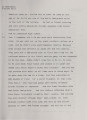
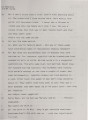
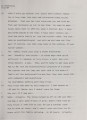
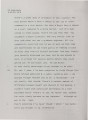
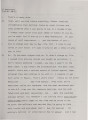
Show EI HAshimoto 5-11-84 s1:7 polite type of conversation we do with average Caucasian family. You say, hey, joe, how are you. How's your wife and so on.You might walk in and say, how do you do, youre looking well. How's your father and mother. And take maybe ten minutes of preparatory introductory talk befor-e you ~t down to the business of seeing the patient. But that's just a custom. I don~t believe my boy has learned that yet. Practice medicine. What's interesting. I'm not sorry that I went in the practiceof medicine. I hatedbusines~ecause of the competition and deciet that went along with it. Law I thought I would try one time when I was in high school, Iwas on the debate team. And a few other things. And then I decided, well, shucks, if I present my case b.efore a jry, I'd never get a fair trail formy client. L Why? EH BEcause of the prejudice, ethnic differences. And you wouldn't - ant htat still exists today. I've nver beeno n the winning side of a law suit yet. I've been down everal times. That may sound strange, but that's a fact. They might respect my position as a professor and every-thing else but when it comes down to the nitty gritty of guilty or not guilty, my client would lose out. That- 1n the early 1930s, earlier than that probably. That's one reasoin I decided not to go into law. I'd have to go into corporate law or something like that-It wouldn't be trial law. |
| Reference URL |
https://collections.lib.utah.edu/ark:/87278/s67s95ht/899351 |