| Title |
Interviews with Japanese in Utah: Ichiro Doi |
| Alternative Title |
Ichiro Doi |
| Creator |
Doi, Ichiro, 1917- |
| Contributor |
Kelen, Leslie G., 1949- |
| Publisher |
Digitized by J. Willard Marriott Library, University of Utah |
| Date |
1984-07-02 |
| Date Digital |
2014-03-25 |
| Access Rights |
I acknowledge and agree that all information I obtain as a result of accessing any oral history provided by the University of Utah's Marriott Library shall be used only for historical or scholarly or academic research purposes, and not for commercial purposes. I understand that any other use of the materials is not authorized by the University of Utah and may exceed the scope of permission granted to the University of Utah by the interviewer or interviewee. I may request permission for other uses, in writing to Special Collections at the Marriott Library, which the University of Utah may choose grant, in its sole discretion. I agree to defend, indemnify and hold the University of Utah and its Marriott Library harmless for and against any actions or claims that relate to my improper use of materials provided by the University of Utah. |
| Spatial Coverage |
Salt Lake City, Salt Lake County, Utah, United States, http://sws.geonames.org/5780993/ ; South Korea, http://sws.geonames.org/1835841/ ; Japan, http://sws.geonames.org/1861060/ |
| Subject |
Doi, Ichiro, 1917- --Interviews; Japanese Americans--Utah--Interviews; Utah--Ethnic relations; Hoteliers; Pearl Harbor (Hawaii), Attack on, 1941--Influence |
| Description |
Transcript (typescript, 28 pages) of an interview on July 2, 1984, by Leslie Kelen with Ichiro Doi, who was born in Utah in 1918 and grew up in Salt Lake City. Mr. Doi (b. 1917) talks about his parents, farming, the flu epidemic of 1918, and emigrant life on the West Side in Salt Lake City. He recalls the multi-cultural neighborhood of his childhood and gang activity. Other topics covered include the Athens and West Side hotels (which were owned by his family), the Buddhist Church, the Japanese Christian Church, courting his wife, the Eagle laundry, and life in Salt Lake City in the months following Pearl Harbor |
| Type |
Text |
| Genre |
oral histories (literary works) |
| Format |
application/pdf |
| Language |
eng |
| Rights |
 |
| Relation |
http://archiveswest.orbiscascade.org/ark:/80444/xv45901 |
| Scanning Technician |
Matt Wilkinson |
| Conversion Specifications |
Original scanned with Kirtas 2400 and saved as 400 ppi uncompressed TIFF. PDF generated by Adobe Acrobat Pro 9 for CONTENTdm display |
| ARK |
ark:/87278/s6g74wt9 |
| Topic |
Japanese Americans; Hotelkeepers; Pearl Harbor, Attack on (Hawaii : 1941) |
| Relation is Part of |
Mitsugi M. Kasai Memorial Japanese American Archive |
| Setname |
uum_ijau |
| ID |
897619 |
| Reference URL |
https://collections.lib.utah.edu/ark:/87278/s6g74wt9 |
| Title |
Page 48 |
| Format |
application/pdf |
| Setname |
uum_ijau |
| ID |
897603 |
| OCR Text |
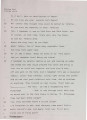
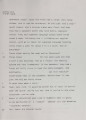
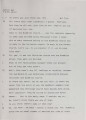
Show Ichiro Dei 7-6-84 s1:14 L i SO there was just those two. The a1d Troy. ID Oh, there were other laundries, I guess. Peerless. But they're all out, just like we are. They're all out of business too, now. L Back to the Buddhist Church···· Was the Japanese community in some ways divided along religious lines. I mean, did so many Japanese belong to the Buddhist Church and so many to the Christian church. So many to the Mormon Church, let's say. Do you~member if it was divided like that. ID OH, yes, it was the Christian church and the Buddhist group, they were all divided. L What is the relationship between those two groups? How do they see each other? ID Well, thre wasn't any ill feelings or anything between the two ~pups.It was harmonious relationship between Christian and Buddhist church. L Is there any sense, let me ask you this, is there any sense from the point of you the Buddhist members that membersof the Christian church have become more white, more caucasian. They're trying to assimilate more? ID Hmmmm .. Not in the early days, I wouldnt say so~ No, Idon't think there was any of that. L Do you think there's some of that now? ID No· We have - we have - equal, I would say. The Buddhist group has an equal number of married out side of their |
| Reference URL |
https://collections.lib.utah.edu/ark:/87278/s6g74wt9/897603 |