| Title |
Bernice Gibbs Anderson, Golden Spike Oral History Project, GS-4 and GS-5, August 9, 1974, American West Center, University of Utah |
| Creator |
Anderson, Bernice Gibbs |
| Contributor |
Thompson, Gregory C. (Gregory Coyne), 1943-; Notarianni, Philip F.; University of Utah. American West Center |
| Publisher |
Digitized by J. Willard Marriott Library, University of Utah |
| Date |
1974-08-09 |
| Date Digital |
2015-06-17 |
| Spatial Coverage |
Promontory (historical), Box Elder County, Utah, United States, http://sws.geonames.org/5780007/ |
| Access Rights |
I acknowledge and agree that all information I obtain as a result of accessing any oral history provided by the University of Utah's Marriott Library shall be used only for historical or scholarly or academic research purposes, and not for commercial purposes. I understand that any other use of the materials is not authorized by the University of Utah and may exceed the scope of permission granted to the University of Utah by the interviewer or interviewee. I may request permission for other uses, in writing to Special Collections at the Marriott Library, which the University of Utah may choose grant, in its sole discretion. I agree to defend, indemnify and hold the University of Utah and its Marriott Library harmless for and against any actions or claims that relate to my improper use of materials provided by the University of Utah. |
| Subject |
Anderson, Bernice Gibbs--Interviews; Golden Spike National Historic Site (Utah)--History |
| Description |
Two transcripts (30 pages and 29 pages) of interview by Greg Thompson and Phil Notarianni with Bernice Gibbs Anderson on August 9, 1974 for the Golden Spike Oral History Project. |
| Collection Number and Name |
Ms0095, Golden Spike oral history project, 1947-1974 |
| Abstract |
Anderson (b. 1900) recalls growing up west of Corinne, Utah. Her family took their cattle to the Promontory area every summer. She describes the area and talks about the people who lived in the area. Other topics include conflict between the Irish and Chinese, Crockers ranch, Captain Bufford, Leland Stanford letting stock loose in the area, Holly ranch, passenger trains, the telegraph line, freighting, a robbery in Corinne, the prohibition of liquor, and World War I. Interviewed by Greg Thompson and Phil Notarianni. 30 pages. Anderson continues with a description of Chinese labor in the area, bandits, brakemen, freight cars, the Golden Spike, Wilson Wright, the federal government, National Parks, veterans organizations, and Heber Sessions. Interviewed by Greg Thompson and Phil Notarianni. 29 pages. |
| Type |
Text |
| Genre |
oral histories (literary works) |
| Format |
application/pdf |
| Language |
eng |
| Rights |
 |
| Is Part of |
Inventory of the Golden Spike oral history project, 1947-1974; http://nwda.orbiscascade.org/ark:/80444/xv31866 |
| Scanning Technician |
Niko Amaya; Halima Noor |
| Conversion Specifications |
Original scanned on Epson Expression 10000 XL and saved as 400 ppi TIFF. Display image generated in Acrobat Pro X as PDF |
| ARK |
ark:/87278/s6b01000 |
| Topic |
Utah--Golden Spike National Historic Site |
| Setname |
uum_gsohp |
| ID |
866615 |
| Reference URL |
https://collections.lib.utah.edu/ark:/87278/s6b01000 |
| Title |
Page 41 |
| Format |
application/pdf |
| Setname |
uum_gsohp |
| ID |
866590 |
| OCR Text |
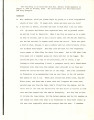
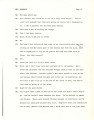
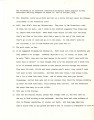
Show ANDERSON 5 T: I see. Do you know if any of those families are left today? A: Well, descendants of them are all over in the farming district. T: So, some of them are still farming. A: Oh, yes, and the Golden Spike is run by one of them that came out of California during the. War, you know, when they had the camp. T: Relocation? A: Camp Topaz and they put them in it. But they let him come here, and he ran our farm for awhile. We were in the store in Corinne. T: Oh, my! A: We leased him the farm and he ran it: He was a good farmer. T: Do you recall his name? A: I don't at the moment. Don't put this in for goodness sake! Ichi. Nisogi. Ichi and Nisogi, I can't remember, let me get the phone book T: Well, Nisogi, ·well we can look that up. Urn and he came after World War II. A: When they • . • when they • . • put those camps in. But he came here, it seems we had some Japanes~ here that sponsored him. P: Is he still over at the Golden Spike? A: Yes, he is. P: He would kn·ow some of the other families here, wouldn't he? A: He would know all the Japanese, but th.ey didn't work on the railroad. They came into here, of course, to farm. The sugar company brough.t the first ones in 1913. And I have known Japanese families since and they've been, they've been wonderful. T: Somebody was mentioning to us that there was a section of Corinne th.at was where these people lived. |
| Reference URL |
https://collections.lib.utah.edu/ark:/87278/s6b01000/866590 |