| OCR Text |
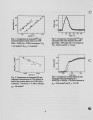
Show Mech 1.2, which involved application of the optimization procedure to 47 target data points covering a wide range of conditions. The natural gas combustion chemistry is described in tenns of 177 reactions involving 31 species. The version 1.2 mechanism, and subsequent improvements and extensions, are available for distribution and use by the natural gas industry and combustion research community on the Internet by anonymous ftp to unix.sri.com (go to directory gri) or by World Wide Web using the uri locator http://www.gri.org (go to Basic Research). For describing practical combustion systems, 2 or 3-dimensional computer modeling of combustion process is often required. Restrictions on computer time and storage in such calculations, however, allow one to do them only with simplified chemical reaction mechanisms smaller than GRI-Mech. Here we present 3 reduced mechanisms of natural gas combustion: two with 22 and 19 species, respectively, derived from GRI-Mech 1.2 using a standard reduction technique, and one with only 9 species built using a generalized intermediate approach. We have recently released a first version of an optimized mechanism for NO production and reburning kinetics, GRI-Mech 2.1. The new mechanism, based on version 1.2, adds 99 reactions involving 18 nitrogen species, and was optimized against a limited available set of 11 target experiments. OPTIMIZATION PROCEDURE To develop the initial reaction set (the trial mechanism), a number of previous proposals were examined in detailJ 1-7] In addition to selecting the reactions and starting rate coefficient expressions, the uncertainty range of each rate coefficient was also evaluated for use in the automatic optimization process. The optimization procedure was analogous to that described by Frenklach et alJ7] Following a detailed review of the literature 37 shock-tube ignition delay and species profile measurements, from 7 different experiments, and 7 flame speed values and 2 species proftles were chosen for the GRI-Mech 1.2 optimization targets. It was intended that this set provide a balanced representative sample of the relevant literature data over a wide range of stoichiometries, pressures, and temperatures, and pennit identification of a set of elementary reaction rate coefficient expressions capable of accounting for both the target data and the rest of the (valid) ignition and flame data as well. We were guided in this process by the results of our first optimization effort, GRI-Mech 1.1, which used a more limited set of 10 targets. 3 |