| OCR Text |
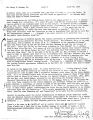
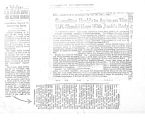
Show Dr. Harry G. Dorman, Jr. -page 2- April 29, 1969 on Soviet Jewry, make it a permanent body, and they will help as raise the funds. In this they are now giving directions and will brook no opposition." ine outcome indicates the force of those directions. Another deposition-by the William Korey cited in the Times-points to r.ie same conclusion, though less succinctly. It's about 40 pages long and the accompanying documentation on which he was examined under oath is even longer. It relates to the employment B o f one Mrs. Avis Shulman to operate-under Israeli direction-in the B'nai B'rith International Council, "with a name invented that is natural . . ." (to quote her own im- Cc\pounded memorandum) to "offer the best base from which to operate." This was, as a Korey memo indicated, with the "intention to have it understood that she was to work for w the International Council . . . (though) I was never advised as to precisely what . . . JP her public identification would be." Korey's deposition of 6/20/68 depicts the Israeli government as providing both financial support and policy directives for B'nai B'rith activity. For instance, on p. 14 we read that Eliav, Consul General of Israel in N. Y., "indicated in the presence of Ranaan" that they would "pick up the tab for $400 for Avis Shulman to work for the balance of the year." Later (pp. 23-26) we find Korey referring to "our friends" (i. e. Ranaan, tied in with Eliav and Uri, "all connected with the Consul General from Israel") wanting "to know about the future budget for Avis" and insisting that "her instructions would come only from them." And in his memo of March 22, 1961 (p. 30), he noted "I believe I shall be able to prevail upon them so that this month's bill (for Mrs. Shulman) will have to be paid." In this latter connection U s xn an earlier report of a meeting with "our friends") there is mention of one Moshe Dectir (formerly with B'nai B'rith's Anti- Defamation League) who was on Fulbright's pan at the time o the Senate 1963 investigation of unregistered Israeli foreign agents. I've heard he s suspected of being a channel for getting Israeli spy-secured information to the NGO's but I haven't been able to document this yet. To return to the Times news item: It quotes William Korey o < efending himself, B'nai B'rith and the COJO by referring to "some of his articles on human rights." In this connection I'd like to quote from a supportive document cited along ide the Korey deposition. It is an internal report made to the Anti-Defamation League of B'nai B'rith (with offices next to Korey's) by Arnold Forster, its General Counsel, in October, 1965. (He's the one who, with David Hunter, objected to our publishing the National Council of Churches' Resolution on the Near East Crisis in the Times.) Atop p. 46, it deplores the fact that "many elements in the Jewish community are convinced 'things are good'"(i. e. anti-Semitism is declining, as indeed it seems to be) and notes that "the only way these Jews will be persuaded to join defense efforts is to 'dress up' programs with the problems of other ethnic groups, camouflaging the fight for the Jewish minority in an across-the- board fight for all minorities." It is simply interesting to note in passing that Korey uses the same !!dressing up" and "camouflage" in his plea for NGO acceptability. Further in passing-anent the recent confrontation of American Jewish Committee staff with the National Council of Churches' Near East panel-you'11 be interested in a single further sentence (amply illustrated) from Kaufman's 12/2/65 memo noted above: "The A. J. Committee . . . . breaks its word whenever publicity for itself can be gained."! W There's a lot more in $» CJt3271-67 and in another libel suit J^ C.IL216-69 fagainst B'nai B'rith) but I feel that if any further digging is in order it shoulo oe by a Washington-based professional researcher, not me, though I'll await )^our j this, too. y ,, Fraternal W\ (. priont on Near East Chairman, Pres UA-&<J ^kj &Jyp cry of i. Y. C. A |