| OCR Text |
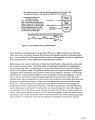
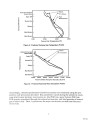
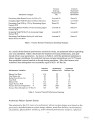
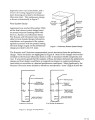
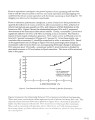
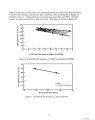
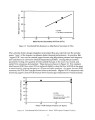
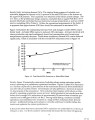
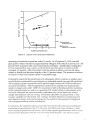
Show 400 • 300 MWe • 11.5% Reburn Fuel Heat Input O l I I I I 0 20 40 60 80 Main Burner Secondary Air Flow (m3/s) Figure 12: Post-Retrofit NOx Emissions vs. Main Burner Secondary Air Flow The Ladyzhin boiler design integrates recirculated flue gas, injected near the aerodynamic "nose" of the furnace, to enhance boiler thermal performance. In practice, this "upper FGR" was used to control upper furnace slag deposition patterns and improve non-uniformity in convective section temperature profiles. During reburn system parametric testing, the quantity of recirculated flue gas at the nose was varied, and outlet N O x emissions documented. These data are shown in Figure 13. For constant total furnace FGR flow rates, N O x is reduced slightly when the flow of F GR at the nose is minimized by closing dampers to a 25-percent open position. As upper furnace FGR increases, the FGR flow into the lower furnace decreases. Higher N O x is observed with increasing upper furnace FGR because lower furnace gas temperatures would increase, •:: • 286 MWe • 11.5% Reburn Fuel • Burnout Air and Reburn FGR Dampers 100% Open 25 50 75 100 "Nose" FGR Damper Postion (% Open) Figure 13: Post-Retrofit NOx Emissions vs. "Nose" FGR Injector Damper Position CO o o O E Q. a. x O z 300 200 100 n J 3U 300 - CO o . l_ k_ o o E n Q. **-* X O z 250 200 150 100 50 n - 15 |