| Title |
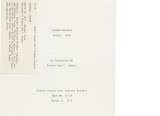
Joseph Dalpaiz, Helper, Utah, Carbon County oral history project, No. CC-29, March 12, 1973 |
| Creator |
Dalpaiz, Joseph, 1901- |
| Contributor |
Tomsic, Kendra; Tomsic, C.; University of Utah. American West Center |
| Publisher |
Digitized by J. Willard Marriott Library, University of Utah |
| Date |
1973-03-12 |
| Date Digital |
2015-12-28 |
| Spatial Coverage |
Carbon County, Utah, United States, http://sws.geonames.org/5536454 |
| Access Rights |
I acknowledge and agree that all information I obtain as a result of accessing any oral history provided by the University of Utah's Marriott Library shall be used only for historical or scholarly or academic research purposes, and not for commercial purposes. I understand that any other use of the materials is not authorized by the University of Utah and may exceed the scope of permission granted to the University of Utah by the interviewer or interviewee. I may request permission for other uses, in writing to Special Collections at the Marriott Library, which the University of Utah may choose grant, in its sole discretion. I agree to defend, indemnify and hold the University of Utah and its Marriott Library harmless for and against any actions or claims that relate to my improper use of materials provided by the University of Utah. |
| Subject |
Dalpaiz, Joseph, 1901- --Interviews; Coal mines and mining--Utah; Strikes and lockouts--Miners--Utah; Italian Americans--Social life and customs; Mafia--United States; Ku Klux Klan (1915- ); Jones, Mother, 1837-1930; Miners--Labor unions |
| Description |
The interview with Joseph Dalpaiz covers the subjects of his father, mining, strikes, prejudice, the company store, Helper, the mafia and the Ku Klux Klan, leaders in Helper, wages, and church. The Carbon County oral history project (1972-1993) consists of oral histories from residents of Carbon County, Utah. While the main emphasis is on living in coal mine country, the interviews are verbal snapshots of rural Utah life from the earliest settlers to as recently as 1993. |
| Collection Number and Name |
Accn1479, Carbon County oral history project, 1972-1993 |
| Type |
Text |
| Format |
application/pdf |
| Language |
eng |
| Rights |
 |
| Relation |
http://archiveswest.orbiscascade.org/ark:/80444/xv38397 |
| Scanning Technician |
Mazi Rakhsha |
| Conversion Specifications |
Original scanned with Kirtas 2400 and saved as 400 ppi uncompressed TIFF. PDF generated by Adobe Acrobat Pro X for CONTENTdm display |
| ARK |
ark:/87278/s6p57qtj |
| Topic |
Italian Americans--Social life and customs; Miners--Labor unions; Strikes and lockouts--Miners; Coal mines and mining; Mafia; Ku Klux Klan (1915- ); Jones, Mother, 1837-1930 |
| Genre |
oral histories (literary works) |
| Setname |
uum_ccoh |
| ID |
783938 |
| Reference URL |
https://collections.lib.utah.edu/ark:/87278/s6p57qtj |
| Title |
Page 13 |
| Format |
application/pdf |
| Setname |
uum_ccoh |
| ID |
783912 |
| OCR Text |
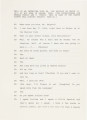
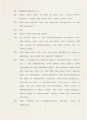
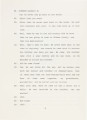
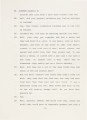
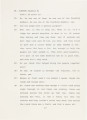
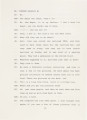
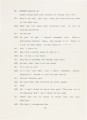
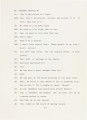
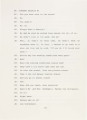
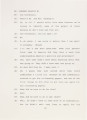
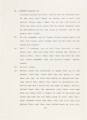
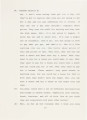
Show DR. JOESEPH DALPAIZ #1 KT: Did your parents farm there? JD: No, my dad never farmed. No, he went into business down in Helper. First he would tend bar, and he did that for a couple of years. Then he went into the saloon business himself and it just went like that. KT: Well, you said that you didn't think there was too much prejudice or they didn't think--did the people get together a lot in the camps in Helper and so on? JD: Yeah. The Italian Lodge that is here now was formed in Castle Gate, and that lodge was built for a 4th of July Celebration, they built--what they called it, "the bowery," and all it was was a floor, a roughpine flooring, and they built a top to it that was shaded with branches and trees. Of course they had a celebration up there, a three or four-day celebration up at Castle Gate, and then all the people--well, the others and the Italians went up there and they went and celebrated for three days at this bowery and they got along pretty good. TK: Did they have any real problems with language barriers at all? JD : Oh, it' s always a problem when they can' t speak it it's a problem for sure. Of course none of them went to school in this country, and naturally it was hard for them to learn. They just picked it up, but 11 |
| Reference URL |
https://collections.lib.utah.edu/ark:/87278/s6p57qtj/783912 |