| OCR Text |
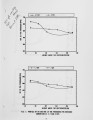
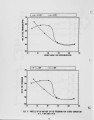
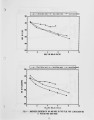
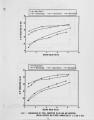
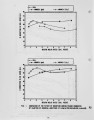
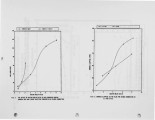
Show (1) (2) 0 (3) (4) (5) CONCLUSIONS The present study has shown that significant reduction in NO and NOx emissions can be achieved by using staged combustion combined with ammonia injection. Under staged combustion conditions combustion efficiency was reduced by about 2 to 4% depending on fluidising velocity and there was an increase in the level of CO in the flue (0.1 to 0.45%) depending on fluidising velocity. Staged combustion led to a significant reduction in the levels of NO and NOll' The NO and NOx emissions were 285 and 310, 280 and 320 and 285 and 305 ppm when fluidising velocities were 1.2, 1.7 and 2 m/s respectively. NO and NOx reductions avera~ed about 37% and 40% irrespective of fluidising velocity. We can say that for similar levels of staging NO and NOx emissions were only slightly affected by fluidising velocity. Ammonia gas injection led to a decrease in NO and NOx emissions during unstaged and staged combustion. For staged combustion, ammonia injection gave a maximum reduction approaching 70% of NO and NOx at an NH3/NO molar ratio of 8: 1. Reductions of between 40-50% were achieved at a molar ratio of only 0.6 (which is likely to meet proposed EEC emissions limits). Unsta~ed combustion would require a molar ratio of 8.1 to achieve similar reduction. Ammonia carry-over also increased with increasing ammonia flow, with a maximum slippage of 123 ppm at a molar ratio of 8.1. However at a molar ratio of 0.6: 1 the ammonia carry over was only between 20-3Oppm, which may be considered environmentally acceptable. Ammonical liquor injection was very effective in reducing NO and NOx emissions and was superior to ammonia gas injection at low molar flowrates. Over a 50% reduction in NOx was achieved at a mole ratio of only 0.6. AmmoJ!ia. carryover was acceptable (~10 ppm) at a ~ole r~~o o! less than 1. eo eDllsslons however were substantially higher for liquor mJection and were 0.45% for a 50% reduction in NOx over double those for gas injection. Injection of urea during air-staged operation achieved comparable NO reduction to those obtained for ammonia gas or liquor. However, sintering and agglomeration of bed solids occurs when excess urea is added to the bed (i.e. at mole ratios greater than 4). ACKNOWLEDGMENT Part of this work was supported by a grant from British Coal. The views expressed are those of the authors and not necessarily those of British Coal. REFERENCES 1. Lyon, R.K.: Hydro Proc., 58 1091979. 2. Slack, A V.: I.Chem.E. Symp. Sere 57 011979 3. Hampartsoumian, E. and Gibbs, B.M.: J. Inst. of Energy, p402 1984. 04. Barnes, J.P.: Ph.D. Thesis, Department of Fuel and Energy, University of Leeds 1988. ' 7. |