| OCR Text |
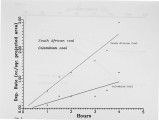
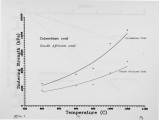
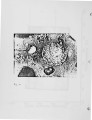
Show The main deposit matrix is quartz and mullite which are the stable phases in the concentration range of CaO, Al 0 , SiO , as desumed 232 from phase equilibria diagrams /12/. Inserted in the main aluminum silicate matrix are framboids of ferrous and ferric oxides see fig. 11. 6. Conclusions Combustion tests in wall firing mode were performed in a laboratory furnace facility to collect ashes deposited on cooled tubes exposed at a gas temperature between 1100 - 12000 C. Two bituminous coals of different ash content were used to assess their fouling tendency. Deposi tion rate measurements show that increasing ash content of a coal does increase the rate at which deposits accumulate. However this parameter gi ves no information on fouling tendency. As a matter of fact, colombian coal with a lower ash content and chemical composition similar to the south african one, presents greater deposit problems. - Few fouling factors, derived from chemical analysis and sodium potassium content in coal ash, do not appear useful predictors of furnace cleanability, at least for our laboratory combustion parameters and for the two bituminous coal used. - The ash sintering test appears to be a reasonably realistic way of simulating the development of strength in fly ash deposits. A non fouling coal as the south african gives pellet strength less than 10 MPa at 900°C and compression strength is a weak function of increasing temperature. Future work will involve fouling tests to be performed on a full-scale power plant supplied with the same pulverized fuels and more coals of different ash composition of subbituminous and lignite type ash |