| OCR Text |
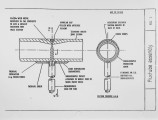
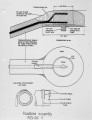
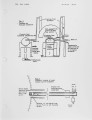
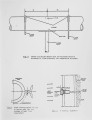
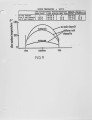
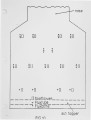
Show Calibration W1thin usable limits the calibration of each instrument can be theoretically established using a knowledge of the cylinder thermal -conduct1vity and the spacing of the sensing thermocouples. During " manufacture careful material selection and engineering are employed to maintain sensor conformity. Nevertheless an individual calibration 1s an essential requ1rement. The ideal method of calibration is the introduction of the device 1nto a black body furnace produc1ng a representative heat flux. In pract1ce a comparative method is used. The eqUipment is shown 1n Figure 3 and employs an array of l1near high intensity halogen lamps. These are mounted in a cylindrical plane behind which 1s a highly reflective, water cooled, diffuse reflector. ~ater cooled sensors of both types ~y be closely mounted beneath the array. A radiant source 1s thus provided having a flux intensity relatively insensit1ve to the exact position of the sensor and in particular providing a wide area of uniform intensity to minimise thermal gradiants along the surface of the sensor and surrounding reg1on. In use every production unit 1s compared in output to a similarly constructed reference unit at typical flux intensities 100-200 K~/M2. To provide a direct reference to black body h~at flux, transfer standard units (Figure 4) have been constructed which are water cooled probe versions of the production sensors. These can be either mounted below the comparitor source or inserted to be flush with a black body source s?here (also shown on Figure 4). Periodically the comparator and reference units are checked against these transfer standards. f~rfor~nce Evaluation The development of Fluxdoree lncluded a ~horough theoret1c51 5nalys1s using the heat transfer m~del FLHE developed at the Berkley Nuclear Laboratories. Th1S ~odel calculates the temperature distribution and heat flux across the bou~dar1es for pres~r1bed ste~n water te~peratures. Cons1deration of deVice surface te~perature and e~fe~ts upon ash ~hickness were confir~d to be essential co~pone~ts c! :be des1gn requirement for any flux ~easurlng devlce. A n~mber of des1gn !eat~res were examined 1nclud1ng the 1nsula:!on effects be~ween guard ring and ~e~sur1ng cylinder, the p;Esence of voids within ~he drawn arc weld zcne ancl the 1nfluence of var!ed peripheral TIG weldi~g . I: was shown that all :i~ely ~nufactur1ng 1~st c:l~ :1on and opera:1onal '/ ~r~ables could have c~l y small (up to +/- 8% ) e::e~t on its ca11bra~ic ~. The ~Jority of : ~l s cncerta1nty (up to ~ ! - 5%) is 6 feature of ~~~~acture and 1s El!~:nated by individual ca.~brat1on. ,/ ' / ' -/ |