| OCR Text |
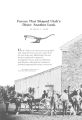
Show Forces That Shaped Utah's Dixie: Another Look BY MELVIN T. SMITH / U T A H ' S DIXIE HAS DISTINCTIVE geographic and cultural features that set it apart from the rest of the state. Historically, the area has been subjected to numerous development forces, both non-Mormon and Mormon. Although the traditional historical approach has been to look at the Dr. Smith is director of the Utah State Historical Society. •v?.:t \ *?. • v • ; > • « . • ••v.cA\ v V-j • . K > ^ 11 j \t: •? : > : i v \ l j i .» 112 Utah Historical Quarterly region chronologically from the Mormon point of view, this paper will attempt, first, to review several national and regional forces that had an impact on Dixie and to look at Dixie's impact on the national movements; second, to look at the Mormon settlement forces seen from the perspective and objectives of the church leadership rather than from the settlers themselves; and, finally, to make some observations about these factors as forces in the area's development. One begins the story by asking what Utah's Dixie is. Former President Harry S Truman, when referring to the development of the atom bomb and its use in World War II against Japan, spoke of that spot in western Utah where the bomber crews were trained, as Leftover, Utah, not a very complimentary term but yet a rather apt description of Wendover as the Nevada border. In some w7ays that term could be appropriately applied to southwestern Utah. Dixie is bounded on the east by the faulted cliffs of the Colorado Plateau; on the south by the Grand Canyon, dug according to folktales by a Scot who lost a dime in a gopher hole; on the west by the dry deserts of the Great Basin of which Death Valley is a major feature; and on the north by the south rim of the Great Basin, old Lake Bonneville, and the lava-coverecl Black Ridge.1 Prominent there too is the volcanic laccolith uncovered by millennia of erosion and named now Pine Valley Mountain. The black rocks between St. George and Santa Clara look like the clinkers of hell dumped by Beelzebub in stoking his numerous volcanic furnaces to raise the summer temperatures above 110 degrees in the shade. No wonder George A. Smith is credited with saying, "If I had a lot here and one in Hell, I'd sell the one in St. George."2 Dixie pioneers felt the heat. George Washington Brimhall referred to the lower Virgin River region as "Burnt Country.'" Joseph W. Young speculated that one could hatch eggs without a mother hen, since frying eggs in the sun w7as a cinch.1 Perhaps most descriptive was Rufus C. Allen's report that in June 1855 while exploring the Colorado River near Black Canyon, "the water boiled in their canteens and the metal stirrups on the saddles were too hot to keep their feet in."5 One questions reports, 1 Melvin T. Smith, "The Colorado River: Its History in the Lower Canyons Area" (Ph.D. diss., Brigham Young University, 1972), chap. 1. 2 The quotation is credited to George A. Smith. See Juanita Brooks, On the Ragged Edge: The Life and Times of Dudley Leavitt (Salt Lake City: Utah State Historical Society 1973) pp. 74-75. 7' '' s See report of George W. Brimhall to George A. Smith, December 10, 1865, in Archives Division, Historical Department, Church of Jesus Christ of Latter-day Saints' Salt Lake City. 4 See letters of Joseph W. Young in Deseret News, August 29, 1868. J Thomas D. Brown, "Journal of the Southern Indian Mission," n.p., typescript, Lee Library, Brigham Young University, Provo, Utah. Forces That Shaped Utah's Dixie 113 howrever, that Gila monsters actually roll over on their backs to cool their hot feet. Nevertheless, woe be to the novice who ignored the certain realities of desert heat, as the tragedy of the Davidson family below Beaver Dam so sadly illustrates.0 Dixie is desert, dependent upon the waters of the mighty, muddy Virgin River and tributaries, which waters bloated the denizens while it fed their thirsty crops. Its tributaries en route to the Colorado River carved their ways across mountains and into the bowels of mother earth, leaving escarpments, mesas, cliffs, canyons, and formations of great variety and exquisite beauty, especially during sunrise and sunset. Its flora and fauna are varied but restricted. Its weather is mild. When it is cold in Dixie, they say, "That's a good place to spend the winter." Dixie is also capricious. Dixieites can have fresh corn for Thanksgiving but freeze their fruit in May. Dixie is also springs-warm ones, some of them •-sand and soil, and opportunity limited only by the will and labor and technology of those who live there. But most of all, Dixie in the past has been out of the way: no harbor, no highways, no navigable rivers, no railroad, no space port- sort of leftover from the geography of the Colorado Plateau south and east and the Great Basin north and west. Getting to Dixie has always been a problem. Father Escalante related how cleverly their timid Pauche guide abandoned them at the crest of the Black Ridge.7 Early Mormon settlers lamented their plight to Brigham Young. In effect, no one could build a road across the Black Ridge. Even Gentiles had sense enough to go around, choosing the route west from Cedar City to the Mountain Meadow7, Santa Clara Creek, Beaver Dam, and Vegas Springs on their wray to California.s Did that bother Brigham Young? Not at all! And Heber C. Kimball even less. Rapt in vision, the latter proclaimed: "I prophesy in the name of the Lord God that the saints will not only build a road across the Black Ridge, but will also build a temple to the Most High on the banks of the Virgin River. . . ,"!' And one thought there were problems before! So Mormons selected Peter Shirts to locate a route. He reported a good one along the east base of Pine Valley Mountain, except "James G. Bleak, "Annals of the Southern Utah Mission, Book A," pp. 469-73, typescript, Dixie College Library, St. George, Utah. James Davidson and his wife and son died from lack of water in June 1869 en route from the river to Mormon Wells. 7 Ted J. Warner, ed., The Dominguez-Escalante Journal, trans. Fray Angelico Chavez (Provo, Ut.: Brigham Young University Press, 1976), pp. 77-78. 8 The sites mentioned describe the route of the Old Spanish Trail and a portion of the later Mormon-California Trail. s Bleak, "Annals," p. 15. 114 Utah Historical Quarterly for about two hundred yards. "What's there?" "A canyon!" "How do we get across?" You guessed it-that is Peter's Leap, up from Pintura a few miles. It could be called the precursor of the better-known Hole-in-the- Rock of 1879.10 (Despite what avid residents claim, Dixie is not the site of the original Garden of Eden, and when Jedediah Smith in 1826 called the Virgin the Adams River he meant John Quincy, not Father.) The point is that Dixie is very much a part of the American Southwest and as such has been influenced by the peoples and by the social, economic, and political fortunes of the larger area. Several of these are noted briefly. The Indians' heritage can still be seen there. The earliest inhabitants in past millennia were the Desert Archaic peoples and later the Anasazi.11 The Lost City peoples, located near present-day Overton, Nevada, with their hundred-room house and settlements extending thirty miles along the Muddy River, were most impressive. They claimed the area from about A.D. 500 to A.D. 900.12 Remnants of the old irrigation canals were reported by early Mormon settlers a thousand years later. These people appear to be the region's first growers of cotton and producers of dyed and woven cotton clothes.15 Also contemporary with the Anasazi were the Fremont Indians to the north who gathered, hunted, farmed a little, and traded throughout the area.11 The historic Indians consisted of the Paiutes who arrived about A.D. 1200ld and the Navajo and Utes who resided peripherally but raided into the area. In time the Southern Paiutes, living lives of sheer survival, adapted to the deserts and canyons well enough to endure the slave raids of the Utes and the coming of the white men. Nevertheless, those with energy and determination perished in combat. Many who sought "peace in their time" were enslaved, or their children were. No wonder their heirs have such a limited legacy. Next on the scene were the Spaniards who, less than fifty years after Columbus had-through Cortez, Cabeza de Vaca, Coronado, and 10 Ibid., p. 36. Shirts's survey work was not completely acceptable. The "Leap" west from Pintura can be seen today. "Jesse D. Jennings, "The Aboriginal Peoples," Utah Historical Quarterly 28 (I960) • 210-21. " M. R. Harrington, "Ancient Tribes of the Boulder Dam Country," p. 2, reprinted by Lost City Museum, Overton, Nevada, from an article written by Mr. Harrington'while curator of the Southwest Museum, Los Angeles, California. See also, Byron Cummings, First Inhabitants of Arizona and the Southwest (Tucson: Cummings Publication Council, 1953), pp. 5-10. 13 Harrington, "Ancient Tribes," pp. 76-79. 14 Albert H. Schroeder, "The Archeological Excavations at Willow Beach, Arizona, 1950," p. 3, MS, Lake Mead National Recreation Area, Boulder City, Nevada. 13 Jennings, "Aboriginal Peoples." Forces That Shaped Utah's Dixie 115 Cardenas-reached to within a hundred miles of Utah's Dixie in their quest for gold, glory, and God.10 How7ever, it was settlements in Alta, California, in the second half of the eighteenth century that brought Spaniards to Dixie.17 During the summer of 1776 Padre Garces, a kind of Catholic Jacob Hamblin, explored a northern Arizona route between central California and the Hopi villages. His report mentions the "Pauches" living north of the Colorado, that is, in Utah's Dixie.18 That summer also two Catholic priests-Fathers Atanasio Dominguez and Silvestre Velez de Escalante- led a small expedition north from Santa Fe, through southwestern Colorado into Utah's Uinta Basin, west to Utah Lake, and then south. Their destination had been Monterey, California, but a heavy snowstorm below present-day Delta, Utah, forced a change of plans. The new objective was to return to Santa Fe as quickly as possible across the Colorado River.19 That decision put Utah's Dixie on the map literally. Don Bernardo Miera y Pacheco identified the Virgin River, Ash Creek, Pearce's Wash, and the Hurricane Fault-not by those names, how ever. Fathers Dominguez and Escalante also gave a good description of the mild climate of mid-October and of the Indians and their small farms. Devout Dixieites may wonder why the padres did not just stop and stay, especially with name potentials like St. George and Santa Clara for the area. However, the party's condition was quite desperate, and the padres needed to make their report. On their return to Santa Fe they discovered the old Indian crossing of the Colorado River, since known as the Crossing of the Fathers.20 The next fifty years became a period of transition. Mexico won her independence from Spain in 1821 and claimed control of the area. Even so, Americans with and without their Mexican cohorts trapped west of Santa Fe for fortunes in furs. Three such expeditions had particular impact on Utah's Dixie. Coming from northern Utah, Jedediah Smith's group reached the Adams or Virgin River (over the Black Ridge) in the late summer of 1826. He noted the Indian fields at Corn Creek ,,! Smith, "Colorado River," chap. 4, provides a detailed review of the Spanish activities. 17 See Herbert E. Bolton, Spanish Exploration in the Southwest, 1542-1706 (New York: Barnes and Noble, 1907), for this story. ]S Elliot Coues, ed., On the Trail of a Spanish Pioneer: The Diary and Itinerary of Francisco Garces (Missionary Priest) . . . 1775-1776 (New York, 1900), 2:350-97. VJ Warner, Dominguez-Escalante Journal, pp. 73-75. ' ' I b i d . , pp. 99-101. See also David E. Miller, "Discovery of Glen Canyon, 1776" Utah Historical Quarterly 26 (1958) : 221-37. 116 Utah Historical Quarterly (Santa Clara) then continued west through the narrows of the Virgin River without the benefit of modern highways and nearly lost several horses in the quicksand there. Smith passed the Salt Caves further south and took some salt with him to California.~1 A second group of trappers left Santa Fe late in 1826, traveled west along the Gila to the Colorado River, and trapped upstream. In March 1827 they reached the Mojave villages (near Needles, California), wiiere a skirmish resulted in deaths to the Indians. Later that party divided into several groups. The James Ohio Pattie group probably crossed the Colorado River to the north side and turned east over the Shivwits Plateau- Mount Trumbull area, and on east. However, Pattie's account is difficult to follow at times.22 A third group was led by Thomas "Pegleg" Smith. His party crossed the Colorado and appears to have trapped up the Virgin River into the St. George area. Apparently there was a confrontation with the Indians, since the party burned some Indian granaries and fields. Smith and his men continued north and eventually returned to Santa Fe.2" Later that summer Jed Smith again trekked south to Utah's Dixie for a second trip to California. That time, however, he turned up the Santa Clara River and crossed the Utah mountains close to the present route of U.S. Highway 91. One "narrows" escape had been enough. On the lower Colorado River, Smith and his men were ambushed by the hostile Mojave who were seeking revenge for their losses to the other trappers earlier that spring.21 Several of Smith's men were killed, forcing the survivors to walk to California. California continued to dominate both Mexican and American interests in the Dixie area. In the fall of 1829 Sehor Antonio Armijo led an expedition from New Mexico to California by way of northern Arizona, the Crossing of the Fathers, the Rio Virgin at St. George, and the lower Colorado River.2" His expedition, in effect, opened the Old Spanish Trail. During the next decade and a half annual caravans regularly 11 Maurice S. Sullivan. The Travels of Jedediah Smith (Santa Ana, Calif.: Fine Arts Press, 1934), pp. 70-75. "James Ohio Pattie, The Personal Narrative of James Ohio Pattie of Kentucky, ed Timothy Flint, in Reuben Thwaites, Early Western Travels. 1748-1846 (Cleveland: Arthur H. Clark Co., 1905), pp. 131-40. ~:1 Sardis W. Templeton, The Lame Captain: The Life and Adventures of Pegleg Smith (Los Angeles: Westernlore Press, 1965), pp. 55-58. •4 Dale L. Morgan, Jed Smith and the Opening of the West (Lincoln: University of Nebraska Press, 1952), pp. 237-40. ""LeRoy R. Hafen and Ann W. Hafen, eds., Old Spanish Trail: Santa Fe to Los Angeles ...Including Diaries of Antonio Armijo and Orville Pratt (Glendale Calif.: Arthur H Clark Co., 1954), pp. 155-70. Forces That Shaped Utah's Dixie 117 traded between Santa Fe and Los Angeles, however, not along Armijo's route, for geography and the hostile Mojave caused traders to look to better routes north from Santa Fe into Colorado, then west into Utah through Moab, Salina Canyon, Mountain Meadow, and on south and west where they picked up his trail on the lower Virgin River and Las Vegas Springs. The result was an effective bypassing of much of Utah's Dixie. Still, traders and raiders had some impact on the region. Ute Chief Walkara and mountain men Bill Williams, "Pegleg" Smith, and others conducted frequent raids into California for Spanish horses.20 They and M Templeton, Lame Captain, p. 91. See also Paul Bailey, Walkara, Hawk of the Mountain (San Antonio: Publishing House of the Southwest, 1962), pp. 29-49. Indians conferred with federal officials near Virgin River in 1874. Standing at left is Maj. John Wesley Powell. Courtesy Smithsonian Institution. AS J - J *T . ft " % ' '.».*£,* 0*+ >i< M* ' "-\*S ' **6*i k- .-.*•>• N . I - « . . « ! * * * . ' '*-» ' •' • ' " " ••••J** ' -*y>- \.»-t;iV- f^..• •%£ ..• .• .•v *:r#•; 1 •* -Mi • :• .' ;?;), *z.Mt*n &*&•••:: *Km nfifif WWJ i^ygjl %• 118 Utah Historical Quarterly the regular caravans also raided the small Southern Paiute bands for children to be sold as domestics or slaves in both California and New Mexico.27 Not only did this slaving decimate the local Indian tribes, but in time it produced a reaction in the Mormon settlers that resulted in a territorial indentured servant law allowing Mormons to purchase Indian children and raise them in their homes, as many Dixie Mormon families did. Mormon men, including Jacob Hamblin and Dudley Leavitt, also married Indian girls so raised.28 Quite incidentally, an additional Spanish influence was insinuated into Utah's Dixie. In about 1585 the Spanish monarch had sent the recalcitrant Hopi Indians some red-meated cling peaches which they planted and cultivated successfully. Some of their peach orchards can be seen today in the valleys below the mesas. When Jacob Hamblin first contacted the Hopi in 1858, he tried, as had Catholic clerics before him, to convert the Hopi. He, like they, was unsuccessful. But Jacob liked their red peaches and brought some back to Dixie and planted them.29 And until the days of Interstate 15 one could occasionally purchase red-meated peaches under the sycamores in Santa Clara. In a sense, the 1844 expedition of John C. Fremont east from California along the Old Spanish Trail represented the end of the mountain men's era, for Fremont's maps and reports incorporated much of their information into an important government document that was much used by later western travelers and settlers. His expedition also har-bingered the demise of the Old Spanish Trail and American dominion in the Southwest. For Dixie, he named the river Rio Virgin; he identified the hazards of the narrows, and he proclaimed the merits of the Santa Clara Mesa (Mountain Meadow) for recruiting the stock of travelers passing through the region.!" By 1846 American Manifest Destiny had begun to annex the Mexican Southwest. Mormon men participated in the process by enlisting in the Mexican War. The Mormon Battalion marched west through Santa Fe and into southern California. That venture exposed them to 2' Joseph J. Hill, "Spanish and Mexican Exploration and Trade Northwest from New Mexico into the Great Basin, 1765-1853," Utah Historical Quarterly 3 (1930) : 16-17. "s Brooks, On the Ragged Edge, pp. 93-95. "'Hamblin made several trips to the Hopi Indians between 1858 and 1863. See James A. Little, Jacob Hamblin... (Salt Lake City, 1881), pp. 57-87; and Pearson H. Corbett, Jacob Hamblin, the Peacemaker (Salt Lake City: Deseret Book Co., 1952), pp. 157-58. 30 John C. Fremont, Report of the Exploring Expedition to the Rocky Mountains . . 1842 ... (Washington, D.C, 1845), pp. 249-70. Forces That Shaped Utah's Dixie 119 Spanish culture and economies-adobe building and irrigation of arid lands-and to the potential of the country itself." By 1848 the nation's claims had been staked. Dixie w7as American territory. However, it was the discovery of gold in California that fully unleashed the forces of nation building. First came the westward rush of gold seekers, some of whom passed by on portions of the Old Spanish Trail in lower Dixie. Next came the political organization of the conquered area as the state of California and as the territories of New Mexico and Utah. Three years later transcontinental railroad surveys passed by to the south and to the north of the area,32 as did the pony express and telegraph lines (north) a few years later. During these years federal policy generally viewed the Indians as antagonists and sought to keep them as quiescent as possible. However, both Indian and Mormon unrest on occasion brought the United States Army into the area. With troops there, the federal government looked for new and better supply lines and saw the Colorado River with an overland route through Dixie as one possibility. Lt. Joseph C. Ives's survey of the lower river at the time of the Mormon War (1857-58) had that as one of its objectives. He also produced an excellent report on the condition of the lower river.1! The decade of the 1860s brought many new conditions to the region. Mining amputated the western part of Utah's domain as the territory of Nevada in 1861, and brought Nevada statehood in 1864. More mining, along the Colorado River and later at Pioche and Panaca, Nevada, brought steamers above the great bend of the Colorado River (1866).34 For similar reasons Arizona Territory was carved out of western New Mexico in 1863. These manipulations brought a changing and confusing political climate to Utah's Dixie.33 It was gold that was speaking, and it was gold that Mormon settlers lacked most of all. ::1 "Journal of Robert S. Bliss with the Mormon Battalion," Utah Historical Quarterly 4 (1931): 8 3 ; and "Extracts from the Journal of Henry W. Bigler," Utah Historical Quarterly 5 (1932):53. "2 LeRoy R. Hafen and Ann W. Hafen, eds., Central Route to the Pacific by Gwinn Harris Heap (Glendale, Calif.: Arthur H. Clark Co., 1957), pp. 52-63; Lt. R. S. Williamson, Report of Exploration in California for Railroad Routes in Reports of Explorations and Surveys . . . 1853-54 (Washington, D.C., 1856), 5 : 7 - 8 ; and Grant Foreman, ed., A Pathfinder in the Southwest . . . (Norman: University of Oklahoma Press, 1941), pp. 147-279. ""Joseph C. Ives, Report upon the Colorado River of the West (1861; reprint ed., New York: Da Capo Press, 1969), pp. 5-100. :|4 Richard E. Lingenfelter, Steamboats on the Colorado River, 1852-1916 (Tucson: University of Arizona Press, 1978), pp. 73-103. ""Donald Bufkin, "The Lost County of Pah-Ute," Journal of Arizona History 5 (1964) : 219-40. 120 Utah Historical Quarterly The major forces developing the American Southwest at that time were the United States Army, mining, and freighting and merchandising. Dixie was only peripherally allied, if at all, with any of these forces. In fact, both her ideology and geography worked against such an alliance. Utah was not a force in national politics in 1860, nor was Dixie looked to as an alternative cotton supplier to northern factories. And, with the end of the Civil War the transcontinental railroad soon made New Orleans a better supplier for Salt Lake City than St. George because, again, southern Utah was bypassed by the railroad. But there came on the scene a man of vision. His name was John Wesley Powell, surveyor of the Colorado River canyons and connoisseur of Mormon watermelons. Powell was fascinated with the arid West, its climate, its native peoples, and its potential. His exploration in Utah's Dixie helped him sense some of the West's unique problems, such as the need for a land policy beyond the 160-acre Homestead Act. He saw that irrigated farming required not large land holdings but rather secure water supplies for intensively farmed acres. Powell sensed also that major projects to harness the turbid waters of western rivers to reclaim the desert were beyond the potential of individuals or even small, cohesive communities like the Dixie Mormons.50 "a John Wesley Powell, The Exploration of the Colorado River and Its Tributaries, formerly titled Canyons of the Colorado (New York: Dover Publications, 1961). Designed by Truman O. Angell, the St. George Temple was built of stuccoed stone during 1871-77. USHS collections. So-called Mormon couch and hand-made pine bed in the restored Jacob Hamblin home. USHS collections. Forces That Shaped Utah's Dixie 121 In addition, Powell was fascinated with the American Indians. Using Jacob Hamblin and other Mormon guides, he explored both the Indians' lands and culture. This early research was basic to the study of the American Southwest Indians and to the founding of the American Ethnological Society. Powell's work in the Dixie area also led to additional topographical surveys and to the establishment of the Bureau of Reclamation, so much a part of the American West today.'""7 His own work in the region was succeeded by Lt. George Wheeler whose men surveyed into the area in 1869 and up the Colorado River into the Grand Canyon in 1:7 Wallace E. Stegner, Beyond the 100th Meridian: John Wesley Powell and the Second Opening of the West (Boston: Houghton Mifflin, 1954). See also John Wesley Powell, Report on the Lands of the Arid Regions of the West. . ., 2d ed. (Washington, D.C, 1879). Below: Deseret Telegraph Office, Rockville. Right: Monument on the grave of John D. Lee, Panguitch. USHS collections. 122 Utah Historical Quarterly 1871. From Wheeler's report it is obvious that he was much more impressed with the Mormons than with the environs.38 During the next two decades, the primary non-Mormon economic force in the area continued to be mining, which would bring steamers up the Colorado to the mouth of the Virgin River for salt and produce.39 Gold at nearby Silver Reef and in neighboring Nevada brought some ephemeral markets to Dixie Mormons.10 However, in general, the region remained isolated from the mainstream of American history. Post-Civil War America produced a lot of dreamers and entrepreneurs- John D. Rockefeller, Andrew Carnegie, Edward Harriman, to name a few. Further west a man by the name of Frank Brown dreamed of running a railroad from Denver to Grand Junction, Colorado, and then down the Colorado River to the Gulf of California with a trunk line to San Diego and the Pacific. And while he envisioned cargoes of agricultural goods, minerals, and paying passengers, one of his major freight items would be coal. Californians needed Utah energy even then, and so did Japan. Brown planned to reach Utah's coal-laden Kaiparowits Plateau with a trunk line from the mouth of the Virgin and upriver through St. George to the coal fields. But Frank Brown drowned in Marble Canyon in 1889. His chief engineer, Robert B. Stanton, tried to continue the project, but could not do it.11 What a scheme though, and if one changes railroad tracks to power lines, the project has a modern quality. Mormons had their dreamers also, and certainly most, if not all, of the early Dixie Saints dreamed of having a railroad there. George A. Smith, church leader for the southern colonies, proposed running a railroad south from Nephi into Sevier Valley, then to Kanab and the North Rim of the Grand Canyon where a suspension bridge would cross the canyon. Then tracks would continue south to join the Southern Pacific's main line along the Gila River.12 Some dream! This review of non-Mormon forces affecting Utah's Dixie is incomplete; nevertheless, the major elements have been outlined briefly. For a number of reasons their impact on Mormons in the region was less "s George M. Wheeler, Report upon Geographical and Geological Explorations and Surveys West of the One Hundredth Meridian, 6 vols. (Washington, D.C, 1875), 1 :151-63; and George M. Wheeler, Preliminary Report Concerning Exploration and Survey Principally in Nevada and Arizona (Washington, D.C, 1872), pp. 1-20. 39 See Phoenix, Arizona, Gazette, April 10, 1895, in which John A. Mellon discusses his river experiences; and Lingenfelter, Steamboats. 40 Alfred Bleak Stucki, "Historical Study of Silver Reef, Southern Utah Mining Town" (M.A. thesis, Brigham Young University, 1966). "'Dwight L. Smith, "Robert Stanton's Plans for the Far Southwest," Arizona and the West 4 (1962) : 369-80. 42 Letter of George A. Smith, December 2, 1874, in Daily Union Vedette, October 9, 1875. Forces That Shaped Utah's Dixie 123 than one would expect for American settlers. First of all, Mormons generally viewed the federal government, the military, miners and mining, and Gentiles as adversaries. Alliances of any kind with them were not easy steps. Secondly, the Indians were a force to be played off against the federal government, if such action were needed. But, finally, Mormons in Dixie between 1849 and 1889 were Americans who heard quite a different drumbeat, a beat determined primarily by Mormon church leaders. During these decades, Mormonism was theocratic rather than democratic and did not support American traditions of separation of church and state. For most Mormons, church leaders were the final authority to be heard. Mormons obeyed the law of the land but believed the law of God might, and often should, override the law of majority rule. For example, although the majority of Americans did not approve of polygamy, Mormons practiced it in defiance of the law of the land.13 Mormons believed strongly that the "earth was the Lord's and the fullness thereof" and that the Saints were His select stewards for whom God could and would temper the elements.11 Jesse W. Crosby wrote from Los Angeles, California, in 1863 during a very difficult time in Dixie (the people w7ere nearly starving) about that beautiful city with orange orchards covering the nearby hills. He declared that if the Gentiles could do that well, just think what the Mormons could have made of it. After all, look how they had made Salt Lake Valley bloom.ir' Church leaders taught that it was the Saints' mission to set up the kingdom of heaven on earth and to usher in the Second Coming and millennial reign of Jesus Christ. Even the inspired American Constitution was a means to that end. Mormons preached that Zion was being established in the tops of the mountains as an ensign unto which all nations would come for the law and the word of the Lord, a sort of Mormon version of American Manifest Destiny.10 Mormons believed also that God was perfect, that His plan for mankind was perfect, and that man himself could become perfect through faith and work and obedience. Their way to perfection included a special 43 Gustive O. Larson, The "Americanization" of Utah for Statehood (San Marino, Calif.: Huntington Library, 1971), is an excellent study of these issues. 44 Leonard J. Arrington, Great Basin Kingdom: An Economic History of the Latter-day Saints, 1830-1900 (Cambridge, Mass.: Harvard University Press, 1958), p. 26. 45 Jesse W. Crosby to Brigham Young, November 24, 1863, LDS Archives. 40 Charles S. Peterson, "Settlement of the Little Colorado, 1873-1900: A Study of the Processes and Institutions of Mormon Expansion" (Ph.D. diss., University of Utah 1967) DD 11-12. ' ;' n " 124 Utah Historical Quarterly alphabet, a distinctive cooperative economic system, polygamy, political theocracy, and, hopefully, political autonomy and economic independence. 47 Church leaders, members of the Council of Fifty, and the Saints generally, set about their tasks with a will. However, they were continually kept off balance by national events. By July 1847 when the first Mormons arrived in Utah, the Mexicans had been defeated, and by February 1848 the region was officially United States territory. Obviously there would be no separate, independent Mormon nation. Next best would be the near autonomy of statehood. In March 1849 the Mormons petitioned for entry into the Union as the state of Deseret and set about to explore the vast region they had defined.18 Again the nation said no. It was Utah Territory with a lot less land. The area to the southwest had its attraction for church leaders, especially as an all-weather route to the Pacific over which immigrants and freight might come to Zion.l9 Parley P. Pratt had reported on Dixie's mild climate in 1849-50. By 1850 Parowan had been settled, and the following year a group of Mormons founded an outpost of Zion at San Bernardino. Almost immediately, the Southern Indian Mission brought the Mormons into Dixie: John D. Lee to upper Ash Creek in 1852, Jacob Hamblin to Santa Clara in 1854, and Rufus Allen and William Bringhurst to Las Vegas in 1855. The missionaries discovered, incidentally, that cotton would grow. Wives came to Santa Clara and settlers to Washington in 1856 and 1857. An experimental cotton farm operated one year later at Heberville, above present Bloomington. Settlements sprang up along the river during the next three years as the Indian Mission gave way to the Cotton Mission. " What did all this mean to Mormon leaders? First of all, Dixie provided an opportunity to convert the Indians, the Lamanites. Secondly, it reinforced their hoped-for safe route from California to Salt Lake City. It also promised economic independence in such items as grapes for wine, tobacco (for Gentiles, presumably), and for cotton. Their plans for economic security extended even further-to the Sandwich Islands of the South Pacific for sugar plantations.'1 47 Arrington, Great Basin Kingdom. , sDale L. Morgan, "The State of Deseret," Utah Historical Quarterly 8 (1940) : 67-239. 4" Letter of Brigham Young, December 5, 1864, in Millennial Star 27 (1865) :41. 5,1 A. Karl Larson, / Was Called To Dixie: The Virgin River Basin, Unique Experiences in Mormon Pioneering (Salt Lake City: Deseret News Press, 1961). 51 Leonard J. Arrington, "Inland to Zion: Mormon Trade on the Colorado River, 1864- 1867'," Arizona and the West 8 (1966) : 239-50. Forces That Shaped Utah's Dixie 125 President Young caught the vision and, with the prospect of Civil War ahead, called three hundred additional settlers to the Cotton Mission. They came and settled St. George. Church leaders saw7 the move as more than a colonizing opportunity; it was an important economic mission as well. In this the Cotton Mission was not unique, as the Iron Mission to Cedar City had preceded it by a number of years. However, there were some important new dimensions to the Cotton Mission. For one thing, it was a venture in commercial agriculture rather than basic subsistence farming, typical of most early Mormon settlements. Not only that, the agriculture was based on the use of relatively sophisticated irrigation technology, that is, diversion dams in the Virgin River and a complex of canals, laterals, and ditches to supply water to the cotton fields.'2 Mormons had the know-how to divert the water and to turn it to their thirsty crops. But the rains came. Water from the slickrock of present Zion National Park flooded the fields, silted the ditches, and wrashed out the dams. Of course, more labor produced other dams; but often, in the meantime, crops perished in the hot sun. No crop, no sale. No sale, no food and near starvation. Even livestock suffered. Conditions in Dixie were desperate in 1863 and 1864; yet, these Saints w7ere still asked to send their share of men, teams, and wagons to assist the "poor to Zion."r ! Conditions were desperate in the whole nation in 1864-the Civil War hung on, and Indians raided trains westbound across the plains. Some Mormon emigrants were routed through Canada to avoid trouble. Church leaders believed God was, with the Civil War, judging and punishing a wicked nation that had persecuted His people. More than ever, Dixie looked like a needed haven both for growing cotton and as an important station on a passenger and freight line into Zion. The steamers on the Colorado seemed to be the answer. Based on these presumptions, church leaders late in 1864 sent Anson Call to build a landing at the high point of Navigation (Callville). Settlers were called to Millersburg (Littlefield) and Saint Thomas (near Overton) to establish way stations and to raise cotton the next ycar.ni That same season work was begun in Washington, Utah, on Brigham Young's cotton factory.'" ''' Larson, / Was Called to Dixie. '"' Ibid. See also A. Karl Larson, Erastus Snozv: The Life of a Missionary and Pioneer for the Early Mormon Church (Salt Lake City: University of Utah Press, 1971). "*' Melvin T. Smith, "Mormon Exploration in the Lower Colorado River Area," in The Mormon Role in the Settlement of the West, ed. Richard H. Jackson (Provo, Ut.: Brigham Young University Press, 1978), pp. 29-49. 53 A. Karl Larson, Red Hills of November (Salt Lake City: Deseret News Press, 1957). Then suddenly, in April 1865, the Civil Wrar was over and the picture changed dramatically. The transcontinental railroad was abuilding, and before long it was more expensive to get Dixie's cotton or factory goods to markets in Salt Lake City than it was from the defeated South. The venture to freight goods up the Colorado River was promptly abandoned by Mormon merchants in Salt Lake City. It was the Gentiles who finally steamered a few goods to the site in October of 1866."° 58 Smith, "Mormon Exploration." Forces That Shaped Utah's Dixie 127 During the last half of the 1860s most of Mormondom was experiencing economic and political stresses. Gentile merchants were competing with Mormon merchants for consumers. This economic integration and dependency alarmed Brigham Young who promptly instituted ZCMI and other cooperatives to keep Mormons trading with Mormons. He w7ent even further to consolidate Mormon economic commitment to the kingdom by establishing a number of United Orders. Dixie's was one of the first. It is said that those who hesitated to join were rebaptized "in the name of the Father, the Son, the Holy Ghost, and into the United Order."57 Of more direct benefit to Dixie Saints was Young's effort to erect several buildings-the courthouse, the tabernacle, and the temple (all still standing in 1979). These projects had a kind of public works impact, especially where tithes and money came in from other Mormon stakes to subsidize local efforts. While there is much more that could be said about Mormon leaders' perspectives and about the forces that settled Utah's Dixie, space permits only this brief picture. From it several valid observations may be drawn. In all of his efforts to support, sustain, and direct the Cotton Mission, Brigham Young did not attempt to cooperate with the Gentiles, nor did he seek active church exploitation of the region's mineral wealth, with 57 Larson, / Was Called to Dixie, pp. 292-93. See also Leonard J. Arrington, Feramorz Y. Fox, and Dean L. May, Building the City of God: Community and Cooperation among the Mormons (Salt Lake City: Deseret Book Co., 1976). Opposite: Type of Indian corn mill used by early settlers in Utah. Below: Horn Saloon and James H. Low der's store at Silver Reef. USHS collections. 128 Utah Historical Quarterly the exception of the lead mines near Las Vegas in 1857.,s His efforts to develop the Colorado River as a freight and passenger route proved to be shortsighted and ephemeral; and when Brigham Young finally visited the lower Virgin River area in March 1870 he permitted the Saints there to abandon the mission.9 In nearly every instance, church leaders' judgments of the national scene and its implications for the Dixie Mormons were lacking. The Civil War was not the end. Dixie cotton production remained marginal at best, even in the St. George fields. For Mormons on the lower Virgin it wras less than that. Dixie wine prospered during the decade of Silver Reef but presented Mormons themselves with a multitude of problems. In time the cooperatives gave way to direct capital merchandising such as the firm of Woolley, Lund, and Judd; and the United Order was soon replaced with private enterprise. It should be noted also that although Brigham Young gave little support to promoting the Deseret Alphabet, he did through all these years defend tenaciously the principle and practice of polygamy which, along with Mormon theocracy, kept the Saints in an antagonistic political position with the federal government and the nation. These policies forced Mormons to do most of what they did on their own rather than seek natural alliances with the larger community. But then that practice seems to be in line with Young's concept that labor was the primary source of wealth anyway. Brigham Young's programs for early Dixie did not look forward to the twentieth century and certainly not to the twenty-first. Rather, they turned inward to Zion, not outward to integrate with the world. Whether or not what he did wras best for that time and for Dixie today is speculative. But there are some questions one should ask. Would it not have been better for Dixie settlers to have early developed livestock enterprises or at least other subsistance agriculture? Would not Mormons in the long run have prospered best by prospecting in Pioche, Panaca, and Silver Reef, if not individually, at least under the auspices of the Mormon church? And should not Mormons have worked both as laborers and entrepreneurs so that the wealth of those mines could have come into the kingdom? Why should the Gentiles have had all the good things anyway? Would not that approach have hastened Dixie's move to a modern, prosperous economy, such as it has today? "s Andrew Jenson, comp., "The Flistory of the Las Vegas Mission," Nevada State Historical Society Papers, 1925-26 (Reno: Nevada State Historical Society, 1926), 5:270-76. 58 James Liethead, "Journal," p. 9, typescript, Lee Library. Forces That Shaped Utah's Dixie 129 People's perspectives of what is significant differ. People's measurements of value also differ. After all, what is success? And, wdiat is important anyway? And, if one uses other criteria-the impact of these Mormon church leaders on people's lives, by which they gave them the faith, the hope, the commitment to build the kingdom, to settle Dixie-then history judges them much more kindly. Utah's Dixie does have many qualities that are distinct, qualities that have been sustained by her "leftover" geography. Nevertheless, it was the settlers who actually hammered out the pragmatics of survival. It w7as they who tamed the desert and made it bloom. The day-to-day heroics of settlement came from the pioneers themselves: Jacob Hamblin riding a caving bank into the raging Santa Clara flood; Daniel Bonelli writing with eloquence to Brigham Young that irrigation water from Santa Clara Creek passed the Swiss settlements' orchards, vineyards, and gardens unused, only to sink into the streambed before reaching the fields; schoolteacher Martha Spence Heywood accepting tuition payment in the form of cow7 pats to fertilize her garden; Brother Nielson donating his hard-earned dollars to buy windows for the new tabernacle; George Hicks lamenting his call from Cottonwood; Charles Walker recording his hope for a better life in Dixie. Yes, and John D. Lee administering to a dying child, George W. Brimhall praying for rain, or Dudley Leavitt giving up his horse to be killed for food as Jacob Hamblin's party returned from the Hopi Indians or his wife "Aunt Mariah" Leavitt racing by buggy to deliver another baby. And what about George Brooks, Miles Romney, Erastus Snow, Orson Pratt, Jr., the Gardners, the Gublers, the Hafens, the Toblers, the Stahlis, the Iversons and Sprouls, the Larsons and Jolleys, Bishop Covington, and all the others. Certainly some of them complained, as well they might. As one family man with three hard years down on the Muddy River asked after abandoning the place, "What did we get out of that?" And then answered his own question, "Well, I guess we got experience." The pioneers came, they stayed-that is, the tough ones did-and finally they succeeded. These were the people who gave Dixie a special character. And although Mormon church leadership inspired the sacrifices settlement demanded, it did not provide the blueprints for the future. Those came from the national forces. The prosperous Dixie of today came only after her geographic barriers had been breached by Interstate 15 and her people had sought alliances with the larger communities of the nation. |