| OCR Text |
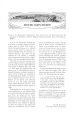
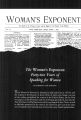
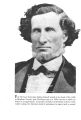
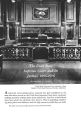
Show •Ii finr^ ^'faj.WflHii^Qlillln1 Ft^f mmm . .-.:;. m , •* ;.. •: :• 1 1 1 '" •:•:• "::" f ! " '"' .: "'' .. '.'V--.. . i_juJS l U i r l • ' ;L- -IIS^^-^- * «^ £. _ • - * . - • - : rtvyn i ^* * *. M, i m mk The Supreme ^IMil^fmwMM BY STEPHEN W. JULIEN t7ta/i »S7a££ Supreme Court chambers, State Capitol. Utah State Historical Society collections. A l y y ' l!- ' •IV, :;m'i \ wTr » I fe • f\ i r •. . -? k .... , i K *- 1 j!^PS^^^^^' ..' - - : ' » :' r--::rj-'=- .ALTHOUGH SOME BIOGRAPHICAL material has been published on the men who have served on the Utah State Supreme Court since statehood, nothing has been written about them collectively. And few as individuals have been given the attention they deserve. This is surprising considering their power and influence and the high esteem in which they are held. Mr. Julien is a doctoral student in history at the University of Utah. 268 Utah Historical Quarterly James A. Miner George W. Bartch Charles S. Zane As a beginning step in Utah judicial history, this paper will outline the organization of the supreme court, analyze data on the background of the justices, and examine the political factors affecting appointments to the state's highest bench.1 The Utah State Supreme Court officially came into being on January 4, 1896. The state constitution ratified the previous November provided for three supreme court justices, a chief justice, and two associate justices. Their term of office was set at six years. In order to prevent three new and inexperienced persons from coming up for election at any given time, it was provided that the first three justices elected to the court were to serve three, five, or seven years depending on the outcome of a lottery. The justice drawing the shortest term was to be chief justice. The person having the next shortest time was always to succeed to that office. By this process each member of the court would be chief justice the last two years of his term.2 The legislature was given the power to increase the number of justices from three to five after 1905. It exercised that option in 1917 1 Few state supreme courts have been studied in detail, and only in recent years have they been studied at all. In 1969 Robert A. Heiberg published "Social Backgrounds of the Minnesota Supreme Court Justices: 1858-1968," in Minnesota Law Review 53 (1969): 901 - 37. His methodology closely followed that of John R. Schmidhauser in "The Justices of the Supreme Court: A Collective Portrait," Midwest Journal of Political Science 3 (1959): 1-57. Heiberg followed Schmidhauser's outline to compare the Minnesota Supreme Court justices to those of the United States Supreme Court. The same informational categories have been used to organize data collected on Utah's supreme court justices, although no comparison will be made between the Utah and the United States courts. For another state court study, see Emmett W. Bashful, The Florida Supreme Court: A Study in Judicial Selection (Tallahassee: Florida State University, 1958). 2 Utah State Constitution, art. V I I I , sec. 2. Utah State Supreme Court Justices 269 Robert N. Baskin William M. McCarty Daniel N. Straup by providing for two additional supreme court justices. Their terms of service were set for eight and ten years, and in the future the normal length of service was to be ten years. Exceptions were made in the case of the three individuals already on the court. They remained under the six-year provision. So did Justice A. J. Weber who replaced Joseph E. Frick on the court in January 1919. By this process one justice would go before the voters every two years.3 Before statehood, members of the territorial supreme court were appointed by the president of the United States. The new state constitution specified that all supreme court justices were to be elected by the people at large on a partisan basis. However, the governor was empowered to fill vacancies on the court created by the death or resignation of one of the justices. The person so appointed was to hold office until the next general election.4 From the beginning the political nature of the state's highest judicial office had been disturbing to many people. This was particularly true because a good judge might be swept out of office simply as a result of a political landslide. Also, the uncertain tenure of the office seemed to discourage many qualified lawyers from seeking the position. Finally, in 1951, the state legislature created the so-called headless ballot on which candidates for the supreme court were to run on a nonpartisan basis. Names of the candidates were to appear on the ballot without any indica- 3 State of Utah, Laws of the State of Utah (1917), chap. 54. 4 Utah State Constitution, art. VIII, sec. 2. 270 Utah Historical Quarterly Joseph E. Frick E. E. Corfman A. J. Weber tion of party affiliation. Candidates were prohibited from contributing to any political party or organization or holding political office.5 The headless ballot did not solve the problems of electing justices. It cost the incumbent a considerable amount of money to run each time his term expired and political considerations continued to be an important factor in determining who sat on the supreme court. To correct many of the ills inherent in the headless ballot system, the Utah State Legislature, with the aid of the Utah State Bar Association and the Utah Legislative Council, passed a law in 1967 based on the so-called Missouri plan. The act established a bipartisan nominating commission composed of seven members, two to be appointed by the governor, two by the bar association and one each by the Utah State House of Representatives and Senate. The current chief justice of the supreme court was designated as the seventh member. This commission is responsible for selecting qualified candidates for the supreme court. When a vacancy occurs on the court, the commission must choose three persons worthy of the position. Their names are submitted to the governor who must appoint one of them as the new justice. The selection is to be based strictly on merit rather than party affiliation. If the appointee is filling a vacancy created by death, resignation, retirement, or other cause, then his term expires at the next general election. The person chosen at the next general election holds the office until the expiration of the term of the judge he has succeeded. At that "State of Utah, Laws of the State of Utah (1951), chap. 38, sees 1, 3, and interview with Judge J. Robert Bullock, Fourth Judicial District, Provo, November 19, 1975. Utah State Supreme Court Justices 271 Samuel R. Thurman Valentine Gideon James W. Cherry time the justice must go before the voters to see if he should be retained in office. Unlike the Missouri plan, the Utah law allows any attorney who desires to do so to run against the incumbent, in which case the name of each candidate appears on the ballot. If the incumbent is unopposed, his name must still be placed on the ballot so that the voters may mark yes if he should be retained in office and no if he should not. If a majority responds negatively, then the office is vacant and the nominating process described above is initiated.6 In 1969 the legislature went a step further by passing a Judicial Qualification Act. It provided for a seven-member Judicial Qualification Commission made up of members from the house and senate judiciary committees and the Board of Commissioners of the Utah State Bar Association. The commission was empowered to recommended the "removal, suspension, censure, reprimand or retirement" of any supreme court or district court justice. Such recommendations were to be submitted to the supreme court which was given the sole power to determine if a judge should be retained. No supreme court justice was allowed to participate in proceedings "involving his own removal or retirement." Grounds for removal included "willful misconduct in office," conviction of a felony, "persistent failure to perform his duties," and the "habitual use of alcohol or drugs" to the detriment of his judicial obligations.7 In 6 State of Utah, Laws of the State of Utah (1967), chap. 35, sees. 2, 7, 8, and Bullock interview. 7 State of Utah, Laws of the State of Utah (1969), chap. 123, sec. 1, and interview with Gordon A. Madsen, attorney and member of the 1969 state legislature, Salt Lake City, November 24, 1975. 272 Utah Historical Quarterly Elias Hansen William H. Folland Ephraim Hanson a separate law the legislature established a mandatory retirement age of seventy-two for supreme court justices and seventy for all other judges. Judges elected or appointed before the passage of the law were exempt.8 The importance of politics in the history of the Utah State Supreme Court is revealed in Chart I.9 Between 1895 and 1916 most Americans voted Republican. But the Wilson reelection of 1916 demolished the Re- 8 Laws of the State of Utah (1969), chap. 122, sec. 1, and Madsen interview. The 1969 legislature also raised the salary of supreme court justices to $20,000 a year and increased retirement benefits. Subsequent legislation increased salaries to $30,000 and again strengthened the retirement benefits. According to Mr. Madsen, salaries paid supreme court justices in Utah before the 1969 upgrading ranked fiftieth in the nation, and retirement benefits were very poor as well. 9 Biographical material on the justices has been compiled from the following sources: History of the Bench and Bar of Utah (Salt Lake City: Interstate Press. 1913); Portrait, Genealogical, and Biographical Record of the State of Utah and Biographical Record of Salt Lake City and Vicinity both (Chicago: National Historical Record Co., 1902); censuses for 1840 through 1920; Cyclopedia of American Biography; Dictionary of American Biography, 1936 ed., s. v. "Zane, Charles S."; State of Utah, Report of Cases Decided in the Supreme Court of the State of Utah, 1st Series, 123 vols., 31:vii-xiv, 47 :xxiii-xxv, 52:xxiii-xxv, 53 :xviii-xxix, 67:xxv-xxxi, 69:xix, xxv-xxxv, 100:xvii-xxii, xxvii-xxxviii, 106:xv-xxi, 109:xv-xxii, 111: xv-xxxvii, 116:xvii-xxii, 2d Series, 31 vols., 8:xi-xxii, 9:xi-xviii, l l : x i - x i v , 18:v-ix, 19:v-vii; Salt Lake Tribune. May 23, 26, 1907, August 27. 30, 1918. December 20, 1918, August 9. 1925, February 18, 1927, February 3, 1950. February 8, 1952, April 12, 1959, September 5. 1966, August 29. 1970: Deseret News. May 22, 1907, March 16, 1927; Noble Warrum, History of Utah since Statehood, 4 vols. (Chicago: S. J. Clarke Publishing Co., 1919), 2:160-63, 575, 1012, 1034; History of Lee County, Iowa (Chicago, 1914). p. 216; J. C. Schwarz, Who's Who in Law, 1937 (New York: Author, 1937), pp. 398-99: Who's Who in America, 1974-75, s.v. "Crockett, J. Allan," "Ellett, Albert Hayden," "Henriod, Frederick Henri," "Callister, Edward Richard, Jr.," "Tuckett. Robert LeRoy"; interviews with F. Henri Henriod, J. Allan Crockett, E. R. Callister, A. H. Ellett, and Richard J. Maughan, all Salt Lake City, November 5, 1975, Blanche Hoxie, C. W. Wilkins, Robert L. Tuckett. all Salt Lake City, November 6, 1975, Don Mack Dalton, Pleasant Grove, November 6, 1975, Edward J. McDonough and Mrs. Lester A. Wade, both Salt Lake City, November 7, 1975, Lucille Buehner, James H. Wolfe, Jr., Mrs. Martin M. Larson, and George W. Latimer, all Salt Lake City, November 10, 1975, Mary Moslander Roberts, Salt Lake City, November 11, 1975, Ruth Smith, Heber City, November 11, 1975, Patricia Noall, Clarence M. Beck, Wilma Straup, Rosalind Dustin, Harold F. Folland, all Salt Lake City, November 12, Utah State Supreme Court Justices 273 j 4 0 0 ^ ^ David W. Moffat James H. Wolfe Martin M. Larson publican grip.10 Utah elected a Democrat, Simon Bamberger, as governor, and the Utah State Supreme Court got its first Democratic jurist, E. E. Corf man, in twelve years. Another Democrat, A. J. Weber, was elected to the court two years later. The Democratic collapse of 1920 and the Republican ascendancy over the next dozen years brought all Republicans to the supreme court. But the Great Depression and the election of Roosevelt in 1932 ended the Republican era and led to drastic alterations in the makeup of the court. It was not until 1946 that another Republican candidate won an election. Since 1952 candidates for the Utah State Supreme Court have been elected on a nonpartisan basis. But politics still plays a role. As Chart I indicates, all but one of the individuals who have run against an incumbent have been members of the opposing party. Furthermore, the appointive power given the governor has remained an important political tool: every justice appointed to the supreme court since 1952 has been of 1975, D. Howe Moffat, Salt Lake City, November 13, 1975, Elliott Pratt and Ralph M. Worthen, both Salt Lake City, November 14, 1975, Seymour Christensen, Ephraim, November 14, 1975,' Betty Ottenstein, San Carlos, California, December 17, 1975, Lasca Gideon, Farming-ton, Missouri, December 18, 1975, David McBride, Hillsboro, Ohio, December 18, 1975. 10 There was, of course, a Republican president only until 1912, but Wilson's victory in that year came as a result of the split in the Republican party rather than a surge in Democratic party popularity. The state's first three governors-Heber M. Wells, John C. Cutler, and William Spry-were Republican. Democrat Simon Bamberger was elected governor in 1916. Utah's other governors and their terms are: Charles R. Mabey (R), 1921-25; George H. Dern (D) 1925-33; Henry H. Blood (D), 1933-41; Herbert B. Maw (D), 1941-49; J. Bracken Lee (R), 1949-57; George D.Clyde (R), 1957-65; Calvin L. Rampton (D), 1965-77. 274 Utah Historical Quarterly Roger I. McDonough Eugene E. Pratt Lester A. Wade the same party as the governor. Perhaps the legislation passed in recent years will alter this pattern.11 THE JUSTICES Political considerations affecting the membership of the supreme court seem relatively easy to understand. Less clear are the effects of non-political factors in determining who will serve in the state's highest judicial office. Although no conclusions will be drawn from the data compiled in Chart II, some general observations can be made. Many factors contributed to bringing the families of Utah's supreme court justices to America. The ancestors of some were part of the Puritan migration of the seventeenth century. Others were members of the European migratory movements coming in the latter decades of the nineteenth century. Still others came as a result of their conversion to Mormonism. But all were of western European stock. There is no indication that any ancestor was part of the southern or eastern European migrations to this country. At least twenty-two justices traced their lineage to the British Isles. Seven had German ancestors and five were of Scandinavian descent. The only other country represented is France. All the members of the supreme court were born in America. Most were from very small communities. Sixteen justices began life in an area 11 As Chart I indicates. A. H. Ellett was the last supreme court justice to be appointed (1967). Electoral data in Chart I were compiled from State of Utah, Secretary of State, Bienvial Report of the Secretary of State of the State of Utah, for the years 1896-1956. For the period since 1956, one must go to the individual reports of the secretary of state or to State of Utah, Secretary of State, Abstract of Returns of the General Election Held in the State of Utah, for the years 1956-74. Party affiliations were learned from interviews with Douglas Thomsen, probate clerk for Salt Lake County, Salt Lake City, November 25, 1975; Serge B. Gudmundson, St. George, December 8, 1975; Harold N. Wilkinson, Salt Lake City. November 25. 1975. Utah State Supreme Court Justices 275 Abe W. Turner George W. Latimer J. Allan Crockett having less than a thousand people. Ten were born in settlements ranging from one to ten thousand inhabitants. Only four justices were from a town with a population of more than ten thousand. Eleven of the first twelve justices serving on the supreme court were born outside the western states. But since 1926 sixteen of the eighteen justices have had Utah as their birthplace. In sum, seventeen members of the court have been born in Utah, six in the Midwest, four in the East, and three in the South. No western state other than Utah is represented. All the justices practiced law in either Salt Lake City, Ogden, or Provo before coming to the court. Eighteen had practiced for many years in Salt Lake City. Justices Charles S. Zane and Daniel N. Straup had been lawyers in the cities of Springfield, Illinois, and South Bend, Indiana, respectively, before coming to Utah. So, all the justices had at least some exposure to practicing law in what may be called an urban area before coming to the court. However, none of them practiced law for any length of time in a large metropolis. The fathers of over half of the supreme court justices were farmers. That is not unusual considering the rural environment that prevailed in nineteenth-century America. Often that was the only occupation available. Only five of the fathers were professional men and only three of the five were attorneys. On the whole the evidence indicates that most of our justices were self-made men. The path to the supreme court was probably not a smooth one for many of them. The religious affiliation of the justices exhibits characteristics unique to Utah. The Church of Jesus Christ of Latter-day Saints has long been 276 Utah Historical Quarterly F. Henri Henriod George W. Worthen E. R. Callister, Jr. a dominant influence in the community. Therefore, one is not surprised to find that one-half of the justices have been Latter-day Saints. But the dominance of Mormons on the court did not begin until 1926. Prior to that time only one of the first twelve justices had been of the Mormon faith. A possible explanation is that early church leaders discouraged their members from studying law. Brigham Young had a particularly low opinion of the legal profession.12 Not until non-Mormons became a political force and the polygamy problem a burning issue did many Mormons begin to study law. The data reflect this change. Since 1926 fourteen of the eighteen justices have been Latter-day Saints. Other churches in the community have hardly been represented at all. Of course, no one knows how committed the justices are to their religion. One sees but the bare outlines. One's status in society often helps determine how much schooling he receives and where he gets it. Given the nineteenth-century small 12 In a discourse delivered in the Salt Lake Tabernacle, February 24, 1856, Brigham Young said lawyers were "men who loved corruption, contention, and broils, and who seek to make them, I curse you in the name of the Lord Jesus Christ; I curse you, and the fruits of your lands shall be smitten with mildew, your children shall sicken and die, your cattle shall waste away, and I pray God to root you out from the society of the Saints." Fortunately, Young's attitude toward lawyers had softened a little by 1873: "I have a few things to lay before the Conference, one of which is-and I think my brethren will agree with me that this is wise and practicable-for from one to five thousand of our young and middle-aged men to turn their attention to the study of law. I would not speak lightly in the least of law, we are sustained by it; but what is called the practice of law is not always in administration of justice. and would not be so considered in many courts. How many lawyers are there who spend their time from morning till night in thinking and planning how they can get up a lawsuit against this or that man, and get his property into their possession? Men of this class are land sharks, and they are no better than highway robbers, for their practice is to deceive and take advantage of all they can. I do not say that this is the law, but this is the practice of some of its professors." Journal of Discourses, 26 vols. (1856; reprint ed., Los Angeles: Gartner Printing and Litho Co., Inc., 1956), 3:240; 16:9. Utah State Supreme Court Justices 277 R. L. Tuckett A. H. Ellett Richard J. Maughan town or rural background of many of the justices, one expects to find that many of them had gaps in their education. Seven of the justices never attended a university or academy before studying law. Six more never received a formal degree. Only Justice George W. Bartch had a masters' degree. Most of those fortunate enough to receive at least some formal undergraduate training attended a school close to home. Those institutions were normally small in size and influence. Only three of the justices attended schools outside their native state. Fifteen of the justices were students in universities and/or academies within the state of Utah. Ten were enrolled at the University of Utah and six at church-related schools established by the Mormons. The legal education of the justices is impressive, although one still finds gaps in some of the members' legal training. Three of the justices learned law on their own. Four others picked it up while working in a law office. Thus, seven of thirty justices never went to law school. Elias Hansen, Roger I. McDonough, and Valentine Gideon attended a law school but did not graduate. Every justice coming to the supreme court since 1940 has earned a formal law degree. This has been a natural consequence of states raising the requirements for practicing law within their borders. Twelve different law schools are represented by the justices of the Utah State Supreme Court. Some schools are among the most prestigious in the United States: Harvard, Michigan, Stanford, California, the University of Chicago, and the University of Pennsylvania. Six justices have attended the University of Utah Law School. The geographical diversity 278 Utah Historical Quarterly of the schools is also impressive and has no doubt helped to broaden the outlook of the court. One would expect that most supreme court justices would have had some previous governmental and/or judicial experience, since the serious candidate must make himself known to either the governor or the electorate. The highest governmental position held by most justices has been the office of city or county attorney. Sixteen justices fit into this category. One justice, Robert N. Baskin, came into prominence as the mayor of Salt Lake City. Five justices were known, at least in part, for positions they held on the territorial, state, or federal level. Two served as assistant United States attorneys, two others as attorney general and assistant attorney general for Utah, and one as a member of the Utah State Constitutional Convention. Only eight of the justices had no previous governmental experience. Most of the justices had some previous judicial experience before reaching the supreme court. The first three members of the court were former territorial justices. Fourteen others were Utah district court judges. On the other hand, thirteen had no previous judicial experience. The importance of having worked with the government or as an inferior court justice before coming to the supreme court is another debatable question. Most would argue that previous judicial experience is a good thing, but it is not universally believed that all members of a supreme court must be former justices. Many think that those outside the court system provide the best sources for new approaches to legal problems. Experience in a governmental post such as that of a county attorney seems to be a less critical factor.13 The Utah State Supreme Court began by having three former territorial justices as its members. From 1905 to 1926 only one member of the court had had any previous judicial experience. Then, from 1926 to 1946 all but one member of the bench were former justices of the district courts. For the past twenty years there has been a greater balance. Four have been former justices and four have not. Currently the balance is three to two in favor of judicial experience. In summary, it is clear that the supreme court justices have had similar backgrounds. All had western European ancestors, all were born in America, nearly all were from small communities, and most were from apparent humble parentage. Their nonlegal education was generally 13 See Heiberg's comments, "Minnesota Supreme Court," p. 926. Utah State Supreme Court Justices 279 restricted to college near home. Although some escaped their native environment by attending law school in another state, most returned to their home town to practice law. Those who eventually went elsewhere journeyed west rather than east. Not one justice, it appears, ever practiced law in a large city or outside the West or Midwest before serving on the supreme court. And finally, most of the justices began their public careers by serving as a city or county attorney. It was normally in that position that they became known to the governor or the people. A distinction may be drawn between those justices serving on the supreme court to 1926 and those coming later. All but one of the earlier members of the court were outsiders. They grew up in states other than Utah and were non-Mormon or even anti-Mormon. They generally had a minimum of legal training and little, if any, judicial experience. Those coming to the court after 1926 have, as a rule, been born and reared in Utah, been members of the Mormon faith, had a better legal education and more judicial experience. It is also clear that politics has generally dictated who should and should not sit on the supreme court. Those persons who have been members of the right party at the right time and who have known the right people are the ones who have made it. But their stay in office has been determined by political forces beyond their control. A presidential election or an economic depression has been far more instrumental in deciding their future than their record on the bench. The creation of a nonpartisan ballot in 1951 and the judicial legislation passed in recent years may have the effect of taking politics out of the Utah State Supreme Court and of providing the court with even more qualified candidates. CHART I ELECTORAL DATA AFFECTING THE OFFICE OF JUSTICE OF THE UTAH STATE SUPREME COURT WINNING CANDIDATE AND PARTY AFFILIATION PRESIDENTIAL VOTE IN UTAH (R) (D) PARTY OF PRESIDENTIAL WINNER PARTY OF UTAH GOVERNOR James A. Miner (R) George W. Bartch (R) Charles S. Zane (R) Robert N. Baskin (D) (Zane defeated.) R 280 Utah Historical Quarterly YEAR 1900 1902 1904 1906 1908 1910 1912 1914 1916 WINNING CANDIDATE AND PARTY AFFILIATION George W. Bartch (R) William M. McCarty (R) (Miner did not run.) Daniel N. Straup (R) (Baskin did not run.) Joseph E. Frick (R) (Bartch resigned that October and Frick appointed.) William M. McCarty (R) Daniel N. Straup (R) Joseph E. Frick (R) William M. McCarty (R) E. E. Corfman (D) (Straup defeated.) PRESIDE VOTE IN (R) 47,000 55,000 56,000 42,000 57,000 NTIAL UTAH (D) 45,000 36,000 40,000 37,000 80,000 PARTY OF PRESIDENTIAL WINNER R R R D D 1918 A. J. Weber (D) (Frick defeated.) Samuel R. Thurman (D) (Appointed in 1917 when court increased to five members.) Valentine Gideon (D) (Appointed in 1917 when court increased to five members.) 1920 Joseph E. Frick (R) (Appointed in 1919 to fill vacancy created by death of Justice McCarty.) 1922 James W. Cherry (R) (Corfman defeated.) 1924 Daniel N. Straup (R) (Weber defeated.) 1926 Elias Hansen (R) (Gideon did not run.) 1928 William H. Folland (R) 1930 Ephraim Hanson (R) (Appointed in 1927 to fill vacancy created by death of Justice Frick.) 81,555 77,327 94,618 56,639 47,001 80,985 R R R R R R R D R R D Utah State Supreme Court Justices 281 WINNING CANDIDATE YEAR AND PARTY AFFILIATION 1932 David W. Moffat (D) (Cherry did not run.) 1934 James H. Wolfe (D) (Straup defeated.) 1936 Martin M. Larson (D) (Hansen defeated.) 1938 Roger I. McDonough (D) 1940 Eugene E. Pratt (Hanson did not run.) 1942 David W. Moffat (D) 1944 James H. Wolfe (D) Lester A. Wade (R) (Appointed in 1944 to fill vacancy created by death of Justice Moffat. Previously been appointed judge pro tern during the absence of Justice Pratt who was in the service.)* Abe W. Turner (D) (Appointed in 1944 judge pro tern during absence of Justice Pratt.) 1946 George W. Latimer (R) (Larson defeated.) 1948 Roger I. McDonough (D) 1950 J. Allan Crockett (D) (Pratt did not run.) 1952 2 Lester A. Wade (R) (Defeated George M. Worthen [D].) F. Henri Henriod (R) (Appointed in 1951 to fill vacancy created by resignation of Justice Latimer.3 Defeated Joseph G. Jeppson [D].) PRESIDENTIAL VOTE IN UTAH (R) (D) 84,795 116,750 64,555 150,246 93,155 154,277 97,891 150,088 PARTY OF PRESIDENTIAL W I N N E R D D PARTY OF U T A H GOVERNOR D D D D D D 124,402 149,151 194,190 135,364 D R R R 1 Justice Pratt was serving as a member of the Armed Services Board of Contract Appeals. 1 Justices of the supreme court ran on a nonpartisan basis after 1951. 3 Judge Latimer resigned to become a member of the U. S. Court of Military Appeals. 282 Utah Historical Quarterly YEAR 1954 1956 1958 1960 1962 1964 1966 1968 1970 1972 1974 WINNING CANDIDATE AND PARTY AFFILIATION George M. Worthen (R) (Appointed in 1954 to fill vacancy created by retirement of Justice Wolfe. Defeated Delbert M. Draper [D].) F. Henri Henriod (Unopposed.) RN Roger I. McDonough (D) (Unopposed.) J. Allan Crockett (D) (Unopposed.) Lester A. Wade (R) (Unopposed.) E. R. Callister, Jr. (R) (Defeated Serge B. Gudmundson [D].)4 F. Henri Henriod (R) (Unopposed.) R. L. Tuckett (D) (Appointed in 1966 to fill vacancy created by death of Justice Wade. Tuckett defeated Harold N. Wilkinson [R].) A. H. Ellett (D) (Appointed in 1967 to fill vacancy created by death of Justice McDonough. Unopposed in 1968.) J. Allan Crockett (D) (Unopposed.) R. L. Tuckett (D) (Unopposed.) Richard J. Maughan (D) (Defeated Callister [R].) PRESIDENTIAL VOTE IN UTAH :R) (D) 215,631 118,364 205,361 169,248 181,785 219,628 238,728 156,665 323,643 126,284 PARTY OF PARTY OF PRESIDENTIAL UTAH WINNER GOVERNOR R D D R R R R D D D * Gudmundson was not a strong Democrat. It is clear that party politics did not play a role in this particular election. Utah State Supreme Court Justices 283 CO fe CJ t-« h m O I-s h & P O cj fe a I fe P CO H * < X o fe H < H cO h P O < < Q Q P O c^ O o < o h <C cu D O o o on w < w N CO O fe 3 z a H fe -3 .a IP C > U <L> SH (H t-c Ui <U -fc* <U CD CD 0) rf fe rf rf fe fe rf rf rf rf fe fe fe fe rG 13 >i u u rf * o OJ u gj aj -c LG G OJ r*"^ G O "C g q ^ g & fefefefeoqfeoc^feSfefeS BBS t/J t/l 5/5 C C C c c c c c coUCJCJ co CJCJCJ C j i o r - ^U CO co « O TT< CJ 00 LOCO _ c o r ^ o v ) c n r ^ r t - r - . ( i 5 co CM T+* *l< ~H Ol <-< CM >-i rH CO COO) J C O S - i co cn rf 6 d X> 0 T3 "O T3 C C C JS J3 ^ "bo bo bp C C C fe fe w t3 c d c d o rs e 3 22 S ° 2 •5 1 e^ 3s &- u g*.s c ° sr| rf P q s fe£e4p5 -Q 0 U fe -C p b P c j S rf | •alu fe s O ^ *-> JZ *J « <^ 13 fel3 '-3 M to a to to fe >; « o .« p 2 •"C - * c j j j ^-53 n n L ui cc U ,25 CD *! $* H rf rf :> Jj ±; 6 fe t o > K Q t/3 JO rf o ^5 •M rf rf M 0 C<3 </5 (73 fe fe rf c rf 'c3 T, ^ -d""S ^ e c rf c rf rf T3 73 T3 ^ c c c u y c I -« rf rf rf £<s E G'bce'bbu'bbc'bbG^ 6 a4'bb'S)^ P ^ O O w c J f e P f e Q f e Q ^ O Q ^ f e f e ^ -a c rfc^Dj^S^SJScS bo G fe -d G ^rf bo G C rf fe VH be G fe T3 -a -2 3 y^ 8 8 W u5 r/) « fe H-1 cu o -a "d" G N rf J^ ^ f e t ^ be G fe >^ d 284 Utah Historical Quarterly z 0 P < O P Q fe J < z o p < u p Q fe -ow<J z o z rf o <D > •a £ fe £ £i ia rf fe too feKc/5 0 o -G U CO c "2 rf G bo C fe-° O ,< fe (U ^ rf aftO a.2 G rf > c/3 •S £ fMe f"e* a^ b o w < ^ 1 "SL. C c/3 t/3 G G fe fe CD r" rf fc2 £ fe * <u be s;lfe fe u p 0 C/3 •rf rf alp > a; u E c B fe O tO " * f e 0 fe 5 CJP C rf , © £ 3 bO >^ rf 22 CJfe rf G c/3 ^5 t/3 rf ^ P O bo >•. rf . - u I 3 £gf 1e2 -I 3 ^ fe > 0 0 0 0 0 0 0 ^ " » ^ » ^ * » ^ " N ^ " ~ » ^ " ~ » ^ - » si fe to fe 12 C 2 G C O CD CD CD CD CD < t H ' . H . i - l • * * .-H 5 G G G G G fePPPPP 2 2 0) CJ > > *G "G P P c tO fe fe rf p p c o fe o o fe O c I'in CJ OJ *G °3 rf p p p E fe '53 rf CO rf U £ P £P v« "G M-I i «+* 0 G o fe O £ ^ ^ S >» T-l "^ C +-> £> .£q s>e J-g2 >^ C S *C °3 rf ''c3 r-f ' 3 rf ' 3 j£ J O P P P P C / 5 P 3 P g d K ^ f e O K P f e P 1 > t/3 . _ c *- t* fe of Utah iversity, Pe of Missouri ic Universil of Utah demy of Utah of Utah of Utah oung Univ niversity G P rf O S- "~) 1 J- 'I«'1 ^ •§ -g -g -g I I 3-81 o'al.^a-G-c-g5! p f e p ^ p ^ f f i p p p « ^ ^ c c fe u P 0 >> 'xfi U & vers 'S p 5J rf CO High : Unive Utah >: E S 1 u < rt C V tend (4 0 J^ < J3 a w >. E cade: < 0 •8 tend (4 C V5 < > -•aJ bO 2 S > i bo P5 -d tend 0 v. < xi 3 p ity oi C > c -a CO tend c to < z o p < E <j 7} P 0 fe rf Si M Ui "rt fe^ u ^ ^ ^. O >. CJ >.*0 fe o J2 fe fe C 55 t/3 rf t/j CJ OJ ^ w^£cS£<-g£poSS6pSSSSP^uuSSSSSSSlsS G B fe O w Ui fe CD fe v d -^ S £ uP *J EP 8 %> £ t> 3 • Ui h-< . t/3 -^ H ^ CJ P > fe o . • &.i JSc G „ r i h •^feO fe w ^ < p 1 Utah State Supreme Court Justices 285 z o p 0 fe -J < 3 5 p co 0 > hw w o z 0 p c2 ^ u u. 3 3 3 o 5 o U c j U U 91 U 6 3 3 K K a fe fe fe P G P to 00 to rf rf rf o o o H z w s z °? > o O ca P o > wh w H o fe rf P u o fe rf p u. o >*- 4-1 u •C f*er->f f*re->f fre^f PPP fe fe fe rf rf rf 4_l .(_> -t-> PPP Ui U, Ui u o O 0 0 0 0 +J +-> 4-> t/3 C/3 t/3 ° ° 5^ 'P'S is 6*3 t/3 <5 pp •8-i! -1 fe +e u CU CJ OJ fe fe fe rf rf rf PPP af aT oT 0 0 0 •p fe -P C/3 C/3 C/l P P P 1 fSe y CJ I 4-1 4-1 rf .5fa C fe G y & 4-> o 'C 4J +3 c .9 6 p y P •-j .a CO | 1 Z 1-J cr s CJ H fe rf - aaaaesee a a rf 'y 1 G 0 fe rf O G > - 5 -' -S rf 'o 13 G fe fefe § § £ fe fe to fe H fe fe r- 4-> rf <-** o 4-> « ** • S | t/3 4-1 3a II •-J p G -~ fe H CD d J c D a J C J C J C J C D C D CJ flj £ £ £ £ £ £ 2 bo £ bObobobobObobobo^ bo £ bo £ z z z ^ ^ ^ ^ ; ^ A A ^ A ^ ^ f c fe\^ fe\^ -c rf CJ CO ., bo bo £ p P £ in 03 cc fe D U E •ts" CJ f0e C"3 * .G ^ rf fe fe +-> H V_ (J c 13 'h T ^ 22 tj u fe CO .22 5 £pP 1 . 8 11 5 5 '"5 P rf fe cn rf U fe CJ fc .3 i 0 4 -1 rf fr None Coun c 0 c CJ c> 0 CJ rf c 0 •p G 4-1 cn Con fe rf P uT CJ Mem er o 4-> 'p c fe 5p -g5 J8 J P rf •3 -3 G u £ bo ^ o ^ jS y e°E Pfce o ea^ E 5s rf ^ § rf •^.^ G 4-> 4-1 o I .fi"! o rf n . . S rf P fe>fe < CO > C/3 >-H c fe s 1 1 r 2 8 ,fe ^ fe p fe\S e^ fe fe < O |