| OCR Text |
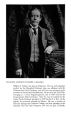
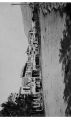
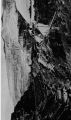
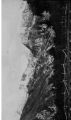
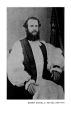
Show WILLIAM JACKSON PALMER (1836-1909) William J. Palmer was born in Delaware. He was well educated, worked for the Hempfield Railroad, later was affiliated with the Westmoreland Coal Company, and still later was secretary to the president of the Pennsylvania Railroad. He served in the Civil War, emerging as a brevet brigadier-general, and in 1894 received the Congressional Medal of Honor. After the war he worked for the Union Pacific Railroad, leaving it in 1870 for the D. & R.G. In the eighties he promoted railroads in Mexico. He was a founder of Colorado Springs and Colorado College, was first president of the Colorado Coal and Iron Company, and laid out part of Pueblo. UTAH AND THE COMING OF THE DENVER AND RIO GRANDE RAILROAD By Robert G. Athearn* As it was originally conceived, the Denver and Rio Grande had not the slightest interest in Utah. General William Jackson Palmer, former Civil War officer and promoter, set out to build a road from the Colorado capital to El Paso with the hope of tapping major transcontinental lines and of one day making a connection with Mexico City. The projected eight hundred and fifty mile road was to be strictly a north and south creation, designed to pick up local trade from a growing mountain community. By staying close to the Rockies it was presumed that the road would serve a large population of miners, a class of people quite dependent upon transportation for supplies. Palmer buttressed his arguments for such a route by pointing out that the Union Pacific, with a population of forty millions at its back, had no significant mining population along its tracks, and it was, therefore, not yet a particularly profitable venture.1 Ignoring the westward pattern in railroad building, he chose to look south toward a land of semitropical products, and along a strip of country populated by those who had passed over the Great American Desert to locate their new homes. * Dr. Athearn is professor of history at the University of Colorado, Boulder, Colorado. For other articles by him on the Denver and Rio Grande Railroad which have appeared in the Quarterly see "Railroad Renaissance in the Rockies," January, 1957, and "The Independence of the Denver and Rio Grande," January, 1958. 1 William J. Palmer, The Denver and Rio Grande Railway of Colorado and New Mexico (London, 1871), 10. 130 UTAH HISTORICAL QUARTERLY From 1870, when the Denver and Rio Grande was incorporated, until 1878 die direction of the main fine was unswervingly southward. By the fall of 1871 it had reached the new colony town of Colorado Springs, seventy-six miles out of Denver. Less than a year later Pueblo was receiving regular service. Here the first magnetic pull westward was experienced when a branch line was thrown out toward Canon City, a little town lying at the moudi of "Grand Canon" of the Arkansas. Rather than follow this river course into the mountains before continuing southward, the directors decided to head straight for New Mexico by way of Trinidad, Colorado. But again the attraction of die mines was great, and as the Trinidad extension was nearing completion, a second branch was commenced, reaching out over La Veta Pass toward the San Luis and San Juan valleys. The Panic of 1873 struck hard at die little narrow gauge road, having its most severe effect several years after that year. During 1875 Palmer and his wife visited Paris trying vainly to interest French financiers in the road. About this time the eastern banking house of Duncan, Sherman and Company, in which the road had considerable deposits, failed. Then came more trouble. Early in the spring of 1876 the Atchison, Topeka and the Santa Fe Railroad reached Pueblo, bound for New Mexico where it would compete with the D. & R. G. Desperately, Palmer and his associates drove on, trying to shake off the effects of the panic, and to beat out die Atchison line. Even as they struggled widi this problem the Rio Grande men were struck from behind. The company's unhappy bondholders asked for a receivership, and while it was denied by a Denver court, the road's reputation in financial circles was further jeopardized. The Rio Grande's time of trouble was just beginning. In die spring of 1878 it approached Raton Pass, the only feasible passageway into New Mexico within miles, confident diat no other road was near enough to pose a threat. To the utter dismay of Palmer's chief engineer, the Atchison men got there first and laid claim to the crucial site just thirty minutes before the appearance of their rivals. Quickly the scene shifted to the Grand Canon of the Arkansas, known also as the Royal Gorge, which was the only other practical pass through die mountains. Again, the Rio Grande management was negligent. As in die case of Raton Pass, Palmer had neglected to file a plan of proposed route widi die General Land Office, as required by law. For a second time the A. T. & S. F. moved in, determined to cut down its smaller rival. To the Rio Grande people this was the final aggression. Since there was room for just one UTAH AND THE D & RG 131 track through the Gorge, it was either fight or give up. Desperate, the Rio Grande elected to fight. The story of the "Royal Gorge War" has been so frequently repeated that it has become the railroad historian's "Custer's Last Stand." Even Hollywood has not overlooked its dramatic possibilities. While both sides did rush to arms and shots were fired, it was more of a cold war than one of bloodshed. There were exciting moments and tense episodes as the opposing camps sought to establish a prior right, but most of the fighting was done in court. For two years the tide of legal battle ebbed and flowed. During this time Jay Gould bought into die Rio Grande, and now Palmer had a powerful ally in his fight. Early in 1880 the pair threatened to form a new company called the Pueblo and St. Louis, designed to parallel the A. T. & S. F. eastward across Kansas. Then came a Supreme Court decision, unfavorable to the Atchison Company. It was time to talk terms, and at die "Treaty of Boston" in March, 1880, an out-of-court settlement was made. The terms of the agreement changed the whole course of Rio Grande history. It was agreed that if the narrow gauge would pay the Atchison Company $1,400,000.00 for the work it had completed west of Canon City, the Rio Grande could have control of the Royal Gorge route. But in return for this surrender, the Rio Grande was obliged to abandon plans to build east of Pueblo or into Santa Fe, New Mexico. Palmer's road now had no odier way to go but west.2 By now this was die most desirable direction it could take. Originally the road's promoters had planned to follow the Arkansas, by way of Canon City, only to change their minds in 1872 when they decided die route south of Pueblo was the shortest way into New Mexico. Then, quite suddenly, the fabulous mining camp Leadville sprang into existence, and the whole transportation picture changed. Freight rates from diere down to Canon City, a distance of 120 miles, were four cents a pound. It is small wonder that both the Rio Grande and the Atchison people were ready to fight over so rich a plum. Widi renewed enthusiasm Palmer proceeded, happy over the general revival of business activity and excited at the prospect of serving numberless new mining camps springing up throughout the central Rockies. During 1880 and 1881 his road made heavy purchases of new 2 A good brief account of the war is found in L. L. Waters, Steel Trails to Santa Fe (Lawrence, Kansas, 1950), 97-127; William S. Greever, "Railway Development in the Southwest," New Mexico Historical Review, XXXII (April, 1957), 151-204. For Gould's interest see Julius Grodinsky, fay Gould: His Business Career, 1867-1892 (Philadelphia, 1957). The D.&R.G. single track cut through the Wasatch Mountains serving the mining districts of Utah. From an old stereoscope in the Utah State Historical Society files. ii>, Passengers must have received a thrill! From an artist's sketch of the "Tramway in Little Cottonwood Canyon," in the Utah State Historical Society files. |Vff »-5»Hk •SSIrk Sfl|^_. >x;fe- '•• -•-•aHHl . •'-, r7*&~ ''<-.i *-vi ^KtHSm." ->v *mEfe ' 4 Ji£l j L l i f lF r ,. - , - o ^g, ^ ^ * - ... • The Denver and Rio Grande line running through Castle Gate, Utah. From a W. H. Jackson photograph. UTAH AND THE D & RG 133 equipment and pressed forward the construction program. In 1881 more than four hundred miles of track were laid as the railroad spread across western Colorado, threading its way through narrow defiles and across impossible mountain passes. Actually, the advance was a twin-headed thrust with one line moving northwestward from Salida, toward the Utah line, and the other running west of Cuchara to the San Juan mining country of southern Colorado with a branch projecting into New Mexico as far as the "treaty" agreement would permit. Meanwhile, the new goal of the Rio Grande was revealed. Early in December of 1880, Dr. William A. Bell, who had been widi the road since its inception, quietly organized the Sevier Valley Railway Company in Utah. Its announced purpose was to build south from Ogden to the northern boundary of Arizona, with a branch stretching eastward toward Colorado. During the summer of 1881 the Sevier Valley Railway and the Salt Lake and Park City Railway combined with a new line to be called the Denver and Rio Grande Western Railway Company, popularly known as the "Western." 3 Toward the end of the year the Western acquired two more small roads: the Bingham Canyon and Camp Floyd and the Wasatch and Jordan Valley Railroad. Six months later the Utah and Pleasant Valley Railway Company was added. The little railroads that die Western acquired in Utah were primarily mining roads. The Bingham Canyon and Camp Floyd and the Wasatch and Jordan Valley railways totalled less than diirty-five miles in length. Together they formed a line from the Little Cottonwood mining district, through the Salt Lake Valley, to the Bingham mining district on the west. The Utah and Pleasant Valley ran southeasterly from Springville over the Wasatch range. It was begun in 1878 by Milan Packard, an old-time Montana freighter. Many of his railroad workers received part of their pay in merchandise, and since they often asked for calico, the standard cotton material used for clothing at the time, the short narrow gauge was called the "Calico Line." * There was no doubt that the Rio Grande Western was another of Palmer's projects. Both he and Dr. Bell were on the board of directors; D. C. Dodge, general manager of the Rio Grande, was the new line's president. During August, 1882, the entire picture came into focus when the Denver and Rio Grande leased the Western for a period of thirty 3 For details of the organization, July 21, 1881, see Proofs of the Organization of the Denver and Rio Grande Western Railway Company (Salt Lake, 1881). In Coburn Library, Colorado College, Colorado Springs. 4 Hannah M. Mendenhall, "The Calico Road," Kate B. Carter (ed.), Heart Throbs of the West (12 vols., Salt Lake City, 1936-51), II, 28. I A standard gauge train and the Denver and Rio Grande Western Depot in Salt Lake Cit years guaranteeing to pay the leased line 40 per cent of the gross receipts from its trackage and to pay all operating and maintenance expenses.5 With that agreement the whole Rio Grande axis officially was shifted from a north-south position to one lying east and west. A rich silver strike at Leadville and a war with the Santa Fe had thrown it into the arms of Utah. El Paso watched with disappointment as the world's longest narrow gauge took a new direction. As early as March, 1881, residents of Salt Lake City were alerted to the possibility of increased railroad activity in their region. A local newspaper published a rumor that die Denver and Rio Grande had bought the Utah and Pleasant Valley with die idea of connecting Utah and Colorado. The rumor was properly denied, since the sale had not yet been made. However, the Mormons knew that something was afoot because a good deal of real estate was changing hands in die city. Thirty acres of land were reported purchased for die future site of a Rio Grande depot in Salt Lake City. Eastward, at Saline Pass in Colorado, three hundred men were busily grading and laying track. Utah business men guessed that they would soon enjoy a railroad boom.6 5 Annual Report of the Denver and Rio Grande Railway Company, 1882, p. 9. "Salt Lake Herald, March 28, 1881. Clipping in Journal History of the Church of Jesus Christ of Latter-day Saints, Church Historian's Office, Salt Lake City. The first passenger train to run over the Colorado River into Grand function, Colorado. UTAH AND THE D & RG 135 Within a few months direct benefits of the Rio Grande's expansion began to be felt in Utah. Reports from Provo related that all available laborers were being put to work, grading, laying track and even boarding up the sides of flat cars for hauling coal. Farmers along the line used the opportunity for "putting their teams and boys to remunerative employment." Better yet, the promptness with which the Western paid its employees and the liberal prices offered for rights-of-way made a very favorable impression upon the Mormon community.7 Utah was delighted. The Herald, of Salt Lake City, said the narrow gauge was by no means narrow track in its plans. "The Denver and Rio Grande is one of the most enterprising, largest, best managed and most active railway corporations in the world. Its managers and chief stockholders are among the oldest, and most diorough-going, as well as wealthiest people in the world." To prove his point the editor explained that nearly thirty-three thousand men were at work, digging through cuts, putting in bridges, laying rails and driving spikes. The number of paid employees exceeded that of the entire United States Army. This corps of workmen was laying track or planning new routes in twenty-seven different directions. Happily, said the journal, Utah was a part of this great project and it was well, for if Utah would need anything in the next five years, it was railroads. "If the Union Pacific was a blessing to this country, the Denver and Rio Grande will be no less so, in helping to develop resources, and its advent will be hailed widi delight." s Almost at once the Denver and Rio Grande was adopted as a "home" railroad by a good many people in Utah. They were convinced that one of its prime objects in entering southern Utah was to tap the rich iron and coal resources. This would give the users a chance to buy coal mined at home and by local men, "instead of being compelled to keep men at work in another and rival territory, and to burn foreign coal, while we have equally as good an article here." To them, the D. & R. G. meant a boost for home industry and lower coal prices.9 The road's construction was watched with great interest and there was continuous talk in the newspapers as to the probable date of connection with Colorado. Newsmen proudly reported that the road had already put new life into parts of Utah. Clear Creek, for example, had become a boom town. Hundreds of tons of coal arrived there every day from Pleasant Valley. So did immense quantities of supplies and freight 7 Ibid., October 22, November 10, 20, li 8 Ibid., July 27, 1881. "Ibid., April 22, October 26, 1881. 136 UTAH HISTORICAL QUARTERLY shipped from Provo and Salt Lake City. Like the richest mining camps, Clear Creek was a spectacle of overcrowded hotels, of men sleeping on the ground, on flat cars, on depot platforms. Utah was experiencing a railroad bonanza.10 Local interest further heightened as Rio Grande tracklaying progressed. Farmers and merchants watched widi pleasure as the Union Pacific's Utah Central was goaded into action. When it began to move into Pleasant Valley in late 1882 to capture coal outlets, the Rio Grande at once transferred surveyors and graders from other construction and sent them into the endangered area. This delighted Salt Lake City newsmen who wrote that if such keen rivalry continued their city would certainly be a great railroad center. To them, the Rio Grande was becoming more meaningful every day. "The completion of this new route east will be of vast benefit to Utah in opening up competition in transportation, which will bring a reduction in prices," said the Tribune™ Soon the Rio Grande would provide an outlet to the Burlington and Santa Fe in Colorado, both of which were barred from the region by the Union Pacific's prohibitive rates. In addition the Rio Grande would provide an increased local traffic. Correspondent "A. Z.," revealed that his trip to the end of die line in November, 1882, had given such indications. "I hear that many settlements and towns are springing up between Utah and Colorado and diat Denver merchants are already sending their drummers 200 miles westward to catch the new trade," he told Utah readers.12 Excitement rose to a new high in the spring of 1883 as the east and west termini of the road neared each other. "The benefits of this new outlet for Utah will be very soon perceived," said the leading Mormon newspaper. "Leaving out all considerations of the competition which it may promote for the passenger and carrying trade to and from the East, there will be new fields opened for local enterprise. Between Salt Lake and Denver supplies will be needed by the settlers in new places, and our farmers and gardners will find a market for their produce all the way to the Colorado centre." 13 When the last spike was driven at the Colorado line on March 30, the event was rated as next in magnitude to the completion of the Pacific Railroad in 1869. Now the people of Salt Lake could go to Denver and points east by an alternative route. The 10 Territorial Enquirer (Provo), August 26, 1882. In Journal History. " Salt Lake Daily Tribune, October 11, 1882. 12 Ibid., November 15, 1882. 13 Deseret Evening News (Salt Lake City), March 28, 1883. UTAH AND THE D & RG 137 distance to Colorado's capital via the Rio Grande was 734 miles, a trip that could be made in thirty-five hours.14 Additional service meant more than added convenience. The completion of the new line, said a small town paper, meant Utah emancipation from "the throes of a monopoly." The editor agreed widi a Rio Grande official who said, "One day the Union Pacific and the Central Pacific people are like two chums in a bed, the next day they are like two cats hanging over a clothesline." The newspaper concluded that when two companies were so engaged other companies are liable to step in to take advantage of the quarreling. He was certain that the frequent ruptures between the two larger lines were really the prime movers that brought the Rio Grande westward to Salt Lake City.15 Certainly, other lines watched with jealousy as the Union Pacific and Central Pacific controlled through traffic by the original transcontinental route. But the Central Pacific, a partner in this monopoly, felt no concern at the appearance of the Rio Grande. Rather, it saw an opportunity to threaten its quarrelsome mate. The new mountain railroad, soon to be standard gauged, provided a link between the Central Pacific and roads east of the Rockies, such as the Burlington and Santa Fe lines. With it they could hold a gun to the head of the Union Pacific. In die latter part of 1881 these four roads entered into an agreement to this end. The Central Pacific agreed to make a traffic division with the Rio Grande on eastbound business, and it was promised similar favors on westbound traffic from Palmer's road.16 Utah showed little sympadiy for the Union Pacific. For years it had been in a position to act as capriciously as it chose. Now, with the completion of the Rio Grande, the older road showed its resentment. In May, 1883, Provo businessmen learned that the Utah Central, a Union Pacific subsidiary, would charge them the same rate to ship south of Provo that Salt Lake City houses had to pay. "In other words," said their newspaper, "it is the purpose of the Utah Central and the Union Pacific to discriminate unfairly against this city and in die interests of Salt Lake merchants." Overnight Provo became an all-out Denver and Rio Grande town. "Now is the time for the D. & R. G. Co, to do something and that very speedily," said the Territorial Enterprise. "They will find lots of warm friends and allies in the south who only await an opportunity to let the U. P. monopoly understand that they have not forgotten their "Bear Lake Democrat, April 21, 1883. In Journal History. 15 Bear Lake Democrat, April 28, 1883. 10 Ibid. 138 UTAH HISTORICAL QUARTERLY oppressive treatment in the past." 17 At once businessmen in Payson and Spanish Fork called meetings asking the Rio Grande to offer them service. They talked of grain and other produce from their fields and of the necessity for a connection with Colorado markets. More than that, "the farmers and business men are naturally very desirous of having the facilities given them for making through shipments directly east without being under the necessity of looking to Salt Lake alone for a market, or the U. P. railway alone for transportation east." 18 The Union Pacific's undisguised resentment of the interloper became apparent as Rio Grande tracks neared Ogden in May, 1883. The depot site, upon which the Rio Grande intended to make a connection with the Central Pacific, was owned jointly by die Union Pacific and Central Pacific. The two larger lines had an agreement that no other road might approach this preserve without the consent of both parties. The Union Pacific now objected and secured a temporary injunction that barred the newcomer's entrance. Rio Grande workmen, veterans of the great Royal Gorge war, had been threatened before. Once again they took matters into their own hands. On Saturday night, May 12, during a heavy rainstorm they nailed together sections of track, fishplates, and ties. Then, hoisting the units on their shoulders, they carried diem forward into enemy territory. When about two hundred feet of track had been laid the plot was discovered, and Union Pacific men rushed to dieir posts. A switch engine was at once dispatched to the battleground where a heavy chain was attached to die oncoming tracks. Steam was applied and away went part of the Rio Grande railroad. All during the remainder of the night Union Pacific cars were kept running across the contested ground to prevent further penetrations. The Rio Grande got around legal and physical barriers by laying a third rail along the Central Pacific's standard gauge track and entering the depot grounds on that company's tracks. The Union Pacific then tried to freeze out its rival by reducing rates between Ogden and Salt Lake City. "Baby roads and giant corporations engross the public mind now," said the Ogden correspondent of the Salt Lake Daily Tribune as he described the bitter rivalry. The Rio Grande, always willing to fight, now offered free train rides between the two Utah cities. Immediately a rumor was spread to the effect that the Union Pacific would not only meet this challenge but would give a cash bonus to anyone patronizing its branch, the Utah Central.19 " Territorial Enterprise (Provo), May 8, 1883. In Journal History. 18 Ibid., May 25, 1883. " Salt Lake Daily Tribune, May 15, 18, 20, 1883. UTAH AND THE D& RG 139 During the preceding year as the Rio Grande neared completion, Salt Lake City journalists had talked about the grumbling of older railroads when new ones entered such places as Omaha and Denver. They anticipated a similar situation for Salt Lake City, and one of them wrote, ' Speed the time, for the people are able to stand that sort of thing right well." 20 The people of Utah were entirely familiar with the Union Pacific's power, and as they watched odier roads battling it in the Denver region, there was rejoicing over the probable benefits of competition. A correspondent to the Tribune wrote: All Northern Colorado is under the sole rule of the Union Pacific. It owns all the railroads and all the railroads that are possible. Where it can't run a broad guage it runs a narrow gauge, and builds and builds aimlessly save to forestall others. It owns the coal, the quarries, everything, but the soil. It is a pity the people couldn't find it to their advantage to move out of such a country and let the boss thief of the world do its own farming as well as hauling.21 By the summer of 1883, with the Rio Grande and Union Pacific battling for traffic between Ogden and the Utah capital, the fondest dreams of the users who wanted transportation competition apparently were realized. As the new road went into operation, it was editorially welcomed to Salt Lake City. In a serious and well-balanced appraisal the Tribune editor said: We do not hail the Denver & Rio Grande expecting that it will revolutionize business or religion here; we expect nothing more from its management except that the owners will try to make money out of the road, and that they have already discovered that generous management is more profitable than a too severe one. He saw the railroad correctly when he spoke of it as "a new outlet for Utah to the whole East; as a means of opening up a large and valuable new country; as a new artery of commerce " 22 Denver papers viewed the development in a different light. To them the Rio Grande was a knight in shining armor, come to save the Mor- 20 Ibid., August 24, 1882. 21 Ibid., September 30, 1882. The correspondent signed himself O. J. H. This probably is Ovando J. Hollister, a well-known Coloradoan, who was then working for the federal government in Salt Lake City. He was a great admirer of Palmer and openly prejudiced in favor of the general. 22 Ibid., March 29, 1883. 140 UTAH HISTORICAL QUARTERLY mons from Union Pacific perfidy. "It is well known that the Union Pacific has never been very popular with the Mormons," said the Denver Times. It was with these people, not the Utah Gentiles, that the Rio Grande would trade. Already, by its generous contracts given them, the Rio Grande had gained the favor of the Mormons, "who naturally looked to it as an ally against the Union Pacific and the Gentiles." It was the Times' opinion that "had it not been for the Mormon friendship the Rio Grande perhaps never would have been built to Utah." The Salt Lake Daily Tribune called this piece of journalism "trash." The Union Pacific, it stated positively, had been suspected even of favoring the Utah Mormons rather than the Gentiles. Of course, the Rio Grande would do business with the Gentiles. It was built largely to tap mineral resources, and at least two-thirds of Utah's business fell into that category. In Utah mining was substantially Gentile in character.23 If Palmer's company aspired to the position of a Mormon pet, it was to be disappointed. While these people openly welcomed any and all new roads, they were not entertaining any ideas of permanent economic preference. As a matter of fact the Rio Grande's first official operational act was criticized. It announced its initial run for April 8, which it happened, was the Sabbath. On that day tiiere appeared in a Salt Lake paper a complaint against this violation of the Lord's day. Even before this, a Provo paper charged it with having little regard for its employees. But even if working conditions were undesirable, die Rio Grande was guilty of commiting a more serious offense: it was not hiring enough Mormons. The Colorado railroad was charged with the capricious firing of Mormon workers by superintendents who replaced them with imported favorites.24 During the fall of 1883 there were further complaints of Mormon boys returning to Utah from Colorado after having been discharged by the railroad because of their religion. The aggrieved men quoted their former boss as saying the Rio Grande intended to fire every d - Mormon on the road. The Territorial Enquirer took the stories at face value and promptly advised its readers to boycott the Rio Grande. Suddenly the Utah Central returned to favor. The Enquirer's editor pointed to it as an example of a Mormon-run road and said that where it had one accident, the Rio Grande had scores of them.25 Obviously it was safer to ride with the faithful. 23 Ibid., April 18, 1883. 24 Territorial Enquirer (Provo), May 25, 1883. In Journal History. -' Ibid., November 9, 1883. UTAH AND THE D & RG 141 From Castle Valley came more charges against the Rio Grande. A correspondent told the Mormon Deseret News that the narrow gauge had appropriated lumber and other private property for its own use and had refused to pay for it. The railroad also was said to have run down stock, and instead of receiving compensation the owners were told they ought to be sued for being so neglectful. Worse yet, the railroad discriminated heavily against Utah in favor of Colorado. "We have also got papers to show where they charged us $62.00 for a car of freight 46 miles, while at the same time they were bringing cars of lumber from Montrose for $50.00," said the complainant.26 Another user, signing himself "Biz.," indicated that the brief honeymoon was over. Utah people, he said, were not blind to the benefits conferred by the Rio Grande, but its appearance had not changed the transportation picture very much. We all know that when the D. and R. G. got through here it would open up a market for our produce in Colorado [he explained, in hurt puzzlement], but in this we have not realized quite what we expected. They have thus far [1884] brought produce from the east for a mere song, and charged at the same time the most extortionate express and freight rates, with few exceptions. . . . We find today that we are blocked out from all trade with the near towns of Colorado, from the fact that the rates are against us.27 Thus the Mormons discovered, that so far as railroads were concerned, there were no chosen people. Coloradoans could have told them that if freight rates were discriminatory, it was not the first time Palmer's railroad had imposed such conditions. He and his associates subscribed to the current principle of charging all the traffic would bear and that "nice guys" come in last. The Rio Grande was built to tap mining country, a trade that Palmer had described back in 1871 as being highly lucrative. It would be a long time before it looked upon bridge, or through traffic, as being more important than local, short haul business. While connections to the east and west were important, the Rio Grande could not hope to compete effectively with the Union Pacific, for the winding, tortuous way through the mountains was long and costly to operate. Not until 1934 with the completion of the Dotsero Cutoff, which shortened the Rio Grande's distance between Denver and Salt Lake City ' Deseret News, February 16, 1884. '' Territorial Enquirer, February 19, 1884. In Journal History. 142 UTAH HISTORICAL QUARTERLY by 175 miles, did it pose a serious threat to the Union Pacific. Fifteen years after that date with the institution of the Ogden Gateway suit, the Rio Grande made its bid for joint through rates from the Union Pacific. To date it has gained only a portion of die share it demanded. Suits asking for the remainder are still pending. In modern railroading the Denver and Rio Grande Western can match anything the Union Pacific may offer in die way of schedules, rates, and excellence of service between Salt Lake City and Denver. But during the eighties and for decades after tiiat time, it was a chronically bankrupt, second-rate railroad that provided little more than a species of rail service to parts of Utah and Colorado. Quite correctly it was then known in both places as the "Dangerous and Rapidly Growing Worse." |