| OCR Text |
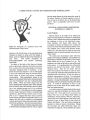
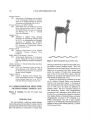
Show 154 UTAH ARCHAEOLOGY 1992 appears to have two barbs and apparently consists of the proximal rather than the distal end of the harpoon. The probable barbs do not appear to have been quite finished even though the tool is highly polished along its existing length. The complete end is tapered to a point but does not appear to have been the distal end as the barbs are pointing in the wrong direction. Also, the tool shows some slight discoloration for about 4.2 cm from the complete end. Perhaps this end was socketed into a shaft extension. If this is the proximal end, the barbs are set exceptionally far back (at least 5 cm) from the distal end as there is little tapering at that end of the artifact. Because of these unanswered questions, the function of the tool remains uncertain. The tool was reconstructed from several fragments and measures 13.3 cm long and 1.3 cm at its maximum width. Barb width is 1.3 cm. It has been made from a large mammal metapodial and is rather oval in cross section. SUMMARY The above descriptions of harpoons from the Utah Lake area provides additional information about fishing gear from the Utah Lake area. If the surface artifacts from Ut732 and Ut832 are reliable indicators, the harpoons from those two sites are Fremont in age while those from the north end of Goshen Island are Late Archaic. Interestingly, the only documented harpoons thus far from the Utah Valley are from Woodard Mound (Richens 1983), which is a few miles south of the Goshen Island site. The harpoons from Woodard resemble closely the harpoon in Figure 2/ from Goshen Island. No harpoons have been found to date from Late Prehistoric sites. REFERENCES CITED Baker, Colleen J., and Joel C. Janetski 1992 Archaeological Survey of the Utah Lake Shore, 1988 and 1991. Museum of Peoples and Cultures Technical Series No. 92-1. Brigham Young University, Provo, Utah. Hunter, Rick J. 1991 Archaeological Evidence of Prehistoric Fishing at Utah Lake. Utah Archaeology 1991 4(l):44-54. Janetski, Joel C. 1990 Utah Lake: Its Role in the Prehistory of Utah Valley. Utah Historical Quarterly 58(1):4-31. Richens, Lane D. 1983 Woodard Mound: Excavations at a Fremont Site in Goshen Valley, Utah County, Utah 1980- 1981. Unpublished Master's thesis, Department of Anthropology, Brigham Young University, Provo, Utah. AN OBSIDIAN CACHE FROM THE GREAT SALT LAKE WETLANDS, WEBER COUNTY, UTAH Ann Cornell, Promontory/Tubaduka Chapter, Utah Statewide Archaeological Society, 1624 24th Street, Ogden, Utah 84401-3002 Mark E. Stuart, Promontory/Tubaduka Chapter, Utah Statewide Archaeological Society, 2054 East 6550 South, Ogden, Utah 84405 Steven R. Simms, Utah State University, Department of Sociology, Social Work, and Anthropology, Logan, Utah 84322-0730 INTRODUCTION A cache of 88 primary and secondary obsidian flakes was excavated from a small subsurface pit at a Late Prehistoric site near the edge of the Great Salt Lake north west of Ogden, Utah. The site was discovered by the two lead authors and excavated by them during investigations sponsored by Utah State University. Here we describe the site context, excavation findings, lab analysis, and chemical sourcing of the obsidian. Information on similar caches is also provided, and the implications for interpreting past life in the Great Salt Lake marshes are briefly discussed. SITE SETTING Site 42Wb326 rests on a natural levee between two intermittent channels of Third Salt Creek, a terminal drainage on the Weber and Ogden river deltas (Figure 1). The site was recorded and filed with the Antiquities Section, Division of State History, Salt Lake City. At an elevation of 4,206 ft and well onto the lake bed of the Great Salt Lake, these drainages have been dissected into complex braided and anastomosing patterns. Virtually stripped of vegetation and largely filled in with sediments during NOTES 155 <D a o •S PQ 1 <D •s s .s <D £ VO m CO (D •s 3 •8 •s c •Sn^i « J I -H 0) 3 • •* UH tah. 2 C •3O& 60 O •S (D £ € oC 156 UTAH ARCHAEOLOGY 1992 * ^JC*iS^Ss >~&m* Figure 2. Looking north across site 42Wb326 showing the obsidian cache in center. The Wellsville Mountains are in the background. • - 7 •**!£• Jgg- BLa r ""4. Hi' • * - PL4 •. - HI > Figure 3. Cross section of the obsidian cache. NOTES 157 Figure 4. Flakes recovered from the cache. the major transgression of the Great Salt Lake peaking in 1987, the faint channels on this otherwise featureless landscape are the only reminders of a vast complex of slow-flowing water, ponds, and marshes that once existed in the area. At the time of discovery in July 1990, the site was barren of vegetation and badly eroded because of fluctuating water levels of the Great Salt Lake (Figure 2). The ground surface had deflated over the 30 m by 70 m area of the site, leaving lag deposits of camp rock, Late Prehistoric ceramics, chipped stone, and bone fragments near the north end of the site. Near the south end of the site was a small mound of similar-sized obsidian flakes within a dark, circular stain. Using a pin flag, a probe during the survey found that the pile of obsidian flakes extended below the ground surface, indicating the presence of a cache in a small subsurface pit. EXCAVATION Upon first encounter the obsidian cache appeared as a faint subcircular stain 42-50 cm in diameter with a mound of similar-sized primary and secondary flakes averaging about 3.5 cm x 5 cm in size (Figure 2). It appeared that 2 to 3 cm of surrounding fill had eroded from the cache through wind erosion between the time the site was first recorded and when it was excavated in June 1991. Excavation began by opening a 1 m by 1 m unit, sectioning the pit containing the flakes and removing the south half in arbitrary 5 cm levels to establish natural stratigraphy (Figure 3). Later the northern half of the pit was removed working from the established profile through the feature. The resulting fill was in fact homogeneous and comprised of clayey loam with a faint orange tinge and containing small charcoal flecks and fragments of freshwater clam shell (Anodonta californiensis). The obsidian flakes extended to a depth of 7 cm and were stacked in at least three distinct layers. Mixed in with the obsidian was a small, round quartzite pebble. The obsidian layers were underlain by tan, sandy loam that extended to a depth of 8 cm. Under this were orange silts comprising sterile subsoil in this area. While sediment texture and color indicated the limits of the pit, a clear fracture line between the pit fill and surrounding sterile sediments could not be defined. Further, deflation of the ground surface had eroded away the upper portion and hence the level of origin of the pit. The homogeneous nature of the fill and the layering of obsidian flakes does, however, indicate this was a cache. The pit may have been excavated for some other purpose and allowed to stand open long enough |