| OCR Text |
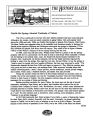
Show ATEFt'S OF UTAH'S PAST FROM THE Utah State Historical Society 300 Rio Grande Salt ~ a kCeit y. LTT8 4101 ( 801) 533- 3500 FAX ( 801) 533- 3503 Miners and Travelers Stopped at Remote Page Ranch THE HISTORIC PAGE RANCH IS LOCATED ALONG A DIRT ROAD-. five Ides east of the small town of Pinto and twenty- five miles west of Cedar City in Iron County. In the 1930s a paved highway was constructed north of the dirt road, bypassing the ranch. Although the location of the ranch is isolated, the road was used extensively by those traveling to the towns of Pinto, New Harmony, New Castle, Cedar City, and points beyond. Travelers were welcome to stay overnight at Page Ranch, which provided food and rest for both man and beast. The ranch provided the only shelter for miles in any direction, and the house was used so much as a " hotel" that the upstairs bedrooms were numberd. Miners working at nearby Iron Mountain also boarded at the house on occasion. The large barn, located to the east of the house, was used to provide food and shelter for travelers' horses. The money earned from boarding and feeding travelers was probably an important source of income for Sophia Page and her children during the years after her divorce. The Page Ranch House was built in 1900 for Daniel R. and Sophia Geary Page on land originally homesteaded by Dan's grandfather, Robert Ritchie, in the 1850s. Dan and his brother Robert lived at the ranch with their grandparents after their mother's death in the 1860s. In 1890 Dan and Robert received the ranch from their grandparents, and one year later Robert sold his share to Dan. Dan and his wife Sophia AM Geary, whom he had married in 1876, operated the ranch until their divorce around 1905. After that she and her seven children continued the ranching operation through the 1920s. Located on relatively flat, open terrain with a reliable water supply from Little Pinto Creek and Lockeridge Spring, Page Ranch was the only agricultural and livestock ranch for miles in any direction, although there were two strictly livestock operations, the Grant and Goddard ranches, a few miles away. Most of the several hundred acres of land that made up Page Ranch were used primarily for grazing cattle. Hay and grain were raised on fifteen to twenty acres of meadowland near the house. The family usually planted a large garden. An apple orchard was located between the house and the barn. Although ranching was for many years Dan Page's main occupation, he was also involved in iron ore mining in the area. He and his brother Robert were among the " pioneer mining men" in the district and were owners of the Homestake Mine at Iron Mountain. The iron industry had first been established there in the 1850s, and, though unsuccessful at first, it proved to be a major industry in the county during much of the 20th century. Page Ranch was the headquarters of Dan's mining partnerships and the informal headquarters of other mining groups. ( more) The Page Ranch House was constructed by Jack and Harvey Faubian, brickmakers and masons from the n& y town of Enterprise, who built a number of other houses in this part of Utah. The Faubians manufactured the brick on the site, first hand- packing the clay in molds to shape the bricks, then, after letting them dry, arranging them into a kiln and firing them for several days to harden them. The house was completed in December 1900 and the Page family moved in on Christmas day. The Page Ranch House is a well- preserved example of the double cross- wing , a relatively uncommon house type in Utah. The ranch house, listed in the National Register of Historic Places, remains significant as an important stopping place along what was once a major freighting and travel route in Iron County. The house remained in the Page family until 1931. A son, Daniel Geary Page, had previously taken over the ranch operations, but due to the Depression and the accumulated difficulties in making the ranch profitable the property was taken over by creditors. Sophia Page, an invalid during the last seven years of her life, was allowed to remain at the ranch until her death in 1934. Although the house has been purchased a number of times since the 1930s, none of its owners remained there long. See National Register file in the Preservation Office, Division of State History, Salt Lake City. RIE HISTOBRLYA ZER is produced by the Utah State Historical Society and funded in part by a grant from the Utah Statehood Centennial Commission. For more information about the Historical Society telephone 533- 3500. |