| OCR Text |
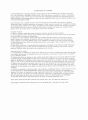
Show AVOCATIONIST'S CORNER RUNNING ANTELOPE: REVISITED Dann J. Russell, Promontory/ Tubaduka Chapter, Utah Statewide Archaeological Society, Roy, Utah 84067 INTRODUCTION In 1993 I authored an article for the journal about a Haskett site entitled " Running Antelope: A Paleo- Indian Site in Northern Utah" ( Russell 1993: 79). Several years after its publication, it caught the attention of Dr. Bonnie Pitblado of Utah State University. At that time, she was a graduate student at the University of Arizona. Her purpose for contacting me was to examine the artifacts from the Running Antelope Site ( 42Bo538) and use the information in her Doctoral Dissertation. She sent five specimens from the site to Dr. Richard Hughes of the Geochemical Research Laboratory in Portola Valley, California for sourcing by x- ray fluorescence. She provided me with a copy of the data obtained by Dr. Hughes upon returning the specimens. In 2002 the Promontory1 Tubaduka Chapter of USAS obtained a grant from the Utah Division of State History for archaeological research by avocationalists. Some of this money was used to pay Dr. Hughes for sourcing specimens from various sites in Northern Utah. Five of these came from Running Antelope. This report will present both sets of sourcing results from the Geochemical Research Laboratory, describe the specimens, and discuss what the results are possibly telling us. The first set ( 1) is those specimens sent by Dr. Pitblado ( Hughes 1997) and the second set ( 2) is those sent by myself ( Hughes 2002). Russel/ - Running Antclopr RESULTS Number 1- 2 1 3 1- 4 1- 5 1- 6 2- 1 2- 2 2- 3 2- 4 2- 5 Table 1. Trace and Selected Minor Element Concentrations Sr Y Zr Nb Ba Ti Mn 3& 3 17+ 3 1W4 2 1 nm nm nm 2& 3 57+ 3 21& 4 39i3 900+ 14 1252+ 22 3311+ 8 3& 3 20+ 3 109+ 4 1853 nm nm nm 3723 1 8 8 106d 19k3 nm nm nm 67+ 3 29+ 3 84+ 4 9+ 3 1584+ 15 nm nm 3753 1 8 8 104+ 4 21i3 188+ 13 nm nm 6653 28B 86+ 4 10+ 3 1587+ 14 nm nm 63+ 3 24+ 3 80+ 4 14+ 3 1525+ 14 nm nm 727+ 3 2338 110& 16+ 3 504+ 13 nm nm 62+ 3 23k3 77+ 4 1& 3 1507+ 15 nm nm Source WHC UNK WHC WHC M AL WHC MAL MAL PS M AL Note: Values in the table are in parts per million ( ppm) except total iron ( in weight percent) and FeMn intensity ratios; + = estimate of x- ray counting uncertainty and regression fitting error at 300 and 600 (*) seconds livetime; nm = not measured. Specimen numbers are consistent with those used by Dr. Hughes. Figure 1. Samples submitted lltulr Archaeology 2004 Figure 2. Map of locations discussed in text Rrrssedl - Runnittg Antelope SPECIMEN DESCRIPTIONS The specimens ( Figure 1) were examined to determine breakage characteristics. The types of specimens along with breakage characteristics indicate that the assemblage represents ten individual lanceolate points. Specimen 1- 2 represents a lower midsection. The upper break shows the scar of a hinge fracture and the lower break shows the scar of a lip fracture. Both would be the result of bending fractures ( Whittaker 1994: 161). The fragment has been retouched bifacially by pressure flalung and has ground edges. These characteristics indicate the impact of a hafted point. The obsidian is dark gray with some lighter gray bands, and extremely small ash inclusions that are typical of Mineral Mountain material. Specimen 1- 3 represents a tip. It shows large percussion flak scars, unfinished platform preparation, and a lip fracture. The fracture was probably due to a misplaced blow during percussion flaking that is represented by the crescent shaped edge bite out of the right edge ( Whittaker 1994: 191,213). Although the material is not known, it is made from very opaque black obsidian with small ash like impurities throughout, very similar to Wildcat Hills obsidian. Specimen 1- 4 represents a tip. The break shows a lip fracture. The right edge is still somewhat ground which is probably the result of platform preparation. The left edge is sharp with a small semi- conic flake missing from the underside. This is probably the area of a blow that resulted in a bending fracture during percussion flaking. The material is very dark gray almost black opaque obsidian. Specimen 1- 5 represents a lower midsection. The upper break shows the scar of a lip fracture and the lower break shows a lip fracture. However, the lower break is not smooth and shows some shattering of the material probably due to compression from impact. With both edges heavily ground, this remnant is probably from a hafted point. It shows evidence of high quality percussion flaking techniques with retouch by pressure flaking. The material is gray marbled obsidian with some very small ash inclusions. Specimen 1- 6 represents a tip. Both edges are sharp and the break shows the scar of a hinge fracture. These indicate a finished to near finished tip fragment that resulted from vibration bending ( Whittaker 1994: 213). The obsidian is black, glassy, and somewhat transparent when held to a light. This is typical of obsidian in the Dairy Creek and Wright Creek areas of Malad, Idaho. Specimen 2- 1 represents a lower midsection. Both upper and lower fractures are neither a lipped, hinged, or straight fracture. They are somewhat shattered and would probably best be described as perverse ( Whittaker 1994: 163,165). Both edges are heavily ground indicating that the fragment was part of a hafted point and therefore the fractures possibly resulted from impact. It shows a high level of quality percussion flaking with pressure retouching. The material is very dark gray to black with some lighter gray banding. Ash inclusions are not visually apparent and the material seems extremely fine grained. Specimen 2- 2 represents a base. The break shows a lip fracture with some conic chipping on the surface of the cross section. Both edges are heavily ground. These characteristics suggest that it is a remnant of a hafted point after impact. The obsidian is black, glassy, and somewhat transparent when held to a light, typical of obsidian from the Malad, Idaho area. Specimen 2- 3 represents a lower midsection. The upper break shows the scar of a hinge fracture and the lower break is flat and straight. The left edge is quite ground with a large edge bite taken from the lower face. The right edge is sharp, well above the centerline with many pressure flaking scars on the underside. These characteristics indicate the remains of a point still being produced. The material is black and not quite opaque. When held to the light, some light can be seen though the edges. Specimen 2- 4 represents a lower midsection. The upper break shows the scar of a hinge fracture and the lower break is oblique and somewhat lipped and shattered. Both edges are heavily ground. These characteristics suggest that it is a remnant of a hafted point after impact. It is black but not opaque. Light can be seen through the edges giving it a somewhat banded'or laced appearance. Specimen 2- 5 represents the edge or " burin" of an upper midsection ( Waldorf 1984: 47) and appears to be the remains of a hafted point that has suffered impact burination ( Whittaker 1994: 165). The obsidian is black and nearly opaque, however, light can be seen through the thin edges. DISCUSSION Haskett points were first discovered near American Falls Reservoir in the mid 1960' s ( Butler 1978: 64). In addition to the American Falls site ( 10PR37) and Running Antelope, other Haskett points have been reported at sites near Tonapah, Nevada ( Hutchinson, 1988: 305, Price and Johnston 1988: 240; Tuohy 1988: 221). In the 1993 Running Antelope article it was suggested to search for more Haskett sites from American Falls Reservoir in a southwest direction into Nevada ( Russell 1993535). However, the sourcing data so far obtained suggests that the people associated with Running Antelope took a different route ( Figure 2). In fact, it supports the findings of Dr. Pitblado who stated that for five study regions between the Great Plains to the Great Basin; mobility for raw material generally followed a north- south axis ( Pitblado 1999: 334). Russell - Runlting Anlelopu REFERENCES Butler, B. Robert 1978 A Guide to Understanding Idaho Archaeology, 3rd ed., The Upper Snake and Salmon River Country. Idaho State Historic Preservation Office. Boise. Hughes, Richard E. 1997 Geochemical Research Laboratory Letter Report 97- 110, December 17,1997. Geochemical Research Laboratory, Portola Valley, California. 2002 Geochemical Research Laboratory Letter Report 2002- 44, June 12,2002. Geochemical Research Laboratory, Portola Valley, California. Hutchinson, P. W. 1988 The Prehistoric Dwellers at Lake Hubbs. In, Early Human Occupation in Far Western North America: The Clovis- Archaic Inte# ace. J. A. Willig, C. M. Aikens, and J. L. Fagan, eds., pp. 308- 3 18. Anthropological Papers No. 2 1. Nevada State Museum, Carson City. Pitblado, Bonnie L. 1999 Late Paleoindian Occupation of the Southern Rocky Mountains: Projectile Points and Land Use in the High Country. Ph. D. Dissertation. Department of Anthropology, University of Arizona. Tucson. Price, B. A., and Johnson S. E. 1988 A model of Late Pleistocene and Early Holocene Adaption in Eastern Nevada. In, Early Human Occupation in Far Western North America: The Clovis- Archaic Znterface. J. A. Willig, C. M. Aikens, and J. L. Fagan, eds., pp. 231- 250. Anthropological Papers No. 21. Nevada State Museum, Carson City. Russell, Dann J. 1993 Running Antelope: A Paleoindian Site in Northern Utah. Utah Archaeology 6: 79- 86 LJtah Archaeology 2004 Tuohy, D. R. 1988 Paleoindian and Early Archaic Cultural Complexes from three Nevada Localities. In, EarlyHuman Occupation in Far Western North America: The Clovis- Archaic Interface. J. A. Willig, C. M. Aikens, and J. L. Fagan, eds., pp. 217- 230. Anthropological Papers No. 21. Nevada State Museum, Carson City. Waldorf, D. C. 1984 The Art of Flintknapping. Third Edition. Mound Builders Arts and Trading Co., Branson . Whittaker, John C. 1994 Flintknapping, Making & Understanding Stone Tools. University of Texas Press, Austin. |