| OCR Text |
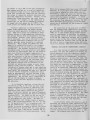
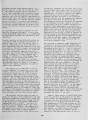
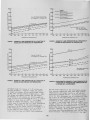
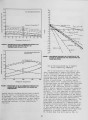
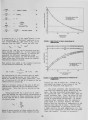
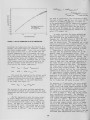
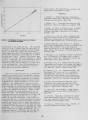
Show 4.0 3.5 Fuel: Birmingham Natural Gas ~ x 0 3.0 z '0c 2.5 0 n co u: 2.0 Q) '0 ~ 1.5 E :::J g 1.0 ':; 0- w .5 Preheat Air Temperature, OF -:.:::~ ::.'.~'~' ~ ~ ~ :':'':'~' ;~~ ~ ~ ~ ...... . ...... . · -· -· - · -· -·-:~1164oooo .-.-. .- . . =--: :.:- - -- :.:~ · . "--. -::~ =--:: : =:.:-:-:- . - -- ·1000 -- . -- . -- . -- . ::.-.:- .. -- _ -- _ "::::-"' - '800::7.:.::=.-;:- . __ . -_- __ - 400 -"' -~ -' 100 - - - - - ..::::-... 0.0 0 10 20 30 40 50 60 70 80 90 100 Percentage of Excess Air (%) FIGURE 5. PERCENTAGE OF NO IN COMBUSTION PRODUCTS VS EXCESS AIR FOR VARYING PREHEAT AIR TEMPERATURES (79%N2, 21%02) 4.0,.-----------------------. ~ 3.5 x 0z 3.0 '0 c0 2.5 '0:; (J ~ u. 2.0 Q) '0 ~ E 1.5 :::J ~ ':; 1.0 0- W 0.0 Fuel: Birmingham Natural Gas Excess Air: 0% 35 % Oxygen in Air -.. • • ___ •• --:-:;.::-..;:,.- ::;,M"""'-: ~ . .......... . ............ --.- .. _ ... __ . 30 ......... . . -"----.--- ':--.--' ......... ."...,." ......... ------ 25 ......... --- - -- --~~ 40 ---- --- -"'" 21 - --- -- ---- 0 500 1000 1500 2000 Preheated Air Temperature (F) FIGURE 6. PERCENTAGE OF NO IN COMBUSTION PRODUCTS VS PREHEATED AIR TEMPERATURE FOR VARYING AIR COMPOSITIONS. bustion species including NO have been verified with the results of Marteney6 and found to be in agreement. This indicates that the NOx formation variation with temperature is more complex at high temperatures because it depends on the equilibrium constants of other dissociating react ions. 191 16 14 12 10 8 6 4 2 0 a. ~ Cl -2 0 ~ -4 -6 -8 -10 -12 -14 -16 -18 -20 FIGURE 7. EQUILIBRIUM CONSTANTS AS A FUNCTION OF THE INVERSE OF TEMPERATURE FOR DISSOCIATING GAS PHASE REACTIONS. USE OF THE EQUILIBRIUM NOX TO PREDICT ACTUAL FURNACE NOX FORMATION One of the purposes of this paper is to show a methodology to predict the actual value of the concentration of NO in the post flame zone of a furnace combustion process. The concentrations of NO obtained from the computer program described above are valid only for conditions of equilibrium. In reality, equilibrium is almost never reached and the values of NO obtained above are much higher than the actual values one might expect. Therefore, a kinetic approach of the combustion process is needed. Under a kinetic approach the time the combustion gases spend in a furnace (residence time) is a variable. It is also important to realize that the adiabatic flame temperature is the theoretical flame temperature and because of the losses to the furnace walls and load, actual temperature in the flame(here called peak temperature) is lower than the adiabatic flame temperature. The peak temperature can be determined by direct measurement or predicted by a computer model of the flame structure which goes beyond the scope of this work. For the purpose of illustration of this methodology the values for peak flame temperature are taken from reference9 which were obtained in a personal communication with Mr. Richard Reed from North America Mfg. Co. |